
People hear “core drilling” and picture a big, noisy, expensive job for commercial sites. In reality, it is often the quickest and cleanest way to put a round hole through a wall or floor: a 107mm extractor hole through a brick cavity wall can take about 10 to 15 minutes to cut. For many service holes, core drilling is the tidy option, not the heavy one.
Core drilling is a method of cutting a neat, circular hole through materials such as brick, block, stone and concrete using a rotating core bit. Instead of breaking out the whole area, the drill cuts around the edge and removes a solid cylinder of material.
Core Drilling Is the Tidy Option, Not the Heavy One
A core hole leaves a clean opening for a pipe, duct, cable or service sleeve, with less risk of cracking the surrounding brickwork than using a breaker. That makes it useful for domestic jobs such as extractor fans and boiler flues as well as commercial M&E penetrations.
The work can be carried out by hand for suitable smaller holes or with a rig for larger holes and tougher materials. See the core drilling service page for more about the service.
What Is Core Drilling?
A diamond core drill uses a hollow cylindrical bit, called a core bit, with diamond segments on its cutting edge. As the bit rotates, the diamond segments grind a narrow ring into the material rather than drilling away the entire circle.
The cylinder left inside the bit is the core. Once the cut is complete, the core is removed, leaving a circular hole close to the diameter of the bit. Core drilling is one method of diamond drilling, which also includes other types of cutting work.
Core drilling is used in brick, block, stone, concrete and reinforced concrete. Common jobs include holes for extractor fans, cooker hoods, soil and waste pipes, boiler flues, air conditioning, cables and other services, as well as penetrations through floors and ceilings.
Common Core Holes and Sizes
The right core size depends on what has to pass through the opening, including any sleeve or clearance needed. These are typical examples rather than a substitute for checking the fitting or service dimensions.
| Common job | Typical core size | Drill type |
|---|---|---|
| Extractor fan (100mm duct) | 107–112mm core | Handheld |
| 110mm soil pipe | 127mm core | Handheld or rig |
| Cooker hood (150mm duct) | About 162mm core | Handheld |
| 300mm cores in reinforced concrete | 300mm | Rig |
Use a core hole size guide to check the opening against the pipe, duct or sleeve before marking the position.
How Core Drilling Works
It Cuts, It Doesn't Smash
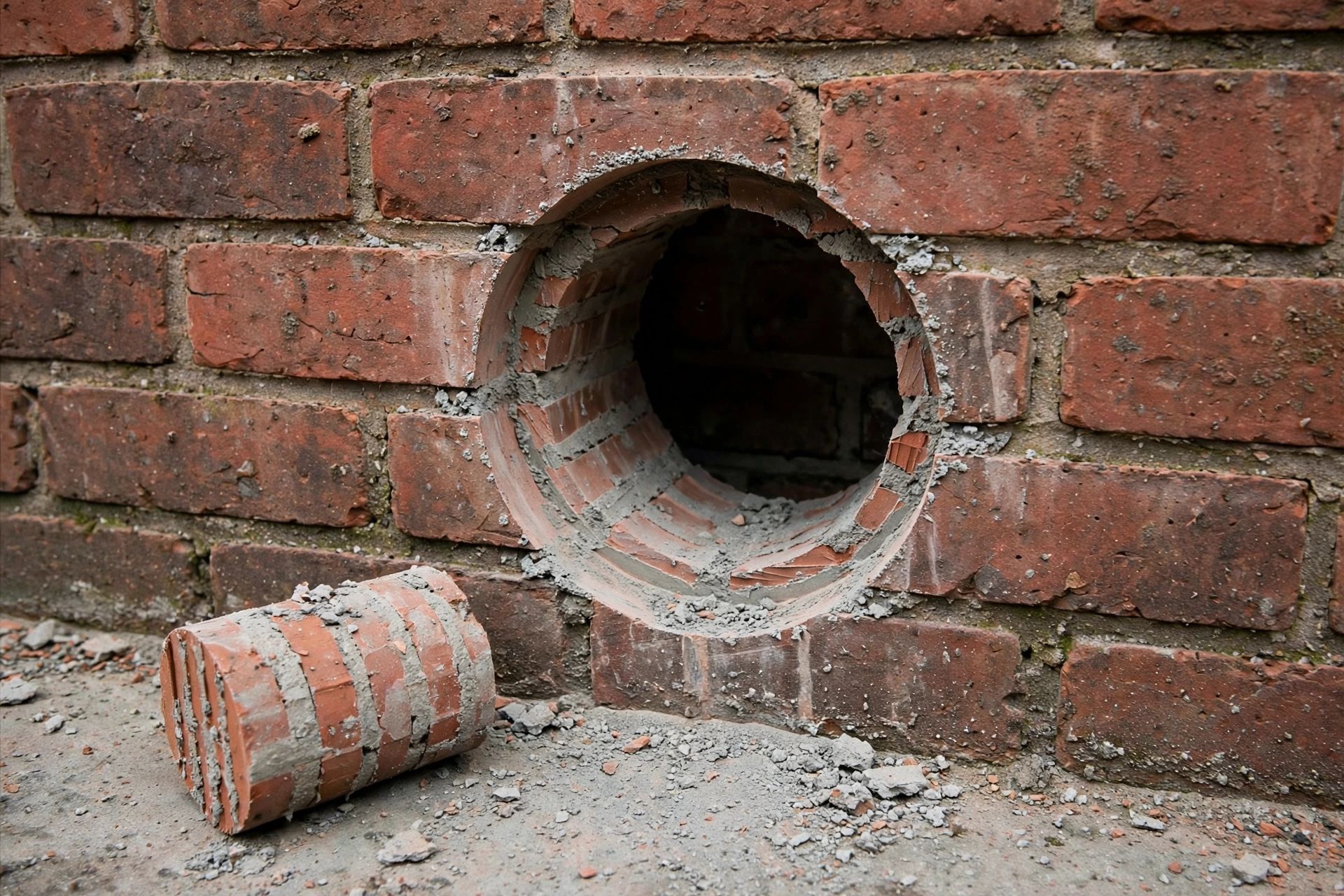
A diamond core bit grinds a ring around the edge of the hole, then the solid core is removed. For example, a 107mm extractor hole through a brick cavity wall can take about 10 to 15 minutes to cut, without breaking out a larger patch of brickwork.
That controlled cut helps limit damage to the surrounding wall and reduces the chance of a rough, blown-out exit on the other side.
The Hole Is the Exact Size
The hole is made by the core bit, so its diameter follows the bit size. For example, a 110mm soil pipe commonly calls for a 127mm core, allowing room for the pipe and its installation needs.
Bits range from around 25mm up to 300mm and beyond. Confirm the required clearance, sleeve and sealing details before selecting the size; the pipe’s stated size is not always the core size you need.
Wet Drilling Controls the Dust
Wet core drilling feeds water to the diamond segments to cool the bit and capture dust at the cutting point. A water collection ring and wet vac can collect much of the water and slurry, although the area still needs suitable protection and cleanup.
Cutting concrete can create respirable silica dust, which presents a serious health risk. Read the HSE guidance on construction dust; dry drilling should not be done without suitable dust extraction.
Handheld or Rig-Mounted
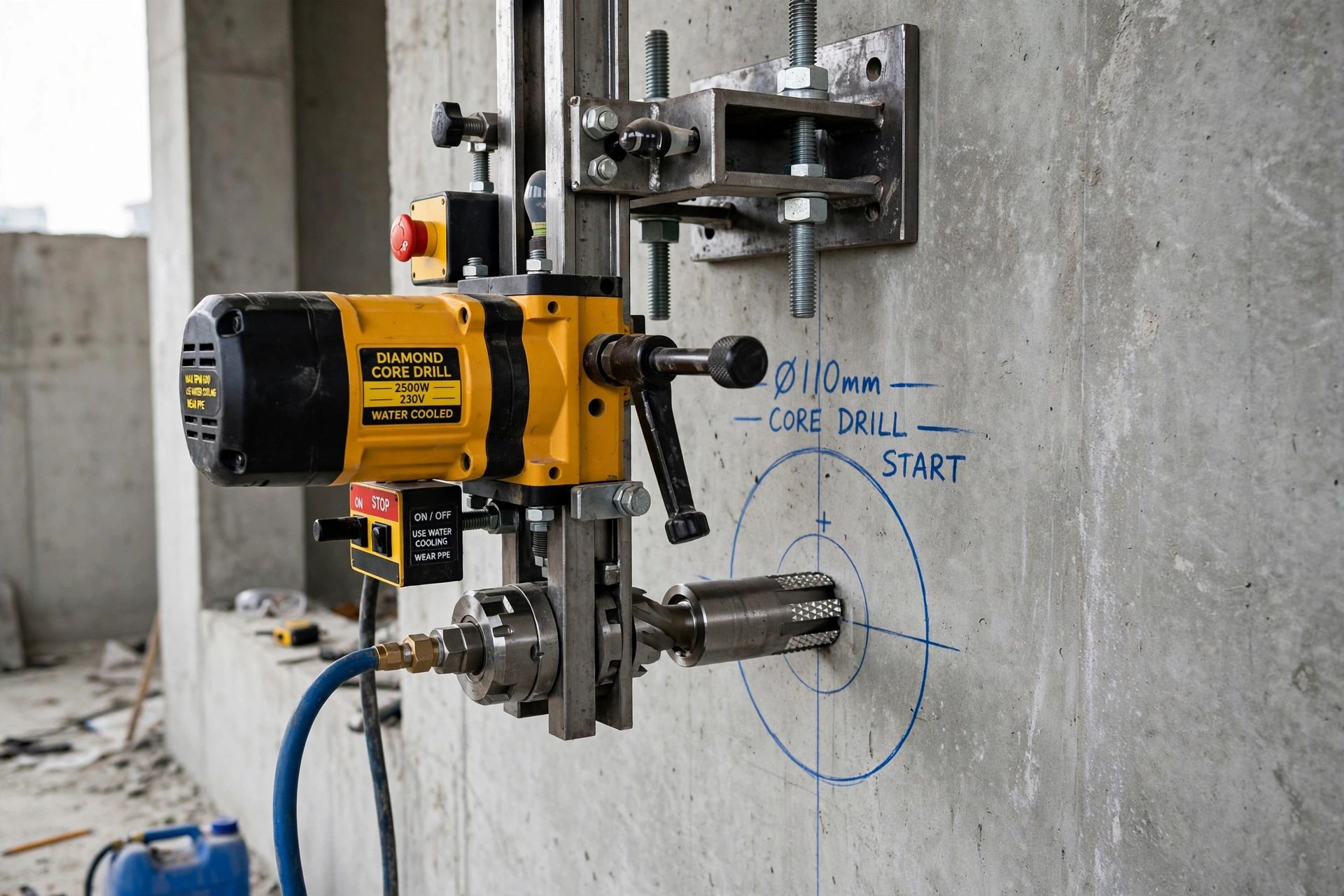
Handheld core drills are commonly used for smaller holes in brick and block, such as a fan duct or pipe penetration. A rig-mounted drill is fixed to an anchor on the wall or floor, helping keep the bit straight for larger holes, concrete and reinforced concrete.
A 300mm core through reinforced concrete is a rig-mounted job, not a typical handheld one. The correct setup depends on the material, hole size, access and whether the drill can be securely anchored.
It Goes Through What Other Tools Can't
Dense concrete, stone and reinforced concrete can defeat an ordinary SDS drill or make breaking out a poor choice. A diamond core bit cuts through the material; where it meets rebar, the drilling method and bit need to suit the reinforcement and the job.
For example, a 300mm core in reinforced concrete requires a rig and a check of the structure and reinforcement before work begins. Read more about core drilling through reinforced concrete.
When Core Drilling Really Is the Heavy Option
Core drilling is the heavier choice for very large or deep openings, such as a 300mm-plus core through thick reinforced concrete. That work may need a rig, more time and more water, and it calls for careful planning around the structure and access.
For a small hole up to around 50mm through ordinary brick or block, an SDS drill may be quicker and cheaper. The SDS route can also make sense where a neat circular edge is not needed, but it is not a like-for-like choice for larger service penetrations or hard concrete. Compare diamond drilling and SDS core bits before choosing a method.
How to Plan a Core Hole
- Work out what needs to pass through the hole and check its real outside size, including any sleeve or fitting.
- Confirm the core size, allowing for the clearance and sealing required around the service.
- Mark the position on both sides of the wall or floor where possible. Check that the planned route avoids services and does not pass through a lintel, beam or other structural element without proper advice.
- Share photos, the required hole size and the wall or slab type when requesting a quote. LAP Diamond Drilling offers free quotes from photos and carries out handheld and rig-mounted wet core drilling with water collection and slurry control.
- Before drilling, have the position checked for concealed services using suitable methods, such as a CAT scanner or cover meter. On the day, the hole is wet drilled and the slurry is collected and cleaned up.
LAP Diamond Drilling is a Drilling and Sawing Association member, and its team holds CSCS, IPAF and PASMA credentials. The team has completed more than 120 jobs, from single extractor holes to commercial M&E work at sites including Bristol Airport and a Skanska project. Find out more about the Drilling and Sawing Association.
Mark Both Sides Before Drilling
A mark on each side helps confirm where the opening will exit and whether there is a clear route for the service. Check the position and any concealed services before drilling; do not assume the space behind a wall or beneath a floor is clear.
What Core Drilling Costs
A typical minimum visit charge is £150, with additional holes costing up to £150 each depending on size and material; prices are ex VAT. The cost can also reflect access, the drilling setup, water and slurry control, and the material being cut.
Grouping several holes into one visit can be more economical than booking separate visits, because the minimum visit charge applies to the attendance. Send the hole sizes, material and photos when asking for a quote so the work can be assessed against the actual requirements.
Core Drilling FAQs
What is core drilling used for?
It makes circular openings for services such as extractor fans, cooker hoods, soil and waste pipes, boiler flues, air conditioning and cables. Core drilling is also used for commercial M&E penetrations and openings through floors and ceilings.
How big a hole can you core drill?
Core bits range from around 25mm up to 300mm and beyond. Larger holes, including 300mm cores through reinforced concrete, generally need a rig and careful planning.
Is core drilling the same as diamond drilling?
Not exactly: core drilling is one form of diamond drilling, using a hollow diamond-segmented bit to make a circular hole. Diamond drilling is a broader term for methods that use diamond tooling to cut hard materials.
Can you core drill through reinforced concrete?
Yes, with suitable equipment and a method that accounts for the concrete and rebar. The structure and proposed hole position should be checked first, particularly if the drilling could affect a beam, lintel or other structural element.
Is core drilling messy?
Wet drilling produces water and slurry, but a water collection ring and wet vac can capture much of it. The work area still needs protection, and the slurry needs to be collected and cleaned up.
How long does core drilling take?
A 107mm extractor hole through a brick cavity wall can take about 10 to 15 minutes to cut. Setup, checking the position, access and cleanup add to the total visit time.
Can you core drill through a floor?
Yes, core drilling can create service penetrations through floors and ceilings. Before work starts, check for concealed services and confirm that the opening will not compromise the structure or hit an area that should not be drilled.
Do I need a professional for core drilling?
A small hole in suitable brick or block may be manageable with the right equipment and experience, but larger holes, concrete, rebar and uncertain wall or floor construction need more care. Check the structure and hidden services first, and compare the risks and costs in this guide to hiring a core drill versus a professional.
Core drilling is usually the tidy option for a service hole, not the heavy one. Send photos, the required hole sizes and details of the wall or floor to LAP Diamond Drilling for a free quote.