

On soft brick and block, an SDS core bit up to about 110mm is quick and does the job, and diamond drilling is not much faster. The difference is the outside face: SDS hammer action can blow out brick or render on breakthrough, while a diamond core usually leaves a clean edge on both sides; with concrete, rebar, stone or a finished surface, SDS can stall, crack the finish or damage the bit. This guide is for homeowners, kitchen fitters, plumbers and builders choosing a method for holes in walls, floors and ceilings.
Diamond Drilling vs SDS: The Short Answer
Use an SDS core bit for a single hole up to around 110mm in soft brick or block when a rougher exit face is acceptable. For concrete, stone, rebar, finished render or tiles, larger holes, ceilings and floors, or several holes on one job, a diamond core drill gives a cleaner, more controlled result. Never drill through rebar in a beam, column or slab without the structural engineer’s approval.
LAP Diamond Drilling carries out diamond core drilling in Bristol, as well as concrete saw cutting and chasing across Bristol and the South West.
How We Compared Them
We compared holes for extractor fans, soil pipes, boiler flues and services across Bristol using SDS rotary hammers with dry TCT core bits and diamond core drills, both handheld and rig-mounted with water feed. Materials included brick, blockwork, Bath stone, Pennant stone and concrete.
We’ve drilled the same hole sizes in the same materials both ways, and we’re often called after an SDS attempt has gone wrong. We judged time per hole, exit-face blowout and spalling, cracking to render, tiles and plaster, dust, performance against steel and the amount of making good left for the next trade. Set-up time matters too: a rig takes longer to prepare than a handheld SDS drill, but can make sense when accuracy or multiple holes matter.
Side-by-Side Comparison
| Factor | SDS core bit | Diamond core drill |
|---|---|---|
| Max size | Commonly most practical up to about 125–150mm, depending on the drill and bit; roughly 110mm is a useful limit for a straightforward hole in soft masonry. | A wide range of sizes is available, from small service holes to several hundred millimetres, depending on the machine, barrel and access. |
| Materials | Best suited to softer brick and block. Hard stone and dense concrete can be slow or too demanding. | Suited to brick, block, concrete and stone, with the right bit and machine. |
| Rebar | TCT teeth are not designed to cut rebar; steel can stop the bit or damage it. | Can cut through steel with the correct bit, but structural rebar must not be drilled without engineer approval. |
| Exit face | Hammer action can chip or blow out the far side, especially through render or brittle masonry. | Usually produces a clean, round edge on both faces when the work is set up correctly. |
| Vibration | Hammering creates more vibration, which can crack nearby plaster, tiles or render. | Rotary cutting has less impact vibration, though poor support or unsuitable positioning can still cause damage. |
| Dust | Usually dry and dusty; use suitable extraction and controls. | Commonly wet, which controls airborne dust but produces slurry that needs collecting. Dry diamond cutting requires suitable extraction. |
| Speed | Fast and simple for a small hole in soft brick or block. | Cutting can be quick, but water management or rig set-up adds time. Often more efficient for hard material or repeated holes. |
| Cost | Lower cost for a small DIY hole if you already own the drill and bit. | Higher cost for one small hole, but can avoid repairs and is often the practical choice for hard materials or multiple holes. |
How Each Method Cuts
SDS Core Bits
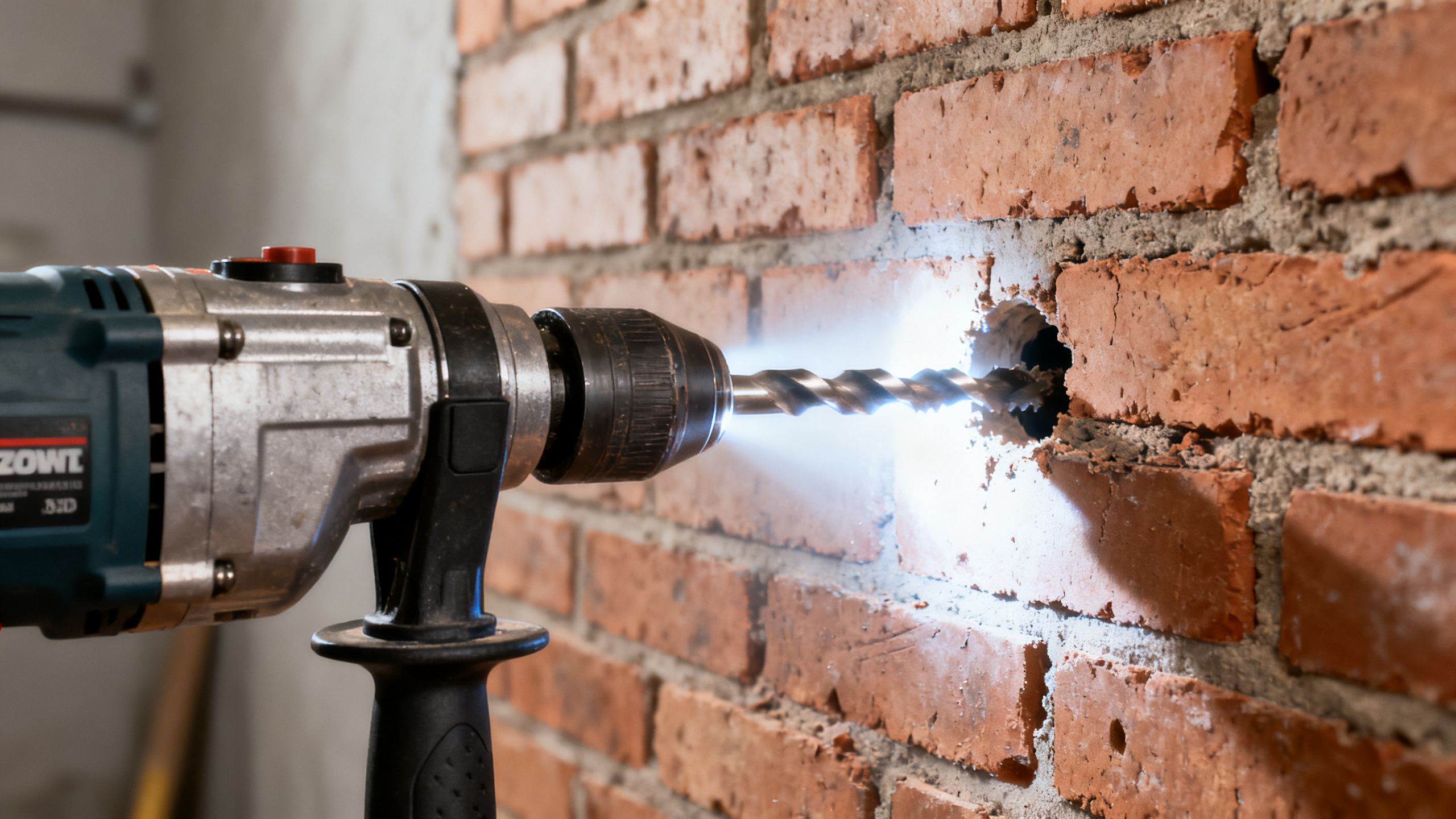
An SDS rotary hammer turns the core bit while adding a hammering action. A TCT core bit has tungsten carbide teeth that chip away softer masonry around the circumference, leaving the centre as a core. It is a useful approach for a modest hole in soft brick or block, but the impact can loosen the far side as the teeth break through, causing blowout.
To reduce damage, drill from the finished side where possible, use a pilot hole and a steady, controlled feed, and stop if the bit starts catching or the masonry begins to crack. If access allows, finish from the other side once the pilot hole breaks through rather than forcing the whole core out in one pass.
Diamond Core Drills
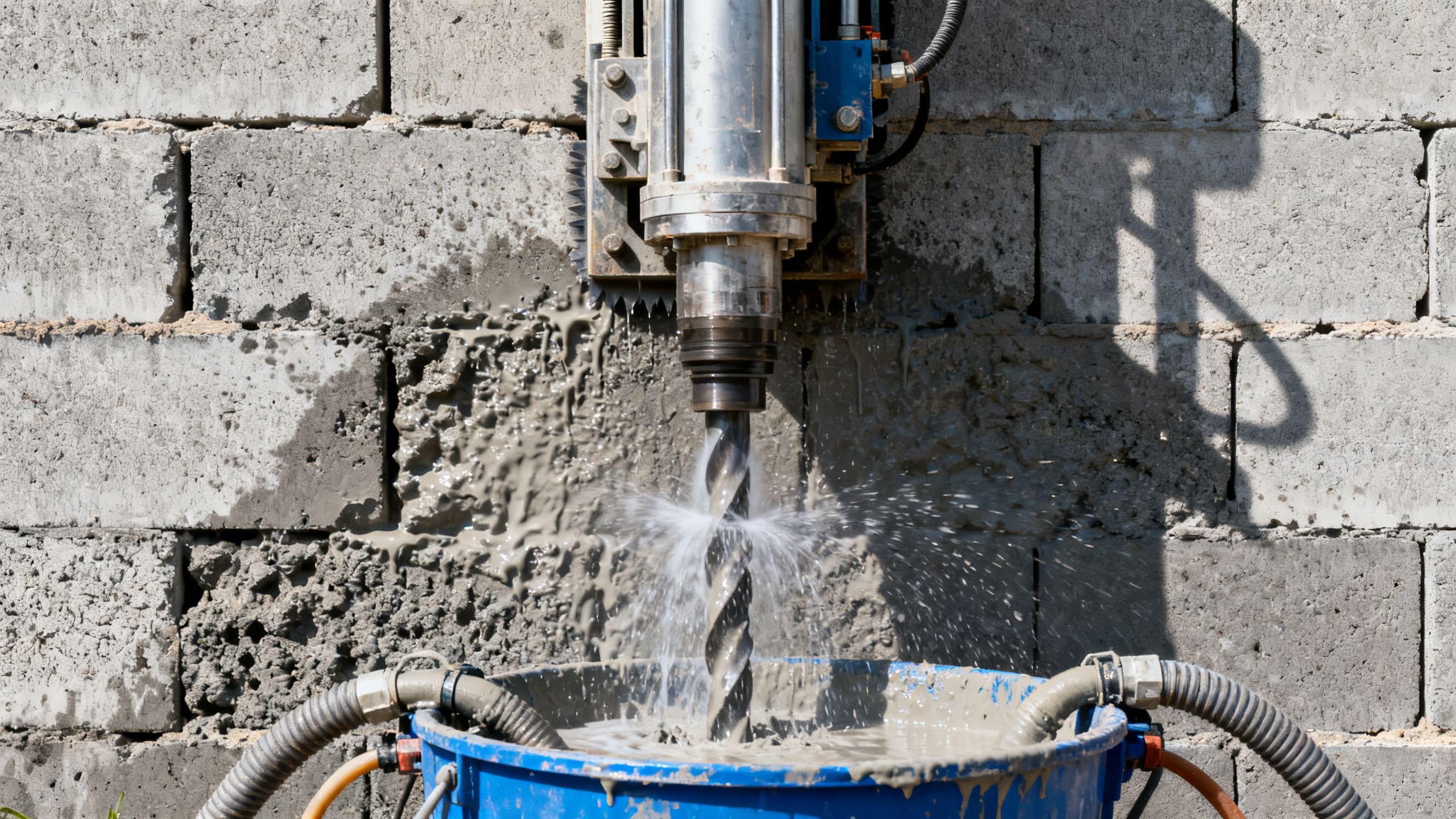
A diamond core bit cuts by grinding with diamond segments rather than hammering the material apart. That makes it suitable for hard concrete and stone and helps produce a more accurate edge with less impact vibration. Wet drilling uses a water feed to cool the bit and control dust; the water and slurry must be collected and managed, especially indoors.
Handheld diamond drills suit many smaller holes where access and control allow. For larger diameters, hard material or repeated holes, a rig-mounted drill can hold the barrel steady and keep it square to the surface. The rig must be securely anchored, and the position checked before drilling. The Drilling and Sawing Association represents specialist contractors and promotes good practice in the industry.
Where Each One Falls Short
Where SDS Falls Short
SDS hammer vibration can crack render, tiles or plaster around a hole, and the bit can blow out the exit face. A TCT bit is not made to cut rebar; dense concrete, hard Bath or Pennant stone and holes much beyond about 125–150mm can also exceed what a typical SDS set-up can handle comfortably.
For example, a 100mm hole for a cooker hood through a rendered cavity wall may look fine from the kitchen but leave a chipped crater outside. A hole through dense concrete can also stall when the bit meets steel. Use a diamond core drill for finished faces, stone and concrete, and check drawings or get engineering approval before drilling a structural member. Dry drilling creates fine dust: follow the HSE construction dust guidance and use suitable controls and extraction. Never dry-cut concrete without suitable dust extraction.
Where Diamond Falls Short
Diamond drilling needs more preparation. Wet drilling requires a water supply and a plan for collecting water and slurry; indoors, a collection ring, sheeting and protection for nearby finishes help keep the area controlled. Dry diamond drilling can suit some brickwork when used with suitable extraction, but it is not a reason to dry-cut concrete without extraction.
A rig-mounted drill needs safe, secure anchoring, and setting it up can take longer than making one small hole with an SDS drill. For example, a single 50mm hole through soft brick may cost more to book a diamond driller than to do with an SDS core bit. Choose SDS if the material and finish make it appropriate; use diamond when the clean finish, hard material or risk of damage justifies the extra set-up.
Which One Does Your Job Need?
| Job | Recommended method | Why |
|---|---|---|
| Bathroom extractor fan, typically around 100–125mm | Diamond for a finished or hard wall; SDS can suit soft brick or block if a rougher exit is acceptable. | The outside face and any render matter as much as the hole itself. |
| Cooker hood duct, often around 125–150mm | Diamond core drilling. | Larger diameter and a visible external finish make breakout more likely with SDS. |
| Soil pipe, commonly around 110mm | Diamond for concrete, stone or finished masonry; SDS may suit soft block. | The material and required clearance determine whether the simpler method is suitable. |
| Waste pipe, often around 40–50mm | SDS in soft brick or block; diamond in hard or finished material. | A small hole in soft masonry is a good SDS use case. |
| Combi boiler flue | Diamond drilling through masonry where needed; use a Gas Safe engineer for the flue installation and advice on its position. | A clean opening is useful, but the appliance and flue must be installed by a qualified professional. |
| Air-conditioning pipework and services | Diamond for concrete, stone, multiple services or finished walls; SDS for a small hole in soft masonry. | A controlled opening helps protect finishes and gives room for the service route. |
| Cable or service entry through a foundation | Diamond core drilling, subject to checks for buried services and structural considerations. | Foundations are often dense concrete, and a controlled hole is preferable. |
| Hole through a concrete floor or ceiling | Rig-mounted diamond core drilling, after checking structure and services. | Stable equipment and controlled cutting suit hard material and overhead or floor work. |
| Bath stone, Pennant stone or a listed wall | Diamond drilling, with the location and method agreed for the building. | SDS impact can damage brittle or historic fabric and cause excessive breakout. |
For concrete with reinforcement, see LAP’s guide to core drilling through reinforced concrete. Rebar in a beam, column or slab is not a routine obstacle to drill through: get the structural engineer’s approval before work starts.
Extractor and Duct Holes
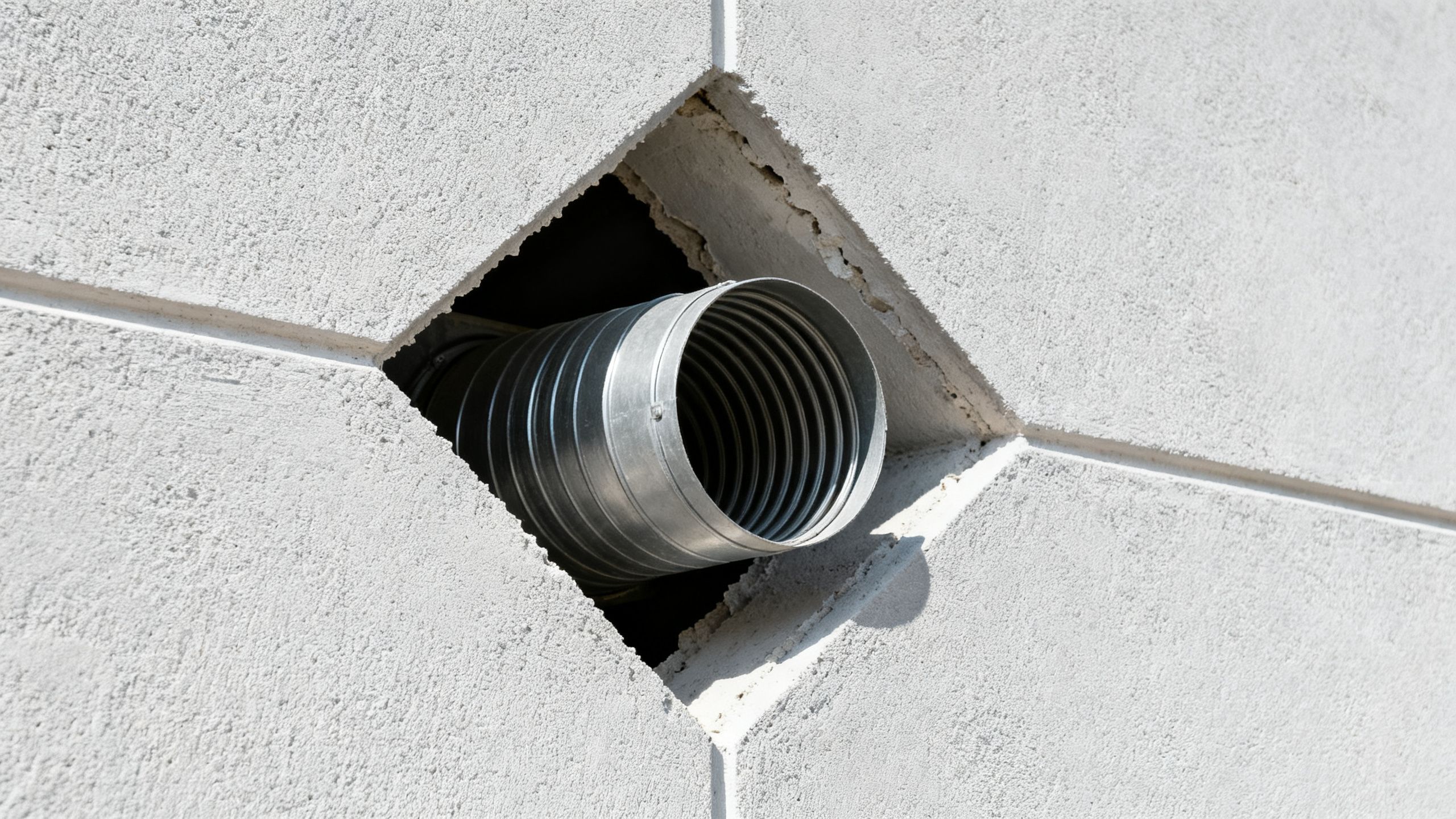
For a 100mm bathroom extractor hole through soft, unfinished brick, SDS can be a sensible choice if you can accept and repair some breakout. For a cooker hood hole through a rendered wall, or a duct through concrete or stone, diamond drilling is usually the cleaner option and helps protect the finished face.
What It Costs
An SDS core bit and a suitable drill can be the cheapest option if you already have the kit and the hole is in soft brick or block. Factor in the cost of a suitable bit, dust controls and any repairs to chipped render or plaster; an SDS attempt that damages a finished face can quickly lose its price advantage.
LAP Diamond Drilling’s guide gives a minimum visit price of £150, with additional holes typically £25–£150 each depending on size and material. A small hole in soft brick will generally be cheaper to do yourself with SDS, while concrete, stone, larger diameters and repeated holes are more likely to justify specialist equipment. See the Bristol diamond drilling cost guide for more detail.
Diamond Drilling vs SDS FAQs
Can an SDS drill through concrete?
An SDS drill can drill small holes in some concrete with a suitable masonry bit, but that does not mean it is the right tool for a large core hole. Dense concrete, large diameters and reinforcement can stop or damage an SDS core bit; use diamond drilling for a controlled core, and get engineer approval before drilling structural rebar.
Can an SDS core bit cut rebar?
A TCT core bit is designed to cut masonry, not reinforcement steel. If it hits rebar, stop rather than forcing it or damaging the bit; do not cut structural reinforcement unless the engineer has approved the location and method.
What size hole can an SDS core bit do?
SDS core bits are available in different diameters, but about 125–150mm is a practical upper range for many SDS set-ups, depending on the drill and material. For soft brick or block, around 110mm is often a more straightforward size; larger holes or harder materials favour a diamond core drill.
Does core drilling make a mess indoors?
Wet diamond drilling creates slurry, so the area needs protection and a collection ring or other suitable water-control measures. Dry SDS drilling makes dust, while dry diamond drilling needs suitable extraction; plan the controls before starting either method.
Is diamond drilling quieter than SDS?
Diamond drilling avoids the repetitive hammering of an SDS drill, so it generally creates less impact noise and vibration. It is not silent: the drill motor and cutting still make noise, so consider the room, neighbours and site requirements.
Can you core drill a ceiling?
Yes, but overhead coring needs suitable equipment, safe access and careful control of the core, water and slurry. Check for services and structural constraints first, and use a specialist for concrete ceilings or other structural elements.
Which is better for a 100mm extractor hole?
For a 100mm hole in soft brick or block where the outside face is not important, SDS can be quick and economical. For concrete, stone, tiles or finished render—or where a clean exit face matters—choose diamond drilling.
An SDS core bit suits one small hole in soft brick or block; diamond core drilling is the better choice for concrete, stone, approved cuts through rebar, finished faces, floors, ceilings and multiple holes. LAP Diamond Drilling is a Drilling and Sawing Association member, with CSCS, IPAF and PASMA credentials, wet diamond drilling with water collection and slurry control, and more than 120 jobs completed—from single extractor holes to commercial M&E work at sites including Bristol Airport and a Skanska project. The company has a 5.0 rating from 19 Google reviews. Send a photo of the wall and details of the hole to LAP Diamond Drilling for a free quote.