On a live Skanska project for IKEA, we cut a run of 300mm cores through heavily reinforced concrete walls for new services. Every core was cut clean in its marked position. Each 300mm core took roughly 30 to 45 minutes through the heavily reinforced sections, with no slurry left on the live site and no hold-up to the services install.
Yes, reinforced concrete can be core drilled using a diamond core bit, but the rebar, structure and site conditions must be checked first. This guide explains how the process works, when scanning and approval are needed, and what to expect for time and cost.
Can You Core Drill Through Reinforced Concrete?
Yes. A diamond core bit can cut through concrete and rebar, though steel makes the work slower and puts more wear on the bit. The diamond segments grind through the steel; they do not simply slice it like a conventional metal blade.
Wet coring is commonly used for reinforced concrete because water cools the barrel and carries away dust as slurry. A rig-mounted core drill helps keep a larger hole straight and controlled. See LAP’s diamond drilling service for more on the equipment and method.
The safe position of a core matters as much as the bit. Rebar must not be cut unless the structural engineer or principal contractor has approved it, and post-tensioned slabs need separate checks before any drilling begins.
Case Study: 300mm Cores Through Heavily Reinforced Concrete
On a live commercial Skanska project for IKEA, LAP was asked to create a run of 300mm cores through reinforced concrete walls for new services.
The Problem
The scan showed rebar in both faces of the wall, making it likely that almost every 300mm core would meet steel. The service routes fixed the core positions, so moving a hole to avoid a bar was not an option without approval; on a live site, dust and water also had to be controlled.
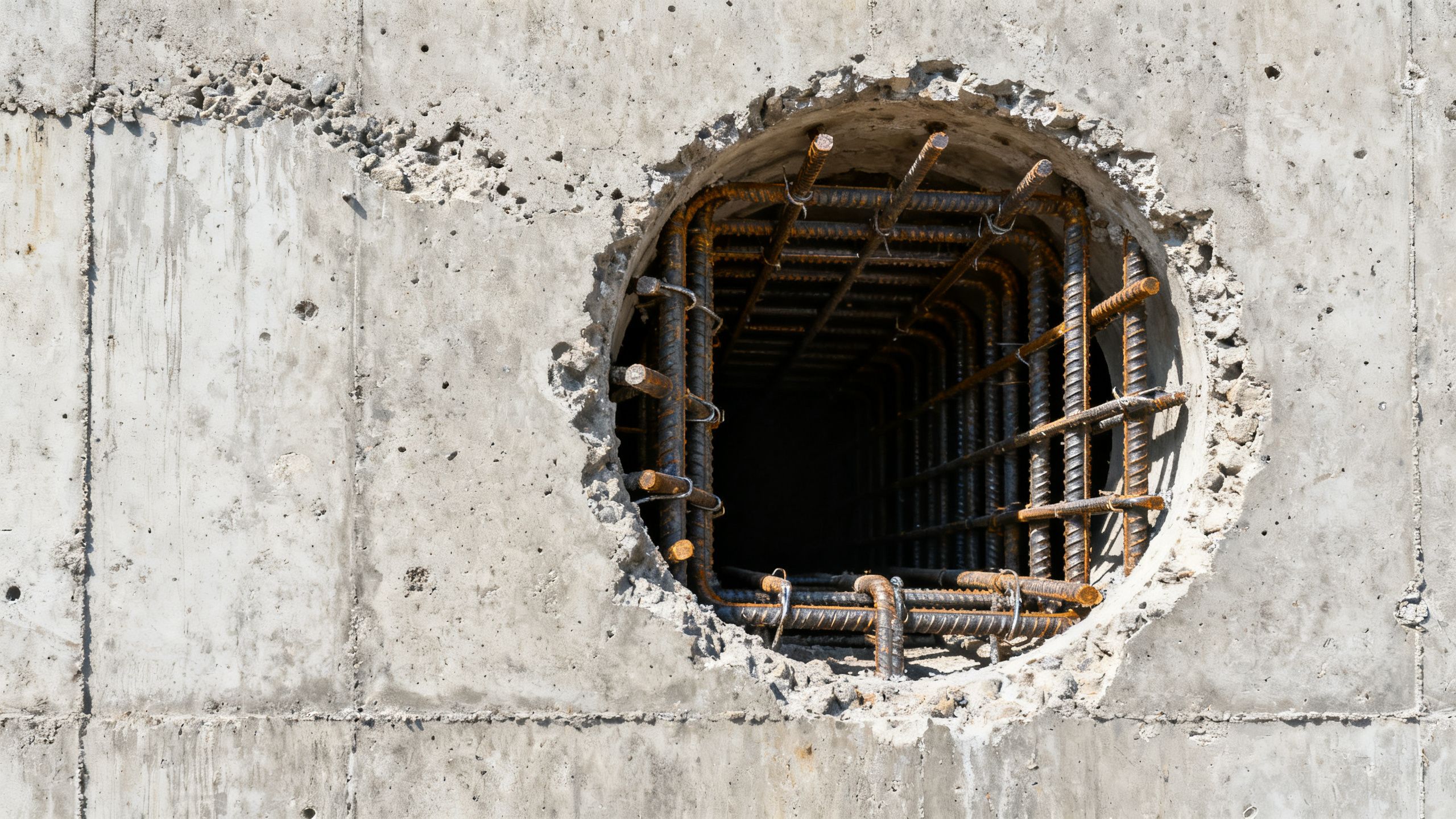
This combination affects the drilling rate, the choice of core barrel and how the work area is contained. If a similar job involves openings through a structural wall, agree the positions and steel-cutting permissions before work starts.
Our Approach
LAP scanned and marked the agreed positions, then confirmed with the principal contractor that cutting bars at those locations was approved. The team anchored a rig-mounted core drill to the wall, used a barrel suited to steel and cored wet with water feed and slurry collection.
Through the rebar, the operators reduced speed and kept a steady feed rather than forcing the barrel. They dressed the segments when they glazed and removed each core in one piece. LAP is a DSA member, and its team holds CSCS, IPAF and PASMA cards and confined-space training; its experience includes commercial sites such as Bristol Airport and a Skanska project.
The Result
Every core was cut clean in its marked position, taking roughly 30 to 45 minutes through heavily reinforced sections compared with 15 to 20 minutes in plain concrete. Slurry was contained, the live site was left without slurry on the work area, and the services installation had no hold-up.
The slower rate was the trade-off for clean, controlled cores through steel, not a reason to shift openings or force the drill. The client incurred no programme delay from the coring work.
What Most Guides Recommend vs What We Did
Generic advice often stops at “use a diamond bit, go slow, add water.” Those are useful basics, but they do not address fixed service positions, steel-cutting approval or slurry control on a live site.
| What most guides say | What we did and why |
|---|---|
| Use a diamond bit and add water. | Selected a core barrel suited to steel and used a controlled water feed with slurry collection for the live site. |
| Go slowly when you hit rebar. | Reduced speed and maintained steady pressure instead of forcing the barrel, which can glaze or overheat the segments. |
| Move the hole if you meet a bar. | Kept the agreed positions because the services had to line up; the principal contractor approved the planned bar cutting first. |
| Keep drilling until the core comes free. | Monitored segment condition, dressed glazed segments and extracted each core in one piece. |
For wet work, dust control still matters during set-up, clean-up and any dry cutting nearby. Follow the HSE guidance on construction dust and plan controls for the whole task, not just the drilling itself.
Before You Drill: Scanning, Sign-Off and Post-Tensioned Slabs
Before setting up, confirm the opening position, wall or slab thickness, access, power and water, and what services or reinforcement may be concealed. Scanning can help locate steel, but it does not replace structural approval for cutting reinforcement.
Scanning for Rebar
A cover meter detects the presence and approximate cover and spacing of near-surface reinforcement. It is useful for mapping bars in many conventional reinforced concrete elements, but its readings can be affected by bar size, spacing, depth and overlapping steel.
Ground-penetrating radar (GPR) can provide a broader picture of embedded objects and changes through the concrete, including deeper or overlapping features in suitable conditions. Neither method is infallible: scan results depend on the material and operator, and services, mesh or closely spaced bars can complicate interpretation.
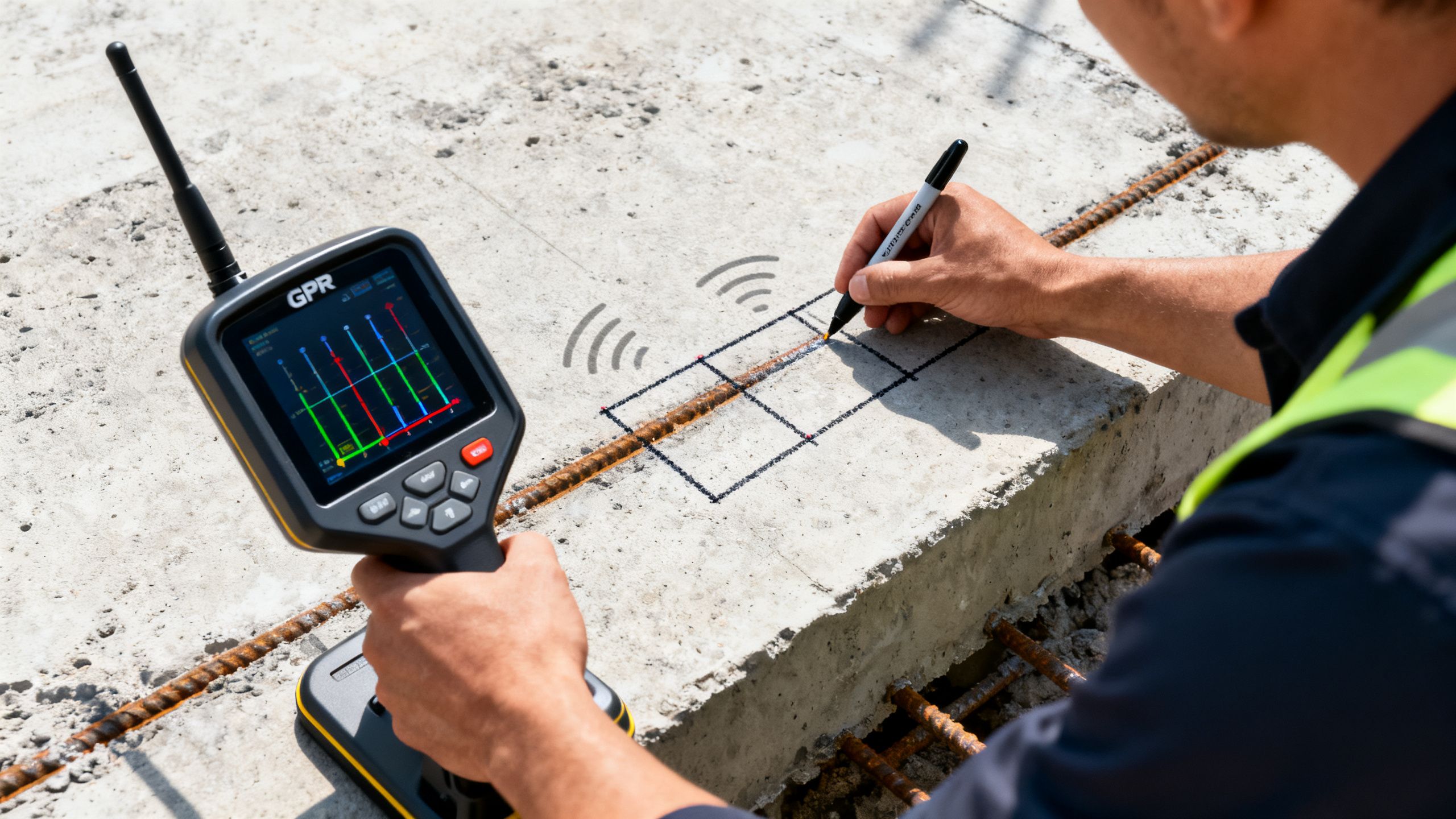
Scanning costs depend on the area, access, reporting requirements and whether the scan is a small local check or a wider survey. Ask for the scan scope and marked results to be clear in the quote; LAP offers free quotes from photos, though a site scan may need to be priced separately.
When Cutting Rebar Needs an Engineer’s Approval
Do not treat every bar as expendable because a core barrel can cut it. Main bars may carry bending or shear forces; distribution steel controls cracking and helps hold the reinforcement arrangement together. The consequences depend on the element, bar position, loading and opening size.
The structural engineer should assess proposed cuts and specify any limits or strengthening. On a commercial site, the principal contractor must also authorise the work under the project controls. LAP’s guide explains when a structural engineer is needed for a new opening.
Post-Tensioned Slabs
Post-tensioned slabs contain high-strength tendons stressed after the concrete has set. Cutting a tendon can release stored force suddenly, damage the slab and create a serious risk to people nearby. Do not drill a post-tensioned slab until tendon locations are confirmed and the responsible engineer has signed off the proposed opening.
Check the building information and consult the structural engineer and principal contractor; a visual check alone cannot rule out tendons. The Drilling and Sawing Association provides industry information, but project-specific tendon location and engineering approval remain necessary before work proceeds.
Is This Your Situation?
| Scenario | What’s different | What to do |
|---|---|---|
| Domestic slab for a soil pipe | A small service core may pass through a relatively thin slab, but the route could still cross reinforcement, pipes or cables. | Confirm slab thickness and what is below, scan the intended position, and check whether the slab is structural or post-tensioned before drilling. |
| Lintel or beam | These elements carry loads, and cutting reinforcement can affect their capacity even if the opening appears small. | Get the structural engineer’s position and written approval for the location and any bar cutting before booking the drilling. |
| Precast concrete panel | Reinforcement layout, prestressing and lifting inserts can vary by unit; a generic assumption about bar positions is unsafe. | Identify the panel and obtain manufacturer or engineer information, then scan and get approval for the exact opening. |
| Commercial M&E penetrations | Multiple openings may need to line up with coordinated services and pass through fire-rated or structurally sensitive areas. | Coordinate drawings, scan and mark the holes, confirm permissions and fire-stopping requirements, and plan water and slurry control around site operations. |
Small holes for services and large cores do not have the same practical constraints. A larger barrel needs a more stable set-up and can encounter more reinforcement, while a small hole may still be unsuitable if it lands on a critical bar, tendon or concealed service.
How Long It Takes and What It Costs
The estimates below are indicative for a single core through roughly 150–200mm of concrete, with straightforward access. Prices are LAP’s extra-hole rates on a visit, excluding VAT; the £150 minimum visit covers the first one or two holes up to 152mm in brick or block. Thicker walls, awkward set-ups, restricted working hours, scanning and making good can add time or cost.
| Core size | Plain concrete time | Heavily reinforced concrete time | Typical price per extra hole (plain / reinforced) |
|---|---|---|---|
| Up to 52mm | 5–10 minutes | 10–20 minutes | £25–£35 / £35–£50 |
| 107–127mm | 8–15 minutes | 15–30 minutes | £35–£50 / £45–£75 |
| 150mm | 10–20 minutes | 20–35 minutes | £50–£80 / £65–£120 |
| 300mm | 15–20 minutes | 30–45 minutes | £90–£150 / £120–£225 |
These are typical per-hole estimates, not a fixed quotation. Reinforced concrete commonly adds around 30–50% per hole compared with plain concrete, because cutting steel takes longer and increases wear on the core barrel. The 300mm timings reflect the job described above; depth, bar density and access can change them.
A minimum visit charge may apply even where a single small hole takes only a few minutes. See LAP’s Bristol diamond drilling cost guide for more detail on hole size, visit time and what can affect the final price.
Reinforced Concrete Core Drilling FAQs
Will a diamond core bit cut through rebar?
Yes. Diamond segments grind through reinforcement as well as concrete, but steel slows the cut and wears the segments faster. On the IKEA project, each 300mm core took about 30–45 minutes through heavily reinforced sections.
Can I use an SDS drill to core through reinforced concrete?
An SDS drill with a suitable masonry bit is for much smaller holes, not a clean 300mm core through reinforced concrete. For core openings, a purpose-built core drill and barrel are the appropriate tools; the set-up must also suit the material and access.
Does hitting rebar weaken the slab?
It can, depending on which bar is cut, the member’s design and the opening location. Never cut rebar without the structural engineer’s or principal contractor’s permission and any specified strengthening measures.
Is wet or dry coring better for reinforced concrete?
Wet coring is commonly preferred for reinforced concrete because water cools the bit and controls dust, while slurry must be contained and cleared. Dry coring may suit some materials or locations with the right equipment and dust extraction, but it is not a universal substitute for wet coring.
How long does a 150mm core take?
As a guide, a 150mm core through 150–200mm of plain concrete may take around 10–20 minutes of drilling; heavy reinforcement may raise that to roughly 20–35 minutes. Set-up, scanning, access and clean-up are additional.
Who checks whether a slab is post-tensioned?
Start with building records and the structural engineer or principal contractor, then arrange suitable scanning to locate tendons. Do not drill until tendon locations are confirmed and the responsible engineer has approved the exact position.
How much more does reinforced concrete core drilling cost?
A typical allowance is about 30–50% more per hole than plain concrete, reflecting slower cutting and extra bit wear. Actual costs depend on diameter, depth, access, scanning and the number of holes; a minimum visit charge may also apply.
What if the core position hits rebar?
Do not move the hole or cut the bar without approval. On the case-study job, the positions had to match the services, so the team confirmed bar cutting with the principal contractor before drilling at the marked locations.
Every core on the IKEA project was cut clean in position, with no slurry left on the live site and no delay to the services installation. Send drawings and photos to LAP Diamond Drilling for a free quote; include the hole sizes, wall or slab thickness, access details and any scan information available.