

Most people think chasing just means cutting a groove for a cable. On the jobs we see, the route, depth and dust control matter just as much as the groove itself.
Wall chasing is the process of cutting a channel into a wall to conceal cables or pipes, which can then be covered during making good.
What Is Wall Chasing?
A chase is a narrow channel cut into a wall so services can be recessed rather than left in surface trunking. It may be made in brick, blockwork, stone or concrete, including through plaster where the finished surface will later be repaired.
Wall chasing is common during a rewire, renovation or first fix. The channel is sized for what needs to go in it—such as cable, conduit or pipe—and its route and depth need to be planned before cutting. You can read more about diamond drilling and the work it is used for.
How a Chase Is Cut
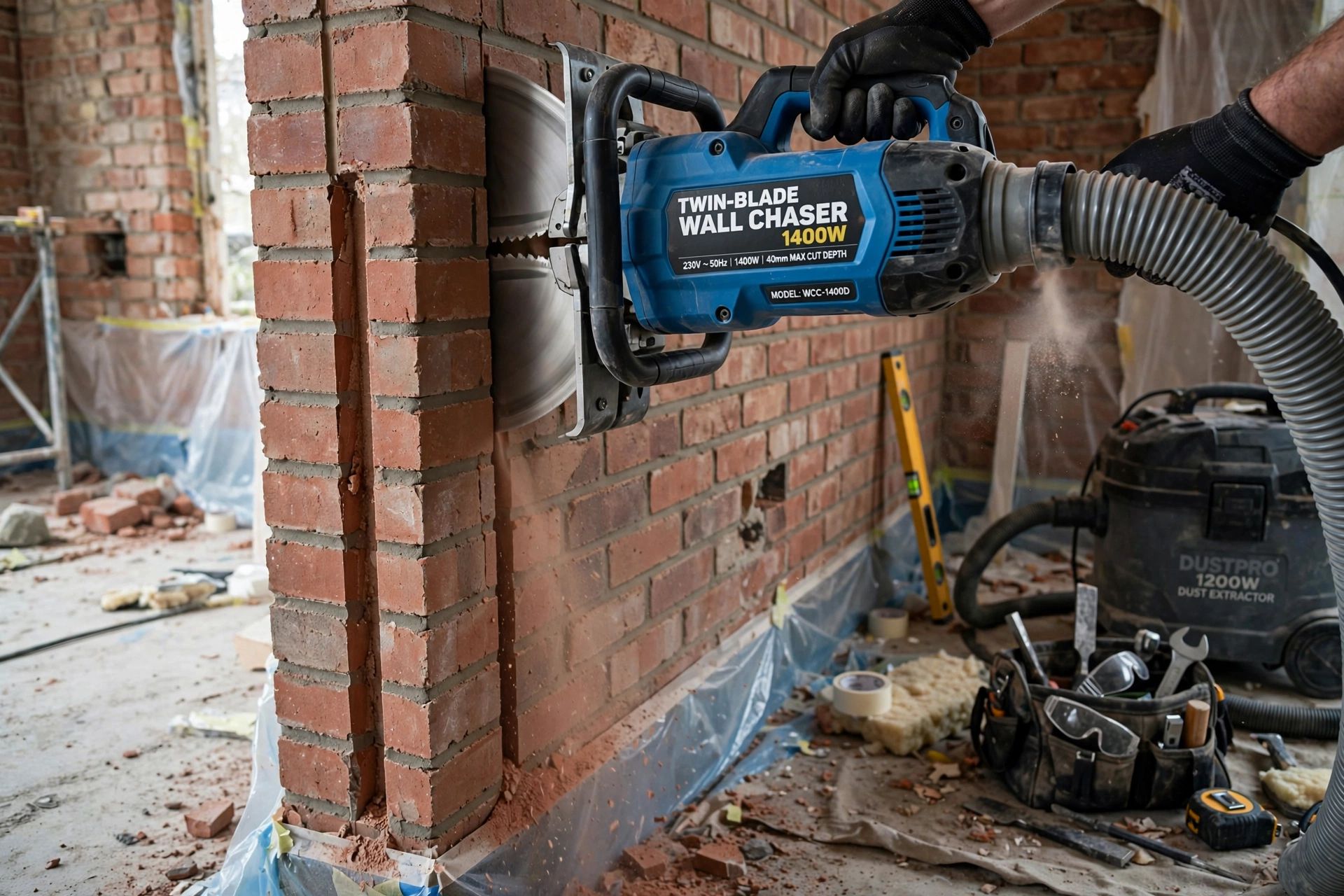
A twin-blade wall chaser uses two parallel blades to cut the edges of a channel to a set depth. A suitable dust extractor is connected to the machine; once the cuts are made, the strip of material between them is removed, often with a chisel or breaker.
On chasing jobs, we see the difference most clearly after the cut: a controlled, even chase usually leaves less material to repair than a groove opened out with a grinder and SDS. The chaser needs a clear run, so corners, edges and the areas close to ceilings or floors may need careful hand finishing. Use dust extraction rather than cutting dry without control; an H-class extractor is commonly specified for this type of work.
Wall Chasing vs Floor Chasing
Wall chasing creates a route in a vertical surface, typically for electrical cables or plumbing. Floor chasing cuts channels into a suitable floor construction, such as screed or a slab, for pipe runs or other services; it is often part of a heating installation connected to an underfloor heating manifold.
The floor construction and the proposed route need checking before cutting. A chase in screed is not the same as a cut into a structural slab, and the latter can affect reinforcement, services or structural capacity. For a discrete opening through a wall or floor rather than a long channel, see what diamond drilling involves.
Where Wall Chasing Is Used
We carry out wall and floor chasing for electricians, plumbers, kitchen fitters, underfloor heating installers and M&E contractors across Bristol and the South West. Typical projects include rewires, new sockets and lighting, data cabling, kitchen and bathroom alterations, extensions and commercial fit-outs.
In homes, a chase may run through brick, blockwork, stone or concrete, or through plaster over the underlying masonry. In kitchens and bathrooms, it can conceal plumbing or heating pipework; on larger projects, floor chasing may provide routes between services and a manifold. The service route, wall construction and what will be installed all influence the method and finish.
Chasing Methods Compared
On chasing jobs, we compare twin-blade diamond wall chasers with extraction, single-blade angle grinders and SDS chiselling by looking at how straight and even the channel is, damage to the surrounding wall, dust, speed and the amount of making good left for the plasterer. The result depends on the material, access, operator and dust controls, but the methods have different typical strengths and limitations.
| Method | Typical finish | Wall damage | Dust | Speed | Best for |
|---|---|---|---|---|---|
| Twin-blade diamond chaser with extraction | Straight, even channel with consistent width and depth | Usually limited to the cut edges; ends and corners may need hand finishing | Lower airborne dust when connected to suitable extraction and used correctly | Fast for suitable, accessible straight runs | Repeated or longer chases in masonry where a consistent channel is needed |
| Angle grinder | Less consistent width and depth; the centre needs breaking out | More likely to chip or damage plaster and masonry either side | High without effective extraction and dust control | Can cut quickly, but opening and tidying the channel adds time | Short, accessible cuts where a chaser cannot be used, with suitable controls |
| SDS chisel | Irregular channel, depending on the material and operator | Greater risk of breaking away material beyond the intended line | Dust and debris can be substantial | Often slower for a neat, continuous chase | Localised removal or finishing corners and areas a chaser cannot reach |
Where Each Method Falls Short
Twin-Blade Wall Chasers
A chaser needs a suitable extractor and enough clear space to run the machine in a straight line. It cannot always reach tight corners or cut right up to ceilings, floors and other obstructions, so those sections may need finishing by hand.
For one short chase, the cost of bringing specialist equipment to site may be disproportionate to the cutting itself. The wall material, access and extraction setup also affect how quickly the work can be done.
Angle Grinders
A grinder with a single blade makes one cut at a time, so the channel width and depth are harder to keep even. The middle must be removed separately, which can leave a rougher edge and more damage for repair.
SDS Chiselling
An SDS chisel is useful for localised removal and finishing, but it is difficult to produce a long, straight, uniform channel by chiselling alone. It can break away plaster or masonry beyond the intended route, increasing the making-good work.
Grinder and SDS work can also generate substantial dust and debris. Cutting should be planned and controlled to reduce exposure to respirable crystalline silica; see the HSE guidance on construction dust and silica. Do not assume an ordinary vacuum or an open window is an adequate substitute for suitable extraction and dust controls. For a different kind of cutting method, see this guide to core drilling versus breaking out.
Depth Limits and Safe Zones
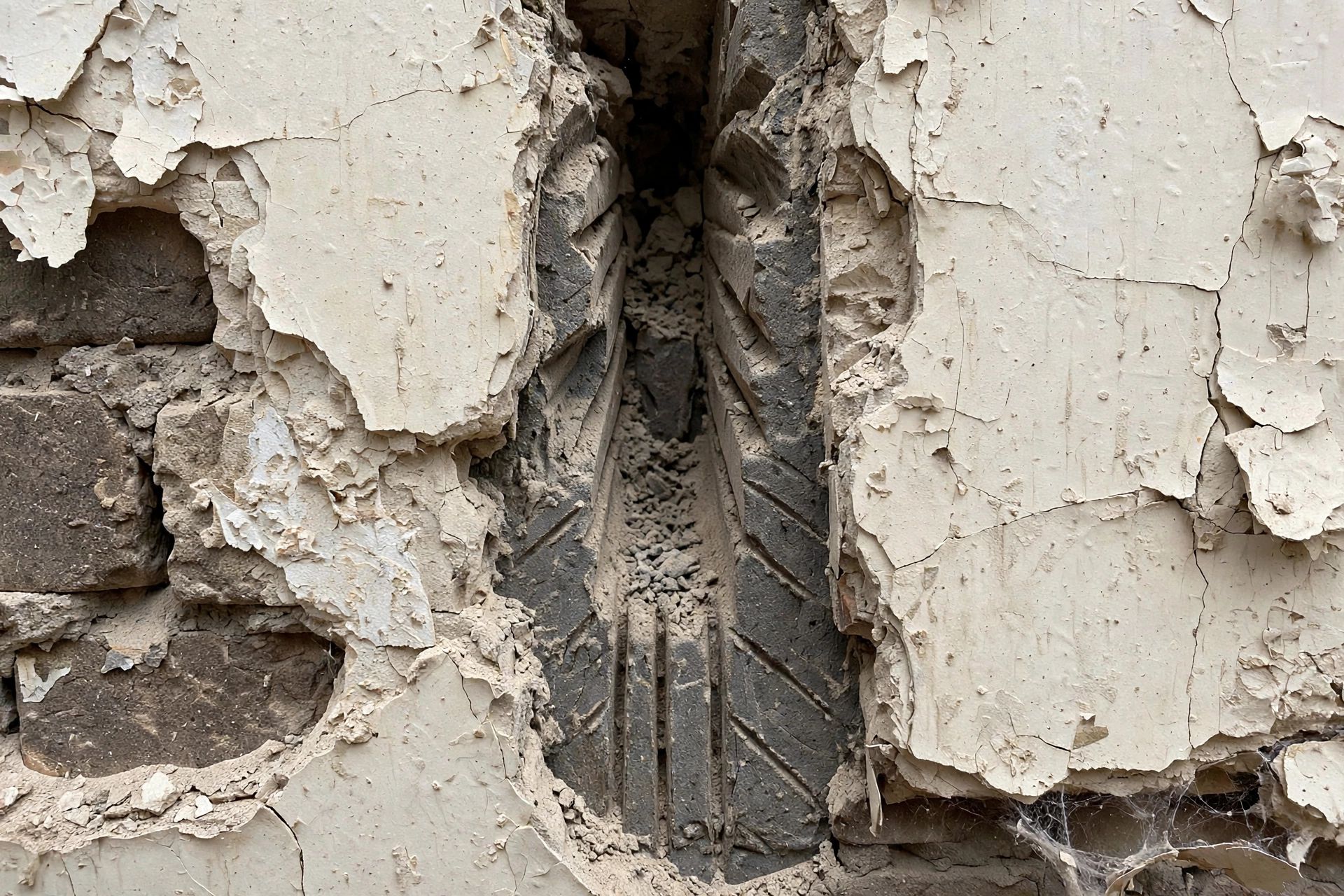
Approved Document A gives guidance on permitted chase dimensions in masonry walls: as a general guide, vertical chases should not exceed about one-third of the wall or leaf thickness, and horizontal chases about one-sixth. These are limits to check against the actual wall construction, not targets to cut to; a structural or site-specific assessment may require shallower or no chasing.
Cable routes should follow the recognised safe zones under BS 7671 and be planned by the electrician. Do not chase deeper than the applicable safe limits or cut horizontally across a load-bearing wall without checking the structural implications. Refer to Approved Document A: Structure and obtain appropriate advice where the wall type or structural role is uncertain.
What Happens After the Chase
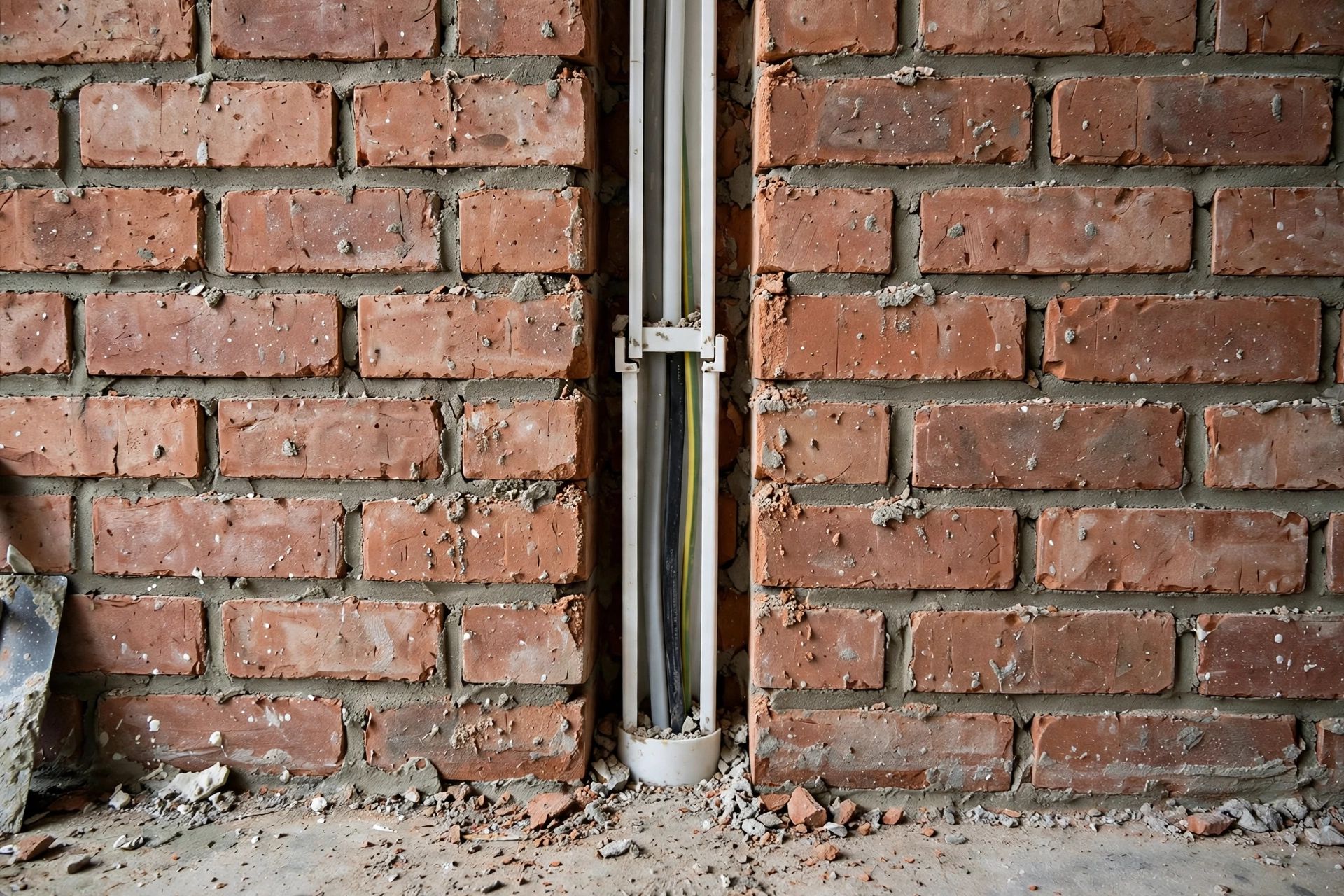
Once the channel is cut and cleared, the electrician or plumber installs the cable or pipe. Depending on the service and specification, cable may be run in conduit or protected with capping before the chase is filled; the relevant trade professional decides what is appropriate.
The chaser’s job is the channel, not necessarily the service installation or final decoration. After the electrician or plumber has completed their work, a plasterer or competent finisher fills the chase, levels the surface and prepares it for decoration. Making good is separate from cutting and may take longer than the chase itself.
What to Know Before You Book
Before arranging a chaser, settle the route and the work that needs to follow. Wall chasing is cutting a neat groove into a wall or floor so cables or pipes can be buried and plastered over; for more than a short run, a dust-extracted twin-blade chaser is generally the better option, provided the wall and route are suitable.
- Mark the proposed route. Show where the chase starts and ends, and identify turns, back boxes and any sections that run close to openings or structural elements. The electrician should plan cable routes within the appropriate safe zones.
- Specify what is going in the chase. Tell the chaser whether it is for cable, conduit, plumbing or heating pipework, and give the required width and depth if these have been confirmed by the installing trade.
- Identify the wall or floor construction. Brick, block, stone, concrete, plaster and screed behave differently. Flag any uncertainty about a load-bearing wall, a structural slab, reinforcement or hidden services before cutting.
- Check access and obstructions. Clear furniture and fittings from the work area and point out tight corners, ceilings, floors, cupboards and other places where a machine may not reach.
- Agree dust control and making good. Ask what extraction will be used, how dust and debris will be managed, and who is responsible for fitting the services and repairing the surface.
LAP Diamond Drilling carries out dust-extracted wall and floor chasing, alongside wet diamond core drilling and sawing. The team is a Drilling and Sawing Association member, with CSCS, IPAF and PASMA credentials, and has completed more than 120 jobs, from single extractor holes to commercial M&E work at sites including Bristol Airport and a Skanska project. LAP has a 5.0 rating from 19 Google reviews and can provide free quotes from photos; pricing depends on chase length, depth, material and access, rather than a single universal rate.
Wall Chasing FAQs
What is a wall chaser?
A wall chaser is a powered cutting tool designed to create a channel in a wall for services such as cables or pipes. A twin-blade model makes two parallel cuts, typically with a dust extractor connected, and the material between the cuts is then removed.
How deep can you chase a wall?
As a general guide, Approved Document A limits vertical chases to about one-third of the wall or leaf thickness and horizontal chases to about one-sixth. The actual safe depth depends on the construction and structural role of the wall, so check before cutting rather than treating those figures as a target.
Can you chase a load-bearing wall?
It may be possible in some cases, but the route, depth and wall construction must be assessed first. Deep or long horizontal chases can weaken masonry, so do not proceed without checking the structural implications.
Is wall chasing messy?
Chasing can create dust and debris, especially when a grinder or chisel is used without effective dust control. A twin-blade chaser connected to suitable extraction helps control dust, but the work area still needs preparation and a plan for handling debris.
Can you chase concrete?
Concrete can be chased with appropriate equipment, but reinforcement, hidden services, thickness and structural function need to be considered first. Some concrete walls or slabs may not be suitable for chasing, or may require a different method.
How long does chasing take?
A short, accessible run can be cut much faster than a long route through hard material, but setting up extraction, protecting the area and hand-finishing corners all add time. Installing the cables or pipes and making good are separate tasks and can extend the overall programme.
Do I need a plasterer after chasing?
Usually, the chase needs filling and the surface needs making good before decoration. The electrician or plumber installs the service; a plasterer or suitable finisher normally repairs and levels the wall afterwards.
Is chasing better than surface trunking?
Chasing conceals services within the wall, while surface trunking keeps them accessible and avoids cutting into the masonry. The right choice depends on the wall, the planned route, structural constraints, finish and how important future access is.
Plan the route first, keep within the applicable depth limits and safe zones, and tell the chaser exactly what the channel needs to accommodate. Send photos of the wall or floor and the marked route to LAP Diamond Drilling for a free quote; if you are comparing contractors, see questions to ask before you compare quotes.