

Most people choose a driller on price and availability, but the problems we get called in to fix rarely come from the price. They come from a handful of questions nobody asked: how will you control the water and dust, will you scan for cables and rebar, what's included in the price, and do you have the insurance and cards to get on site. Five minutes asking those questions saves far more than the difference between two quotes.
This guide is for homeowners, builders, site managers, main contractors, M&E contractors and facilities managers comparing quotes for core drilling, saw cutting or chasing. Use the checklist below to compare the work, safeguards and paperwork as well as the price.
What We've Learned From Fixing Other Jobs
We have completed more than 120 core drilling, saw cutting and chasing jobs across Bristol and the South West, from single extractor holes to commercial M&E work at sites including Bristol Airport and a Skanska project. That work has included jobs where we were called in to finish or put right work another contractor had started.
We compare what customers and main contractors ask before booking with the quotes they receive and the problems we encounter on remedial visits. One example is a core-drilling job where slurry had been allowed to run into a drain: the hole was done, but cleaning up the mess became part of the repair. Our background and approach to diamond drilling explain why setup and control matter as much as the cut itself.
The same checks apply whether you need an extractor fan hole through a house wall, a soil pipe opening, a boiler flue, a door opening in an extension, or a series of penetrations on an occupied commercial site. Structural openings need a separate level of care: the driller should work to the engineer's design and agreed temporary support, not decide the opening details on site.
Questions to Ask a Diamond Driller
- What exact holes, cuts or chases are included? Give the number, diameter or dimensions, wall or floor material, thickness if known, and each location. Ask the driller to confirm these details in writing.
- How will you check for cables, pipes and rebar? Ask whether they will scan the proposed position with suitable equipment, such as a CAT scanner or cover meter, and how they will handle anything detected. Scanning helps inform the plan but does not make hidden services risk-free.
- How will you control water, slurry and dust? For wet drilling, ask about water collection and slurry capture; for chasing or dry work, ask about suitable dust extraction, including an H-class extractor where appropriate.
- What protection and clean-up are included? Confirm protection for floors, furnishings and nearby equipment, who collects the slurry, and how the area will be left. Slurry must not be washed into a drain.
- Does the work need an engineer's design or temporary supports? For a new structural opening, ask what drawings and specifications are needed, who supplies them, and whether Acrow props or other temporary works are part of the agreed plan.
- What insurance and site credentials do you have? Ask for evidence of public liability insurance and check which CSCS, IPAF or PASMA cards are relevant to the work and access arrangements.
- Can you provide RAMS and follow our site process? For commercial or managed sites, confirm the risk assessment and method statement, site induction, permit to work, working hours and any required approvals before the visit.
- What is excluded, and what could change the price? Ask about access, parking, unusual wall construction, extra protection, waste removal and any additional work if the scan or site conditions change the agreed method.
- Can I see reviews or photos of comparable work? Look for examples involving similar materials, hole sizes, access and working environments—not just polished pictures without context.
If you are comparing a core-drilling method with another way of making a hole, this guide to diamond drilling methods and uses can help you frame the discussion with the contractor.
What a Good Quote Includes
A useful quote lets you see what the contractor plans to do, how they will manage the work, and what is outside the price. For a saw cut, for example, length, depth, access and slurry control can all affect the total; see this guide to concrete cutting prices in Bristol for common cost factors.
| Quote item | Why it matters | Red flag if missing |
|---|---|---|
| Number, size and position of holes, cuts or chases | Confirms the scope and lets you compare like for like | A general line such as “core drilling” with no dimensions or locations |
| Material and thickness assumptions | Brick, block, concrete and reinforced concrete can call for different tooling and time | No allowance for unknown construction or a way to agree changes |
| Scanning and service checks | Helps identify cables, pipes and reinforcement before work starts | No mention of checks or an assumption that the wall is clear |
| Water, slurry and dust controls | Protects occupants, equipment and finishes, and keeps waste contained | No collection plan, or a suggestion to let slurry run away |
| Access, protection and clean-up | Makes clear how the working area will be prepared and left | No mention of occupied rooms, protection or who clears the mess |
| Structural design and temporary works, where needed | Structural openings must follow an engineer's design and agreed support plan | The contractor proposes to choose the opening or support details without design information |
| Site paperwork and credentials, if required | Helps avoid failed inductions or a cancelled visit | No confirmation of RAMS, cards, permits or insurance when the site requires them |
| Exclusions, VAT and possible extras | Shows what the quoted total does and does not cover | Unclear whether the price includes travel, waste, VAT or additional holes |
| Programme and completion expectations | Helps coordinate trades, occupants and site access | No agreed arrival window or time for the work and clean-up |
For a rough sense of typical pricing, LAP's guide lists a £150 minimum visit, extra holes at £25–£150, a half day at £250–£300 and a full day at £450–£550, all ex VAT. These are guide figures, not a substitute for a written scope: hole size, material, access and control measures can alter a quote.
Red Flags to Watch For
The Cheapest Quote With No Exclusions
A low headline price can be fair if the scope is genuinely simple, but it is hard to assess if scanning, water collection, slurry removal or clean-up are left out. Those items may then become extras on the day, making the final bill higher than a quote that appeared more expensive.
Ask for the same written scope from each bidder: sizes, positions, number of holes, material assumptions, protection, disposal and exclusions. It is a useful reminder to compare what is included rather than choosing on the first number alone.
No Plan for Water, Slurry or Dust
For wet diamond drilling, ask how the contractor will capture water at the hole and collect the slurry rather than spreading it across the room or allowing it into drains. A water collection ring and wet vacuum can help contain the work, but the setup must suit the surface, position and access.
For chasing and dry cutting, ask what dust extraction will be used. Respirable crystalline silica is a serious construction dust hazard; the HSE construction dust guidance explains the need to control exposure at source. A vague promise to “open a window” is not a dust-control plan.
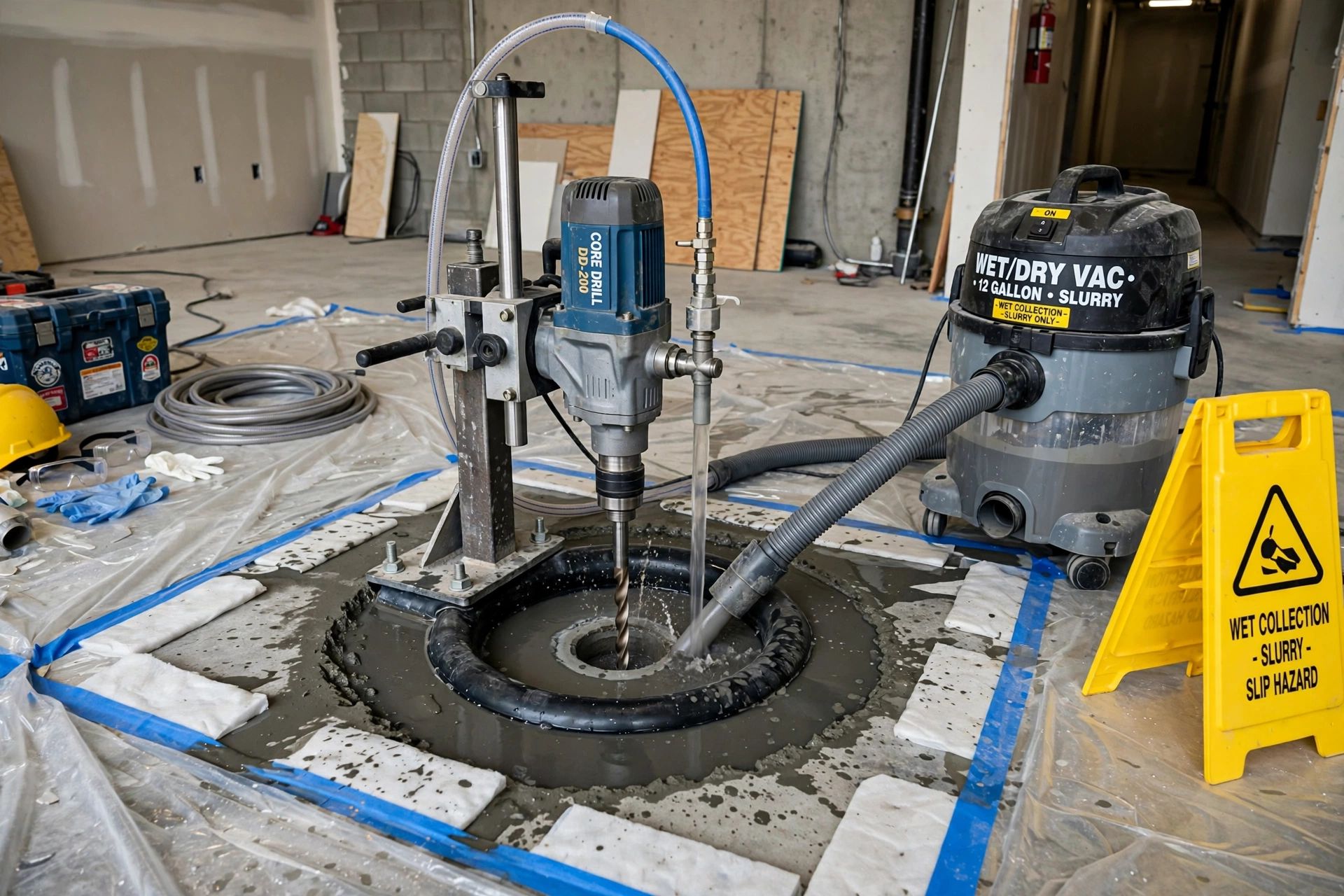
Wet and dry methods suit different materials and conditions, so ask the contractor to explain the proposed approach. This overview of wet versus dry diamond drilling outlines the basic considerations.
No Scanning or Structural Checks
Before drilling, the proposed position should be checked for services and reinforcement using suitable equipment and a method appropriate to the site. A scan cannot identify every possible hazard, so the contractor should also ask about service drawings, the building and any known alterations.
A new doorway or other structural opening is not simply a larger hole. Get the structural engineer's design and agree the sequence and temporary support before cutting; this guide to planning a new structural opening can help you understand why the method needs to be considered early.
Missing Insurance, Cards or RAMS
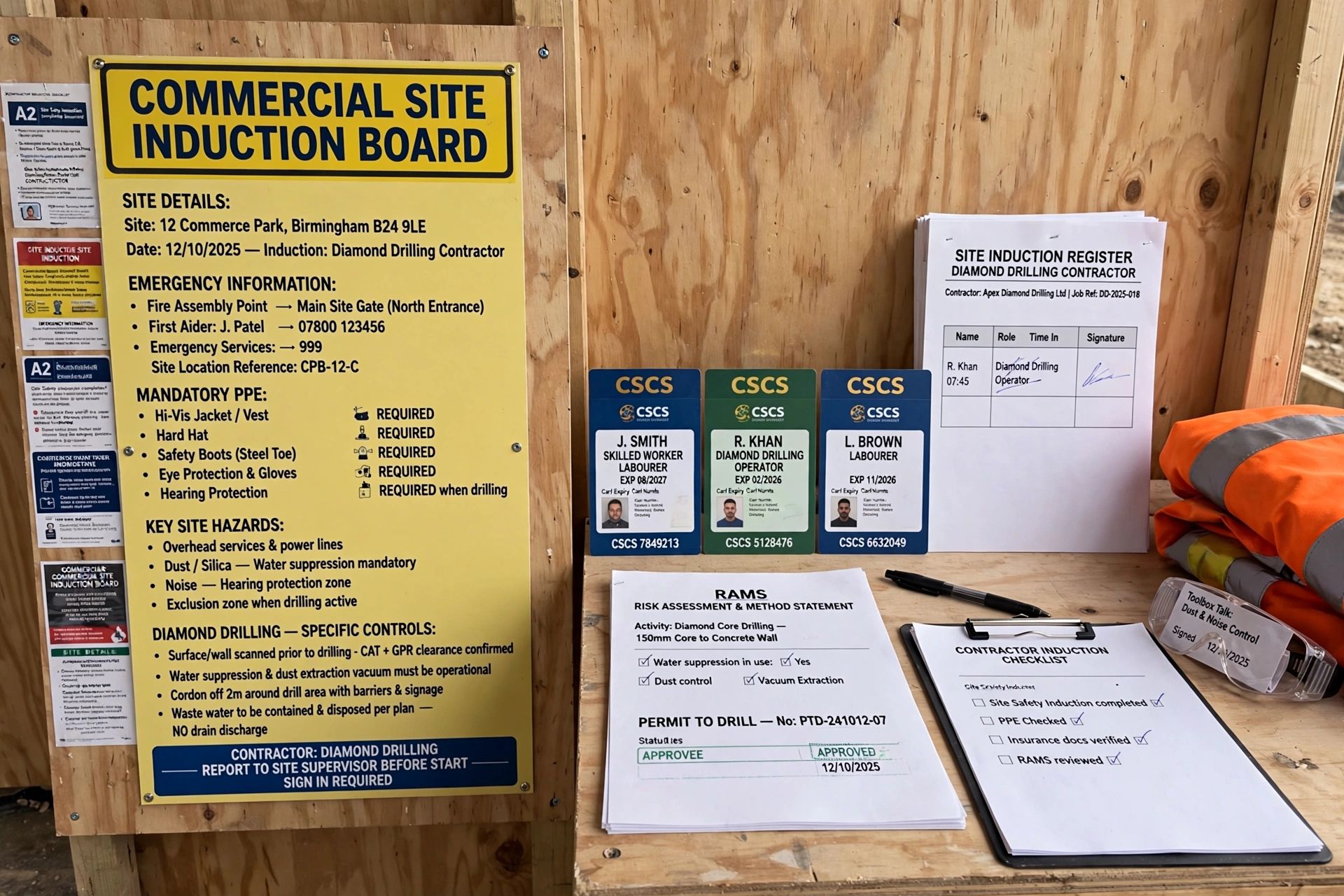
On a commercial site, missing paperwork can stop the job at the gate. Ask for public liability insurance details, the relevant CSCS card and any IPAF or PASMA qualifications needed for the access equipment or working-at-height arrangements; confirm the site's own requirements rather than assuming one card covers every task.
Request RAMS in time for review, alongside any site induction and permit to work requirements. Membership of a trade body is another useful point to check: the Drilling and Sawing Association is the UK trade association for the industry, but membership should sit alongside—not replace—checking experience, insurance and job-specific controls.
Vague Quotes You Can't Compare
“Core drilling, £X” does not tell you whether the quote covers a 50 mm hole or a larger penetration, how many holes are included, where they go, or what wall thickness and material the contractor has assumed. Missing positions can also lead to a hole that is technically complete but not useful to the plumber, electrician or installer.
Ask for a marked-up photo or drawing with dimensions and locations, plus written exclusions. If the position or size is still undecided, agree how changes will be approved and priced before work starts.
Commercial and M&E Sites: Extra Checks
For a main contractor, facilities manager or M&E contractor, confirm the site induction, permit to work, working hours and access arrangements before booking. Share service drawings and the proposed hole schedule early, and check whether the contractor needs to attend a coordination meeting or submit RAMS for approval.
Occupied buildings need a plan for noise, water, dust, access routes and protection of people and equipment. Agree who isolates or confirms services, how the area will be handed back, and whether the work must fit around tenants, patients, staff or other trades.
For overhead work or access platforms, check that the people and equipment meet the site's IPAF or PASMA requirements. Where a penetration affects fire stopping, ask who is responsible for reinstatement and documentation; do not assume that drilling alone includes those tasks.
How to Compare Quotes Like for Like
Use this printable checklist before you appoint a contractor. LAP Diamond Drilling uses the same kinds of questions when preparing free quotes from photos, but the checklist applies to any driller.
- ☐ Scope: Same number of holes, cuts or chases, with dimensions and positions written down.
- ☐ Material: Wall, floor or slab type and thickness assumptions stated; unknowns discussed.
- ☐ Scanning: Service and reinforcement checks described, with the proposed locations agreed.
- ☐ Method: Wet drilling, sawing or dust-extracted chasing explained for the job.
- ☐ Containment: Water collection, slurry capture and dust controls specified; no slurry into drains.
- ☐ Protection and clean-up: Floors, finishes, furnishings and equipment covered; clean-up responsibilities clear.
- ☐ Structural work: Engineer's design and temporary support arrangements agreed before a structural opening.
- ☐ People and paperwork: Public liability insurance, relevant cards, RAMS, induction and permits checked where needed.
- ☐ Price: VAT, travel, disposal, exclusions and potential extras stated; payment terms understood.
- ☐ Evidence: Reviews and photos of similar work available, and the contractor can answer practical questions.
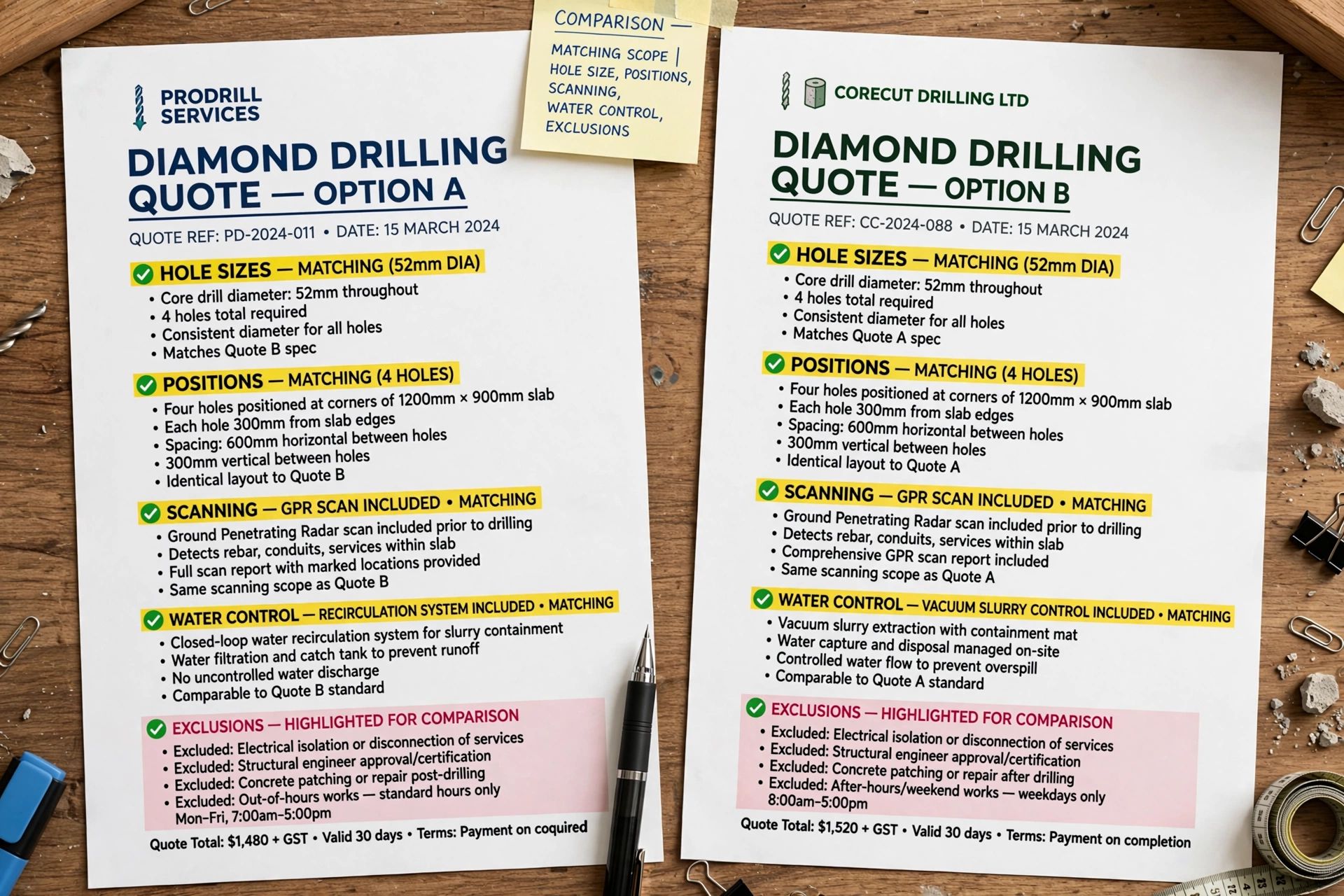
The verdict is straightforward: choose a driller who writes down the sizes, positions and exclusions; explains water, slurry and dust control; scans before drilling; asks for the engineer's design for structural openings; and can show relevant insurance, credentials and examples of similar work. Compare price only after the quotes cover the same job.
Diamond Drilling Contractor FAQs
What qualifications should a diamond driller have?
There is not one card that proves someone is suitable for every drilling job. Check relevant experience, a current CSCS card where required, and IPAF or PASMA qualifications if the work involves access equipment or platforms; also confirm the contractor's method and paperwork fit the task.
Do diamond drillers need insurance?
Ask for evidence of public liability insurance and check that the cover is appropriate for the work and the site. Commercial clients may have additional onboarding or insurance requirements, so confirm those before booking.
What is the Drilling and Sawing Association?
The Drilling and Sawing Association (DSA) is a UK trade association for the drilling and sawing industry. Membership can be one useful credibility check, but it does not replace reviewing the contractor's insurance, references, method and job-specific controls.
Should a quote include clean-up?
It should say what clean-up means: for example, collecting slurry, removing dust and leaving the immediate work area tidy. Confirm who takes away waste and protect nearby finishes; slurry must not be washed into drains.
Can a driller quote from photos?
Often, photos and measurements are enough for an initial written quote for straightforward work, such as an accessible extractor fan hole. Share the material, thickness if known, hole size, position, access and any site constraints; a visit or further checks may still be needed before the method and final price are confirmed.
Do I need a structural engineer for a new opening?
If the opening affects a load-bearing wall or other structural element, get advice and a design from a suitably qualified structural engineer before work begins. The contractor should ask for that information and agree the cutting sequence and temporary supports rather than inventing a structural solution on site.
Why are diamond drilling quotes so different?
Quotes may include different hole sizes, quantities, scanning, access, water or dust controls, protection, waste handling and paperwork. Ask each contractor to price the same written scope and list exclusions so you can see whether a lower price reflects a simpler job or missing work.
What should RAMS include?
RAMS means risk assessment and method statement. For drilling or cutting, the documents should address the work sequence, service and reinforcement checks, equipment, access, water or dust control, slurry and waste handling, protection, hazards and emergency arrangements, as well as relevant site rules and permits.
Send photos, dimensions and the proposed positions to LAP Diamond Drilling for a written quote that sets out sizes and exclusions: request a quote.