The tool matters less than dust control and the depth stop. On our Bristol chasing jobs, a twin-blade chaser with H-class extraction cut a straight 25 mm chase in blockwork at roughly 3–4 metres an hour with almost no dust in the room; a grinder-and-bolster run was quicker to start but left a rougher channel, needed more filling and filled the room with silica dust. On floors, a walk-behind saw was several times faster than hand-held cutting in a concrete slab, while a hand-held saw with a shallow depth stop was the safer choice in thin screed over underfloor heating.
Those findings come from chasing for electricians, plumbers and builders across Bristol, using several tools and materials. This guide compares wall and floor chasing, explains depth and dust considerations, and helps you choose a method for the job.
Wall Chasing vs Floor Chasing: The Difference
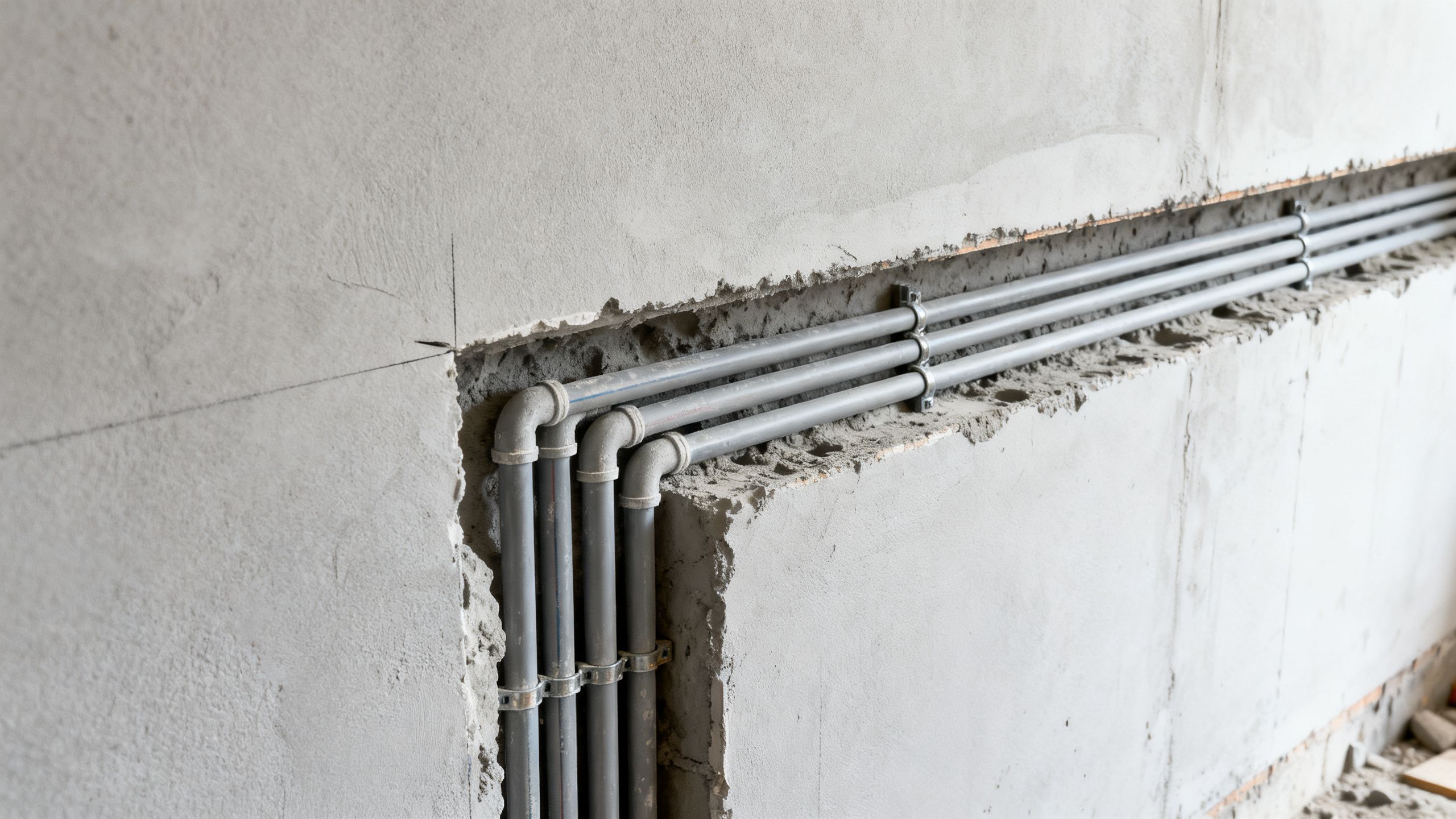
Wall chasing cuts a narrow channel into a wall to recess electrical conduit, cables or plumbing pipes. Electricians use chases for first-fix wiring and back boxes; plumbers may need them for smaller water or heating pipes, while larger waste pipes and soil pipes usually need a different route or more space.
Floor chasing creates a channel in a floor or screed, often for heating pipes, electrical runs or services between rooms. The material matters: sand-cement screed is usually thinner and softer than a concrete slab, and may conceal underfloor heating (UFH) pipes or cables that must not be struck. Brick, blockwork, plaster and concrete also cut differently, so the right blade and depth setting vary by job.
For service options in the region, see wall and floor chasing services.
How We Compared the Methods
We compared the tools on real kitchen and bathroom refits and floor jobs around Bristol. The methods included twin-blade wall chasers with H-class extraction, angle grinders with a bolster, SDS chasing chisels, a walk-behind floor saw and a hand-held saw for screed. Materials included brick, blockwork, sand-cement screed and concrete slabs.
On comparable runs, we judged metres cut per hour, consistency of depth, dust in the room, the straightness and finish of the chase, and how much making good the next trade needed. We also noted practical limits such as corner access, setup time, floor clearance and the risk of concealed services. The results are job observations, not laboratory measurements: material hardness, chase dimensions and access change the time and finish.
What Tool Reviews Say vs What We Found on Real Jobs
Tool reviews often compare blade diameter, motor wattage and maximum cutting depth. Those specifications help with tool selection, but they do not tell you whether the dust is contained, whether the chase stays at a consistent depth or how much filling the plasterer will need afterwards.
| What tool reviews say | What we found on real jobs |
|---|---|
| A higher-powered tool cuts faster. | The setup and material matter too. A wall chaser cut blockwork at roughly 3–4 metres an hour, while an uncontrolled grinder could take longer overall once cleanup and filling were counted. |
| A larger blade gives a deeper cut. | The useful depth is limited by the service, wall structure and safe chase limits—not just blade size. |
| Dust extraction is an accessory. | Extraction or water suppression changes whether the work is suitable for an occupied or finished room. Dry cutting without effective control can spread respirable silica dust. |
| The cleanest cut comes from the most powerful tool. | A set depth and steady, straight pass often matter more. A walk-behind saw was several times faster than hand-held cutting on a slab, but not the right choice for every floor. |
For work involving concrete and masonry dust, read the HSE construction dust guidance.
Wall Chasing Methods Compared
For long, straight runs in blockwork, a twin-blade wall chaser is usually the most controlled option. Grinders and SDS tools can be useful for short sections, corners and adjustments, but the finish and dust control depend heavily on the setup and operator.
Twin-Blade Wall Chaser With Extraction
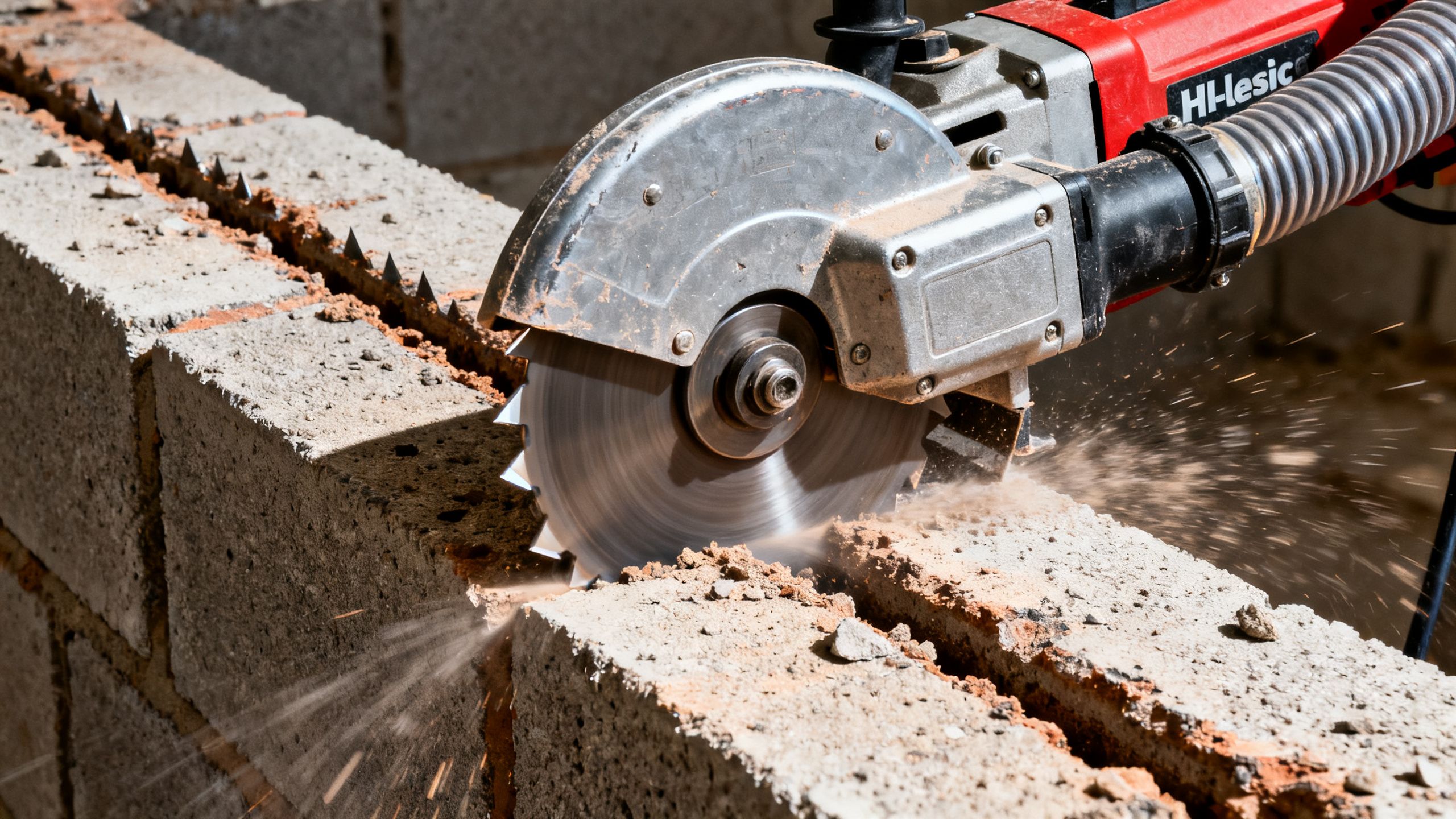
Method: Two parallel diamond blades make the sides of the chase; the material between the cuts is removed with a chisel. A depth stop helps keep the cut consistent, and an attached extractor collects dust at the tool.
Where it works: It suits straight runs in brick and blockwork for conduit and smaller pipes. On our blockwork jobs, a 25 mm chase took roughly 3–4 metres per hour, including the practical pace of keeping the cut controlled.
Where it fell short: The tool cannot cut neatly right into internal corners, tight reveals or around obstructions. Hard engineering brick can slow progress and wear blades, so a grinder may still be needed for short finishing cuts.
Dust and finish: With effective H-class extraction, it produced a straight, consistent channel with very little visible dust in the room. Extraction needs to be matched to the tool and maintained; a blocked filter or poor seal reduces performance.
Typical speed: Around 3–4 metres an hour for the 25 mm blockwork chase observed in our work. Dense brick, deeper cuts, corners and setup can reduce that rate.
For more on the cutting method, see diamond drilling and concrete cutting services.
Angle Grinder and Bolster or SDS Chisel
Method: An angle grinder with a masonry blade makes one or two cuts, and a bolster or SDS chasing chisel removes the material between them. An SDS chasing chisel can also open a channel directly, though it gives less precise control than two guided cuts.
Where it works: This is useful for a short chase, a corner the wall chaser cannot reach, or a small adjustment around a back box. An electrician doing a short run themselves can make sense if they have the right tool, understand the wall and can control dust safely.
Where it fell short: A grinder can leave uneven sides and a ragged base, especially when the operator has to freehand the line. Chiselling can spall the edges or remove more material than planned; both methods take care around services and structural masonry.
Dust and finish: Dry grinding without effective on-tool extraction creates substantial silica dust and is not an acceptable dust-control approach. With suitable extraction or water suppression, the exposure can be reduced, but the finish may still need more making good than a wall-chaser cut.
Typical speed: A grinder can be quicker to set up for a very short cut, but there is no reliable fixed metres-per-hour figure across different materials and operators. Include chiselling, cleanup and filling when comparing it with a chaser.
For cost factors when planning specialist cutting, see this guide to diamond drilling prices in Bristol.
Floor Chasing Methods Compared
Before cutting a floor, identify what lies in or below it. A concrete slab needs a saw suited to concrete and a planned route; screed can be thinner, and UFH pipes may sit close to the surface. Never assume the floor is clear from appearance alone.
Floor Saw in Concrete
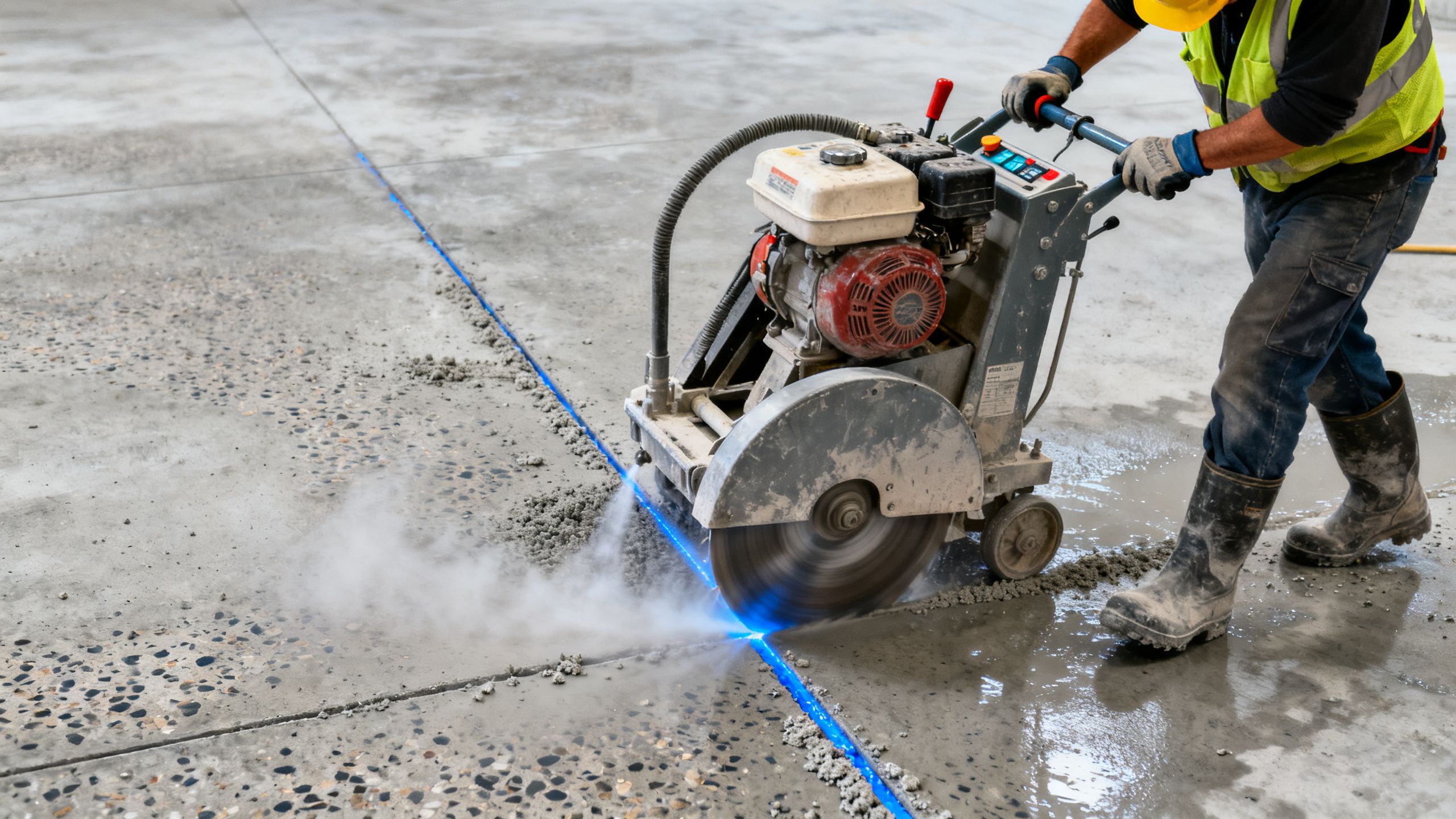
Method: A walk-behind floor saw uses a diamond blade to cut a straight channel in a concrete slab. Depending on the setup, cutting may use water suppression or a suitable extraction system; the route and depth should be planned before work starts.
Where it works: It is suited to long, accessible runs in a slab where a consistent cut and higher production rate are needed. On our slab jobs, it was several times faster than hand-held cutting.
Where it fell short: The saw needs a clear route, space to manoeuvre and suitable access. Setup and water management take time, and bringing it in for a single one-metre chase can be disproportionate.
Dust and finish: Water suppression can control dust at the blade, but slurry must be contained and cleaned up. A properly guided saw gives a straight, consistent cut; the channel still needs breaking out and suitable disposal of waste.
Typical speed: Several times faster than hand-held cutting on the slab jobs we compared, though the actual rate depends on concrete strength, depth, access and setup. Short runs can lose the benefit to preparation time.
See the details of concrete saw cutting services.
Hand-Held Saw in Screed
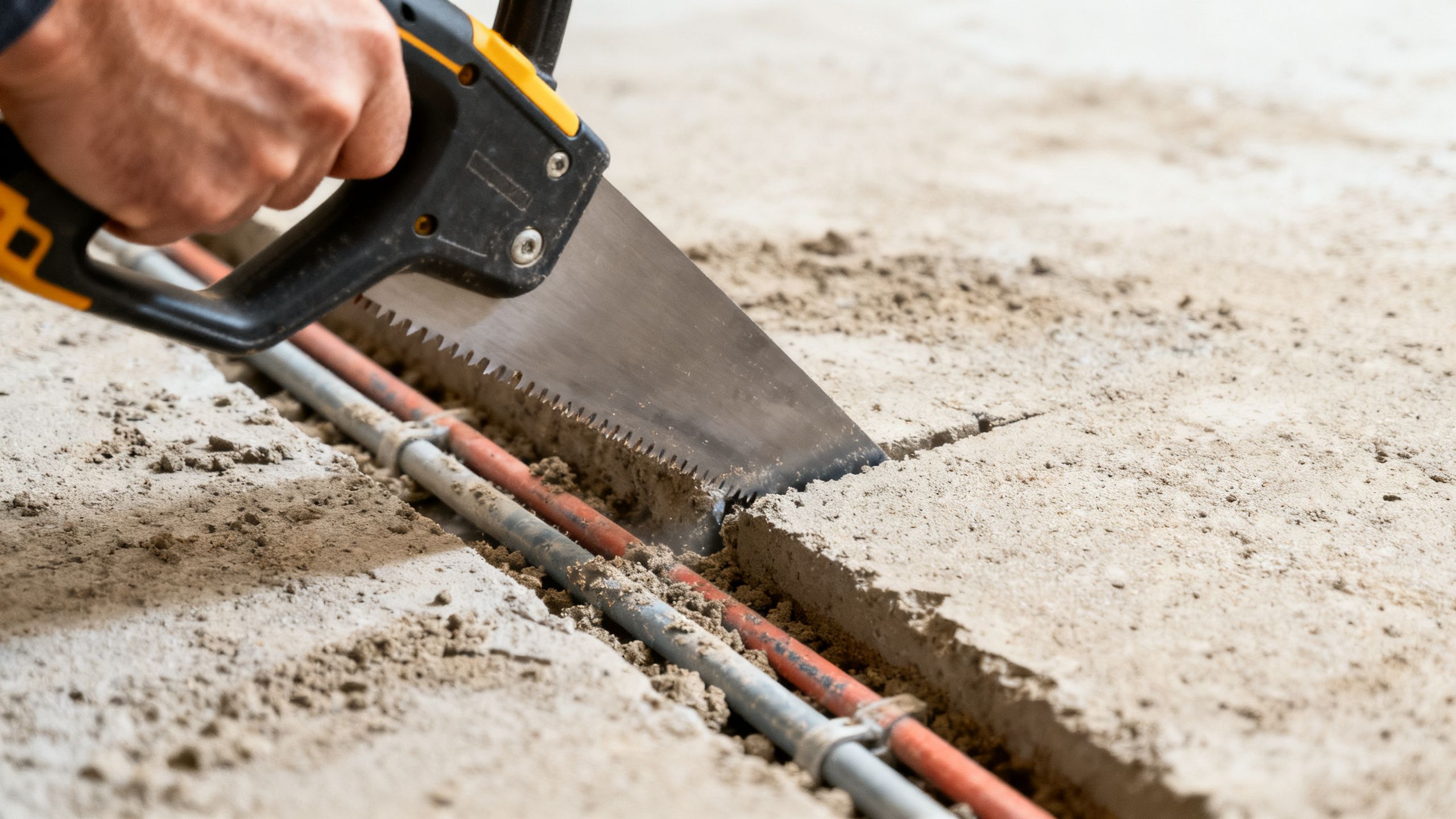
Method: A hand-held saw with a suitable blade cuts a narrow channel in screed. A shallow depth stop is important where the screed is thin or services may be close beneath it.
Where it works: It can suit short runs in accessible sand-cement screed, particularly where a large floor saw would be awkward. On thin screed over UFH, a carefully set shallow cut is preferable to a deeper pass—but the position of the pipes must be established first.
Where it fell short: It is slower than a walk-behind saw on a long concrete run and may be difficult to keep perfectly straight over distance. A depth stop does not make an unknown UFH layout safe to cut.
Dust and finish: Use effective on-tool extraction or water suppression appropriate to the tool and site. A steady pass can give a neat channel, but screed can break away at the edges if it is weak, thin or cut too aggressively.
Typical speed: Suitable for short, controlled runs rather than high output. The pace depends on screed thickness, hardness and how cautiously the operator must work around known services.
Where Each Method Fell Short
Every method has a limit; matching the tool to the material and access is more useful than choosing by blade size alone.
Twin-Blade Wall Chaser
It struggled in corners, tight reveals and hard engineering brick, where a grinder was still needed to finish the line. It also needs a suitable extractor and clear access to run straight.
Angle Grinder and Bolster or SDS Chisel
The grinder-and-bolster approach started quickly but left a rougher chase and more filling on the jobs we observed. A grinder without effective on-tool extraction can spread silica dust through a finished room, while an SDS chisel can chip beyond the intended line.
Walk-Behind Floor Saw
A floor saw needs room to reach and manoeuvre, a clear route and a plan for water or dust control. It is often overkill for a short, isolated chase, especially when setup takes longer than cutting.
Hand-Held Saw in Screed
Hand-held cutting is slower for long floor runs and gives less consistent results if the saw wanders. In thin screed, the larger concern is striking UFH pipes or cables hidden close below the surface.
Hiring a Specialist
Specialist cutting usually costs more than doing one short chase yourself, and scheduling the work adds another step to a programme. For long runs, hard materials or slab work, the cleaner cut and controlled depth may reduce rework and disruption; for a simple short chase, the extra cost may not be worthwhile.
Chase Depth, Safe Zones and Dust Rules
Chase depth is not simply a tool setting. The wall’s construction, structural role, services being installed and the designer’s requirements all matter. Approved Document A guidance sets limits for chases in masonry walls: vertical chases should generally be no deeper than one third of the wall thickness, and horizontal chases no deeper than one sixth. These limits do not replace a structural assessment, and some walls or locations may need stricter limits.
For electrical cables, BS 7671 safe-zone rules govern where concealed cables may run. They are not a licence to cut a chase anywhere within a zone: follow the wiring design, use appropriate protection and confirm the route with the responsible electrician. Pipe cover and chase dimensions also depend on the pipe, fittings and specification. This article is not electrical or structural advice; confirm depths and routes with the designer before cutting.
The Approved Document A guidance on structure explains structural requirements, including considerations for chases in walls. For cutting masonry or concrete, the HSE identifies respirable crystalline silica as a serious health risk. Use effective on-tool extraction with an appropriate M- or H-class system, or suitable water suppression; never dry-cut concrete or block without effective dust control. Keep others out of the dust zone and follow the tool and extractor instructions.
Decision Table: Which Method for Which Job
| Factor | Wall chaser | Grinder/SDS | Floor saw |
|---|---|---|---|
| Speed | Good on long, straight wall runs; about 3–4 m/hour for the observed 25 mm blockwork chase | Quick to start on a short cut, but chiselling and making good add time | Several times faster than hand-held cutting on accessible slab runs; setup takes time |
| Dust | Low visible dust with effective H-class extraction | High if dry-cut without effective extraction or water suppression | Controlled with suitable water suppression or extraction; manage slurry where wet-cutting |
| Depth control | Good with a working depth stop | Less consistent when freehand; SDS chiselling can overrun | Consistent with a planned setup and suitable blade depth |
| Finish | Straight, parallel sides; usually less filling | Often rougher and more variable | Straight cut, though the channel still needs breaking out |
| Noise | Noisy; extraction adds another noise source | Noisy, with impact noise from chiselling | Noisy and disruptive, particularly indoors |
| Cost | Tool and extractor investment; practical for repeated runs | Lower setup cost for a short DIY job, but dust control must be addressed | Higher setup and access needs; less economical for a tiny chase |
| Best for | Long, straight chases in brick or blockwork | Short runs, corners and adjustments | Long, accessible runs in concrete slabs |
Who Should Use Which
| Scenario | Recommended method | Why |
|---|---|---|
| One or two short chases in plaster or soft block | An electrician’s wall chaser with suitable extraction; a grinder or SDS tool for a small corner detail | A tradesperson with the right equipment can handle a short run without arranging a separate cutting visit. Keep dust control and chase depth in the plan. |
| Full rewire with multiple straight wall runs | Twin-blade wall chaser with extraction | It gives more consistent channels and can reduce making good across repeated runs. |
| Kitchen pipe runs in hard brick or blockwork | A wall chaser for straight sections, with a specialist tool for difficult material or awkward access | Hard brick and corners can slow a standard chaser; the route and pipe dimensions should be agreed before cutting. |
| A long run in a concrete slab | Walk-behind floor saw, planned by a suitably equipped cutting contractor | It is faster on a clear slab run and can provide a straight cut at a controlled depth. Confirm services and structural requirements first. |
| A short route in screed over UFH | Do not cut until the pipe layout and safe depth are confirmed; use a hand-held saw with a shallow stop only where the design permits | A shallow stop helps control the cut, but cannot protect an unknown heating pipe. |
For a short DIY chase, hiring a specialist can cost more than doing the work yourself, and availability may affect the schedule. For a full rewire, hard masonry or slab cutting, the cost can be offset by straighter cuts, controlled depth and less cleanup.
LAP Diamond Drilling works across Bristol and the South West, with founder Liam Palmer and a team holding DSA membership and CSCS, IPAF and PASMA credentials. The team uses on-tool water or H-class extraction for dust control and cuts clean, straight chases at a set depth ready for the next trade. LAP has a 5.0 rating from 19 Google reviews and offers free quotes from photos; send photos or contact the team for a quote.
Wall and Floor Chasing FAQs
How deep can you chase a wall?
Approved Document A guidance gives general masonry chase limits of up to one third of wall thickness for vertical chases and one sixth for horizontal chases. The wall’s structure and the designer’s instructions may require less depth, so confirm the route and dimensions before cutting.
Can you chase a concrete floor?
Yes, where the floor design and service route allow it, but first establish slab thickness, reinforcement, embedded services and structural constraints. A floor saw is generally more productive for a long, accessible run; never cut a slab on assumption alone.
What dust rules apply when chasing?
Cutting brick, block and concrete can release respirable silica dust. HSE guidance calls for effective controls such as on-tool extraction or water suppression; use a suitable M- or H-class extractor where specified and do not dry-cut without effective control.
Can you chase near underfloor heating?
Only after the UFH pipe or cable layout and permitted depth have been confirmed. In thin screed, a hand-held saw with a shallow depth stop was the safer method in our comparison, but a stop cannot make it safe to cut over an unknown pipe.
How much does it cost to hire a chaser or a specialist?
A short DIY chase may cost less if you already have suitable equipment and extraction, while hiring a specialist adds labour and scheduling. For specialist cutting prices and the factors that affect them, see the Bristol diamond drilling cost guide.
Is plaster or blockwork better for a deeper chase?
Plaster is a surface finish, not a guide to how deep you can safely cut into the wall behind it. Once you reach brick or block, structural limits apply; confirm the wall construction and required service depth with the designer.
Are horizontal chases allowed?
Horizontal chases are subject to tighter general depth guidance than vertical ones: up to one sixth of wall thickness in the Approved Document A guidance for masonry. Their length, location and effect on the wall also matter, so do not treat that figure as approval for every wall.
Should I use a wall chaser or grinder for one short run?
For one or two short chases in plaster or soft block, an electrician with a wall chaser and extractor can make sense; a grinder may help with a small corner detail. Our comparison found that a grinder was quicker to start but left a rougher chase and more dust when not effectively controlled, so factor in cleanup and making good too.
For short chases, a properly equipped tradesperson may be the practical choice; for long runs, hard masonry or slab cutting, use a method designed for controlled depth and dust. Send photos, the chase lengths and the material to LAP Diamond Drilling for a free quote through the contact page.