

Most people ask how long it takes to drill a hole, but the drilling is usually the quick part. A 107mm extractor hole through a brick cavity wall takes about 10 to 15 minutes to cut; the rest of the visit is getting in, protecting the room, setting up water collection, checking for pipes and cables, and confirming the position. Ask how long the visit takes, not just how long the hole takes, and send photos first so the work can be planned.
This guide explains what affects the time for extractor fans, cooker hoods, soil and waste pipes, boiler flues, air conditioning, floor and ceiling holes, reinforced concrete and commercial M&E work. The timings table below gives typical cutting times and visit lengths.
Why the Drilling Is the Quick Part
A hole is only one part of a drilling visit. For a typical 107mm extractor hole through a brick cavity wall, cutting takes about 10 to 15 minutes, while the visit is about an hour once set-up, protection, checks and clean-up are included.
For example, the first 20 to 30 minutes may go on protecting the room, positioning the drill and arranging water collection. The cut then takes about 10 to 15 minutes; the remaining visit time covers the checks, handling slurry and packing away. These are approximate stages, not a promise that every job follows the same clock.
That preparation is why a specialist diamond core drilling service can be quicker overall than rushing the cut and having to correct a misplaced or untidy opening. Wet drilling also controls dust, with water collection and slurry management planned before work starts.
How Long Each Job Takes
| Job | Material | Typical cutting time | Typical visit length |
|---|---|---|---|
| 107mm extractor fan hole | Brick cavity wall | 10–15 minutes | About 1 hour |
| 127mm soil pipe hole | Block wall | 10–15 minutes | About 1 hour |
| 152mm cooker hood duct | Brick or block | 15–20 minutes | 1–1.5 hours |
| 150mm core | Plain concrete | 15–20 minutes | 1–1.5 hours |
| 300mm core | Heavily reinforced concrete | 30–45 minutes | Half a day for a few cores |
| 10+ service holes | Mixed commercial materials | Varies | A full day |
These are planning estimates, not guaranteed durations. Wall thickness, access, the location of services, water collection and the number of holes all affect the visit. A soil pipe or flue route also needs the right diameter and position agreed before drilling begins.
Where the Time Actually Goes
Set-Up and Protection
Sheets, moving furniture, placing a water collection ring or extraction system and getting the drill square usually take 20 to 30 minutes before the first cut, whatever the hole size. In a finished kitchen, that means protecting worktops and cabinets and positioning the equipment so slurry does not reach the floor or adjoining room.
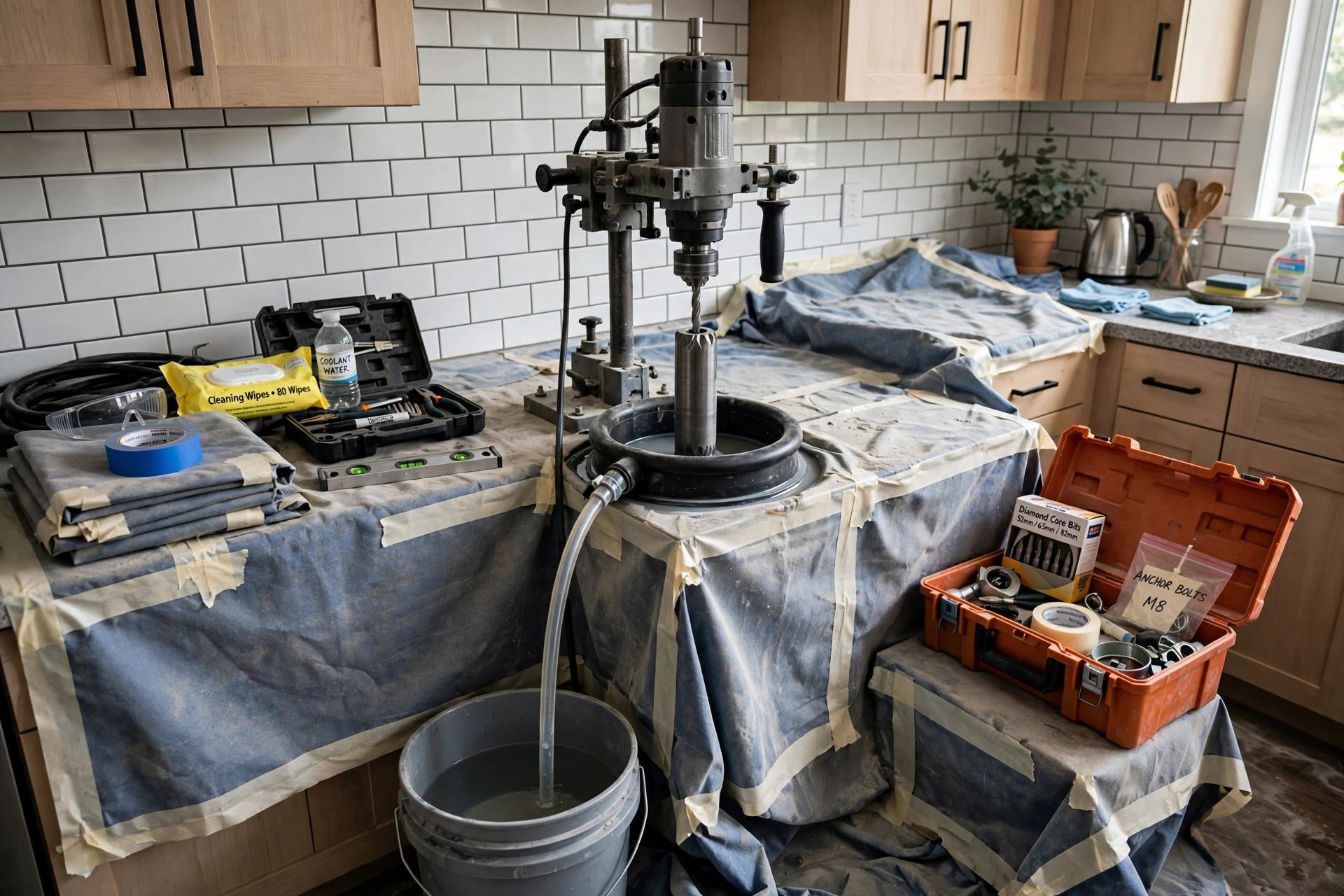
Wet drilling keeps dust to a minimum, but it still needs careful water and slurry control. The HSE construction dust guidance explains why dust control matters on construction work; wet methods are a practical way to control dust during concrete coring.
The Material
Plain brick and blockwork generally cut faster than dense concrete. Reinforcement adds another variable: a 300mm core in heavily reinforced concrete may take 30 to 45 minutes to cut, compared with 15 to 20 minutes for a 150mm core in plain concrete.
A cover meter or other suitable checks can help identify reinforcement before the cut. For more detail on the materials and considerations involved, see this guide to core drilling through reinforced concrete.
Hole Size and Depth
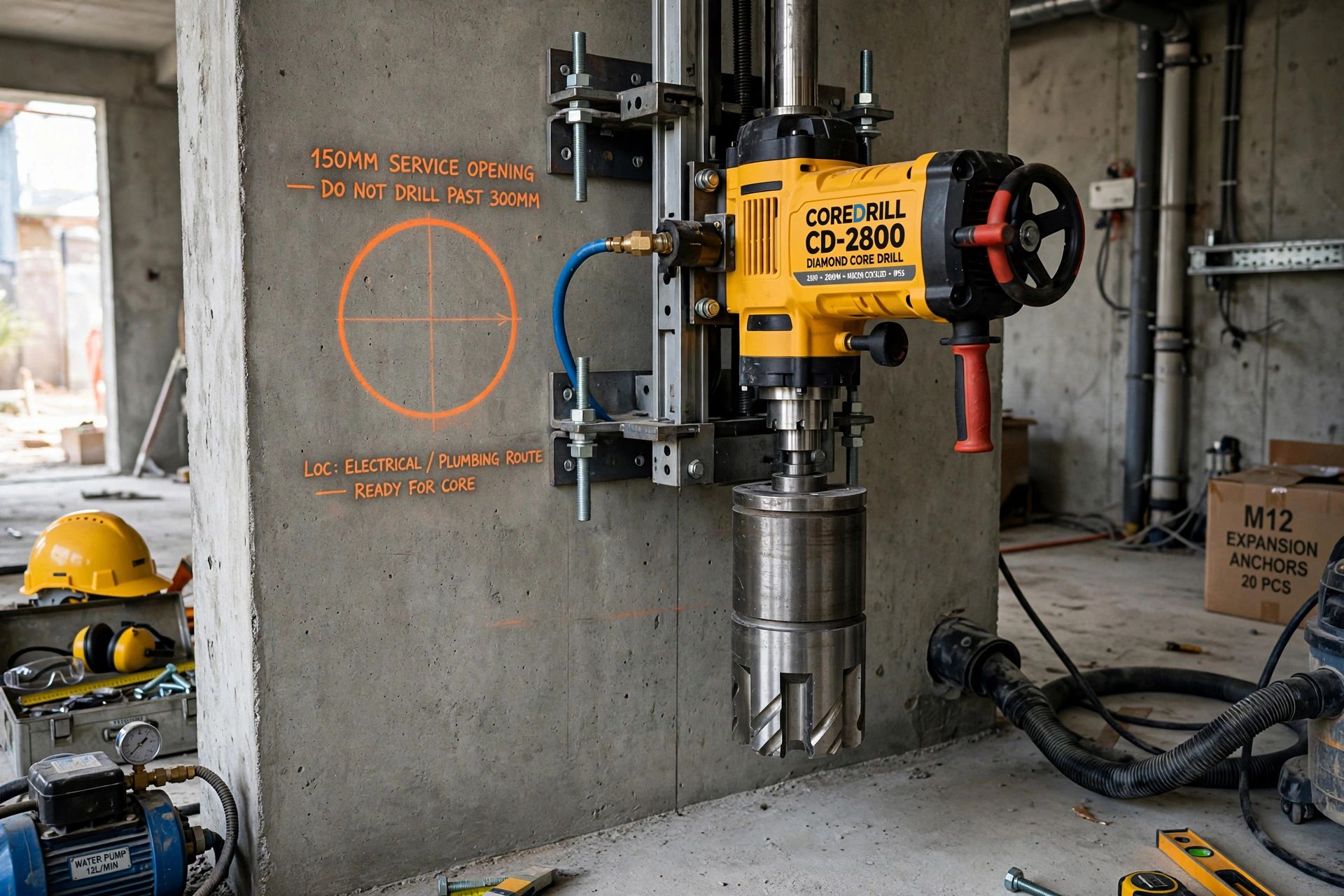
A small opening through a 100mm block wall is a different task from a large core through a thick wall or slab. Larger diameters and greater depth mean more material to cut, and the drill may need a rig-mounted set-up rather than handheld equipment.
A handheld diamond core drill can suit some smaller holes where the material and access allow it. A rig-mounted drill is used where the hole, material or conditions call for a stable, securely fixed set-up; anchoring and positioning take preparation, but help keep the core straight.
Access
An open wall at waist height is easier to set up at than a ceiling, a tight cupboard or a position reached from a ladder. The driller needs room to position the machine, manage water and slurry, and work safely without damaging nearby finishes or equipment.
A hole through a floor or ceiling may also need access and protection on the opposite side. Tell the drilling team whether that area is occupied, finished or difficult to reach so the visit plan accounts for it.
Checks Before We Cut
Before drilling, the position needs to be confirmed and checked for hidden pipes, cables and rebar. A CAT scanner and a cover meter can help with those checks, but they do not replace sound judgement, site information or structural advice where required.
A few minutes spent confirming the opening with the homeowner, builder or engineer is time well spent. Never skip scanning or structural checks to save time: striking a service or drilling an unapproved structural opening can create far greater delays and risks.
When Hole Size Does Decide the Time
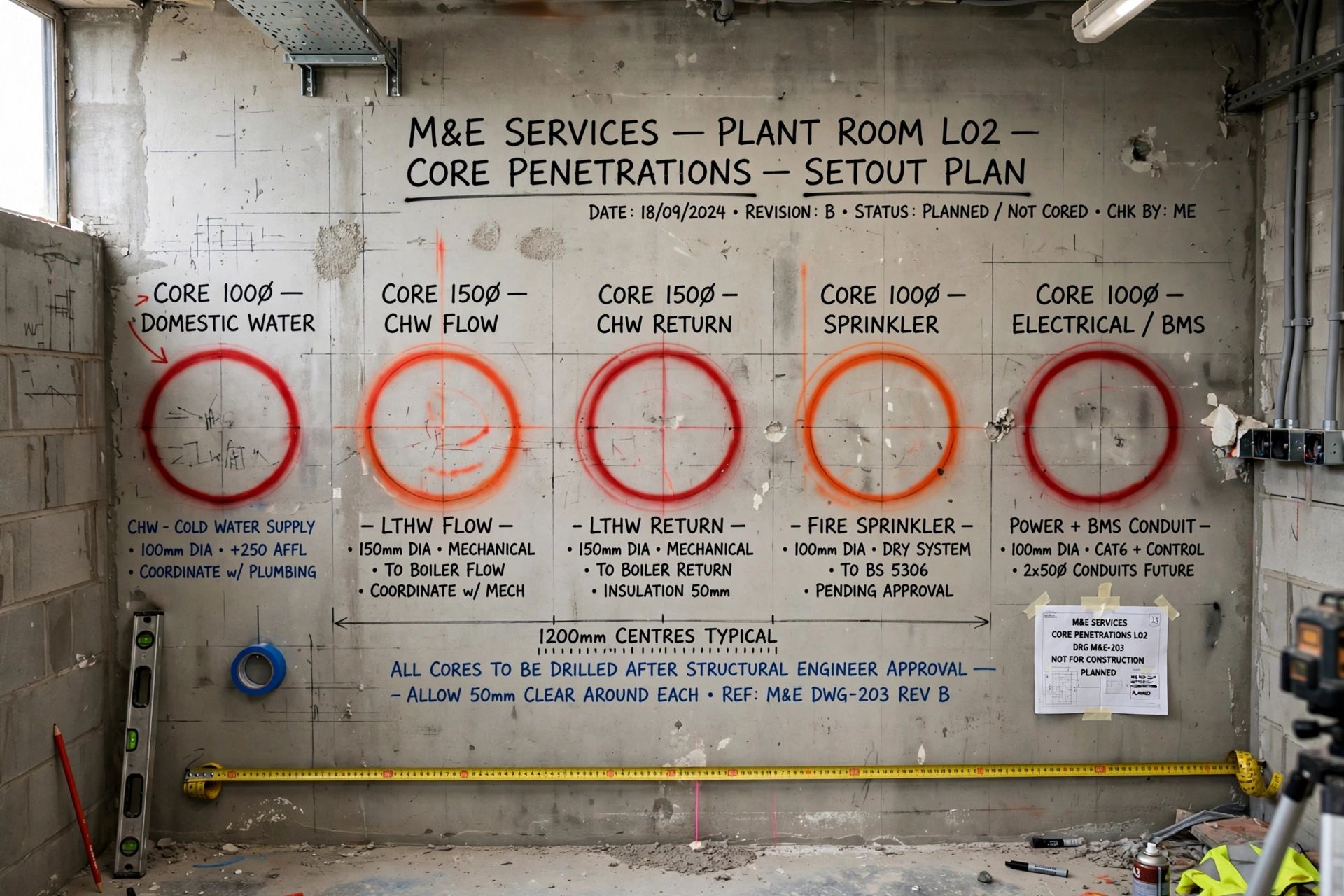
Hole size and material really do drive the time on jobs with many openings. On a commercial project with dozens of service penetrations, set-up is shared across the work, so cutting time per hole becomes a much larger part of the overall programme.
The same is true of very large cores—300mm and up—in heavily reinforced concrete. The cutting itself can take 30 to 45 minutes for a 300mm core, and a few such cores can occupy half a day. A row of planned openings also needs coordinated positions, suitable access and agreement about what lies beyond the wall.
How to Get an Accurate Time for Your Job
- Send photos of both sides of the wall or floor, with the proposed hole positions marked. Include the surrounding area so access and protection needs are visible.
- Give the hole sizes and construction details. Tell us the diameter, wall or slab thickness, and whether you know it is brick, blockwork, concrete or reinforced concrete.
- Describe what is on the other side. Mention a finished room, outside wall, ceiling, floor void or nearby services, and explain how the driller will access the location.
- Group holes into one visit where possible. One set-up for several openings is usually more efficient than arranging separate visits.
- Agree the time and price before booking. LAP Diamond Drilling can assess photos and provide a free quote, helping you plan the visit around the other trades.
LAP carries out wet diamond core drilling with water collection and slurry control. The company is a Drilling and Sawing Association member, with CSCS, IPAF and PASMA credentials, and has completed 120+ jobs, from single extractor holes to commercial work at Bristol Airport and on a Skanska project. You can read more about the Drilling and Sawing Association and its industry work.
What It Costs
LAP’s guide gives a £150 minimum visit charge. Additional holes are typically £25–£150, while a half day is £250–£300 and a full day £450–£550, all ex VAT; the final quote depends on the job details and agreed scope.
Grouping holes can reduce the cost because protection, positioning and equipment set-up are shared across the work. For example, several service openings in one area may make better use of a visit than booking each hole separately. See the Bristol diamond drilling cost guide for more on how hole size and visit time affect price.
How Long Does Diamond Drilling Take? FAQs
How long does it take to drill an extractor fan hole?
A 107mm extractor hole through a brick cavity wall typically takes 10 to 15 minutes to cut. Allow about an hour for the visit, including protection, set-up, checks and clean-up.
How long does a core hole in concrete take?
A 150mm core in plain concrete typically takes 15 to 20 minutes to cut, with a visit of around 1 to 1.5 hours. A 300mm core in heavily reinforced concrete can take 30 to 45 minutes to cut.
Can you drill several holes in one visit?
Yes. Grouping holes means the team can share set-up and protection across the work, which is often more efficient than separate visits. For 10 or more service holes in mixed commercial materials, plan for a full day.
How long does clean-up take?
Clean-up is included in the visit estimate, but its duration varies with the amount of slurry, the water collection set-up and the finishes around the hole. Ask for the expected visit length rather than estimating from cutting time alone.
Do I need to be home?
Someone should be available to provide access and confirm the hole positions, unless you have made another arrangement with the contractor. For a commercial or managed site, arrange access and any required permits before the visit.
How far ahead should I book?
Booking availability depends on the schedule and the job requirements. Send photos, hole sizes and access details when requesting a quote so the work can be assessed and coordinated with your plumber, kitchen fitter or M&E team.
Does reinforced concrete take longer?
It can. The amount and position of rebar, the core diameter and concrete thickness affect cutting time; as a guide, a 300mm core in heavily reinforced concrete takes 30 to 45 minutes to cut. Keep scanning and any required structural checks in the plan.
The drilling is usually the quick part; the visit is what you need to plan. Send photos and hole sizes to LAP Diamond Drilling for a free quote and an estimate of the time on site.