

People shopping for concrete cutting usually ask for a price per metre, but for most jobs that's the wrong way to compare quotes. LAP Diamond Drilling's domestic and small commercial visit prices are £250–£300 for a half day and £450–£550 for a full day, ex VAT. This guide is for homeowners, builders, groundworkers, plumbers and small commercial clients planning work in Bristol and across the South West; LAP can often provide a quote from photos.
Why Price Per Metre Is the Wrong Question
A short, deep cut in reinforced concrete may take longer than several metres of shallow cutting in an open slab. For many small jobs, the visit price reflects the time spent setting up, cutting and managing water and slurry—not simply the length of the cut. The right saw and the conditions on site matter too; learn about diamond drilling methods and where they are used.
LAP Diamond Drilling visit prices
- Half day: £250–£300, ex VAT
- Full day: £450–£550, ex VAT
- Minimum visit: £150, ex VAT
These are visit prices, not a guaranteed price for every job. The cut’s depth, material, reinforcement, access and slurry arrangements all affect how much can be completed during the visit. LAP uses wet diamond cutting with slurry control and can advise whether the job is suited to a wall saw, floor saw or ring saw.
Concrete Cutting Costs by Job Type
The table below shows the main factors to discuss when asking for concrete cutting prices in Bristol. It does not give per-metre or per-opening rates: the details of the cut and the site determine the work involved.
| Job type | Typical saw | What affects the price | What's usually extra |
|---|---|---|---|
| Door or window opening in a brick, block or concrete wall | Wall saw on a track; sometimes a ring saw | Wall thickness, reinforcement, access for fixing the track, cut sequence and slurry collection | Structural design, propping, lintel, breaking out, lifting and removal, making good |
| Opening in a concrete slab | Floor saw or ring saw | Slab thickness, reinforcement, cut depth, access and whether the section can be lifted out | Breaking out, lifting, disposal and repairs to the surrounding finish |
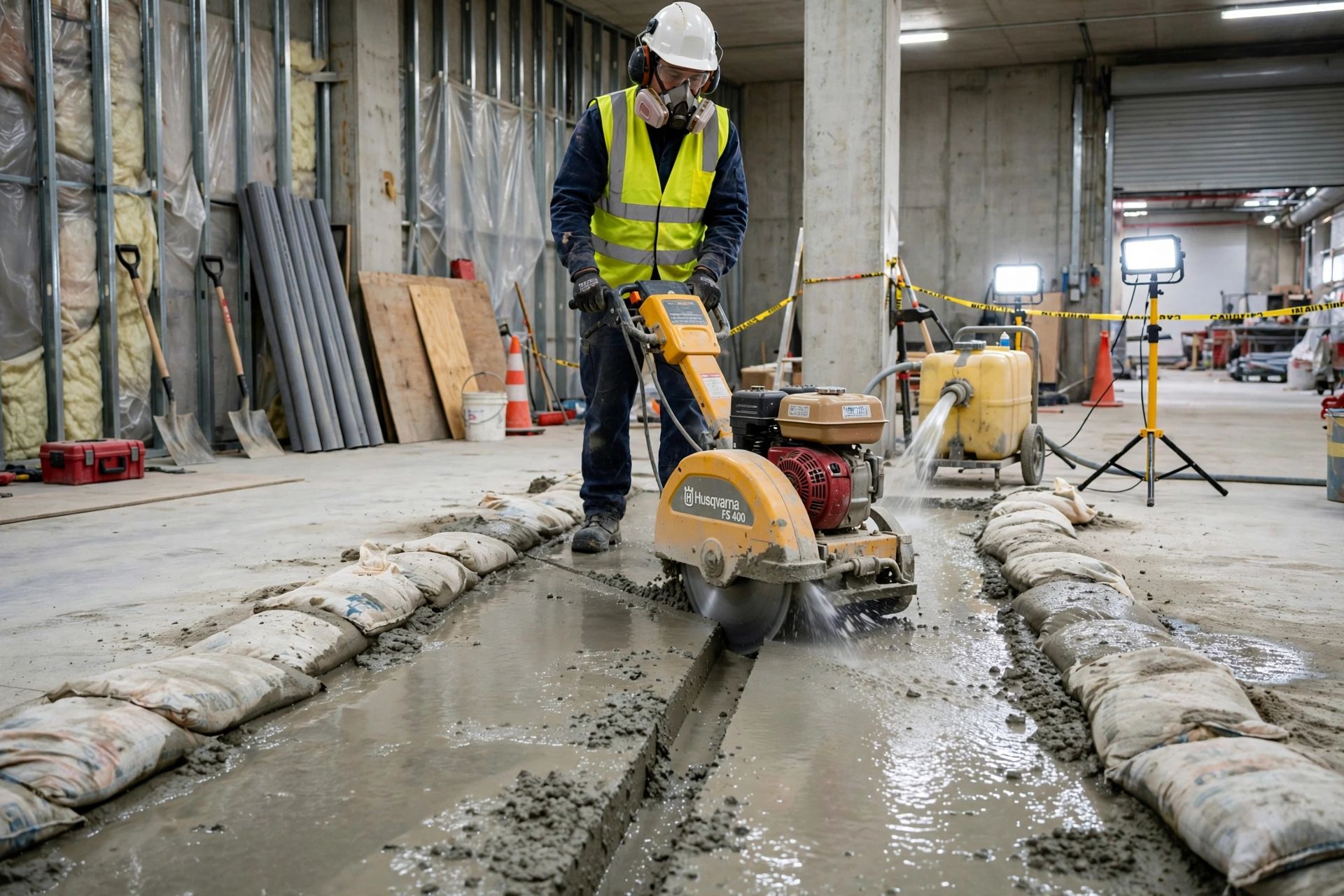
| Drain or soil-pipe trench in a floor | Floor saw | Trench length and depth, screed and slab thickness, services, access and slurry control | Excavation, breaking out, soil removal, pipework and reinstatement |
| ACO channel in a garage, yard or commercial floor | Floor saw | Channel length, cut depth, slab and mesh or rebar, drainage layout and access | Excavation, channel supply and installation, spoil removal and making good |
| Garage or driveway slab cuts | Floor saw | Slab thickness, reinforcement, cut pattern, outside access and whether the work is trimming or joint cutting | Breaking out and removing concrete, disposal and repairs to edges |
| Trimming or joint cutting in a commercial floor | Floor saw | Number and length of cuts, depth, floor type, working hours and space to set up | Lifting out, disposal, traffic management and repairs to the floor |
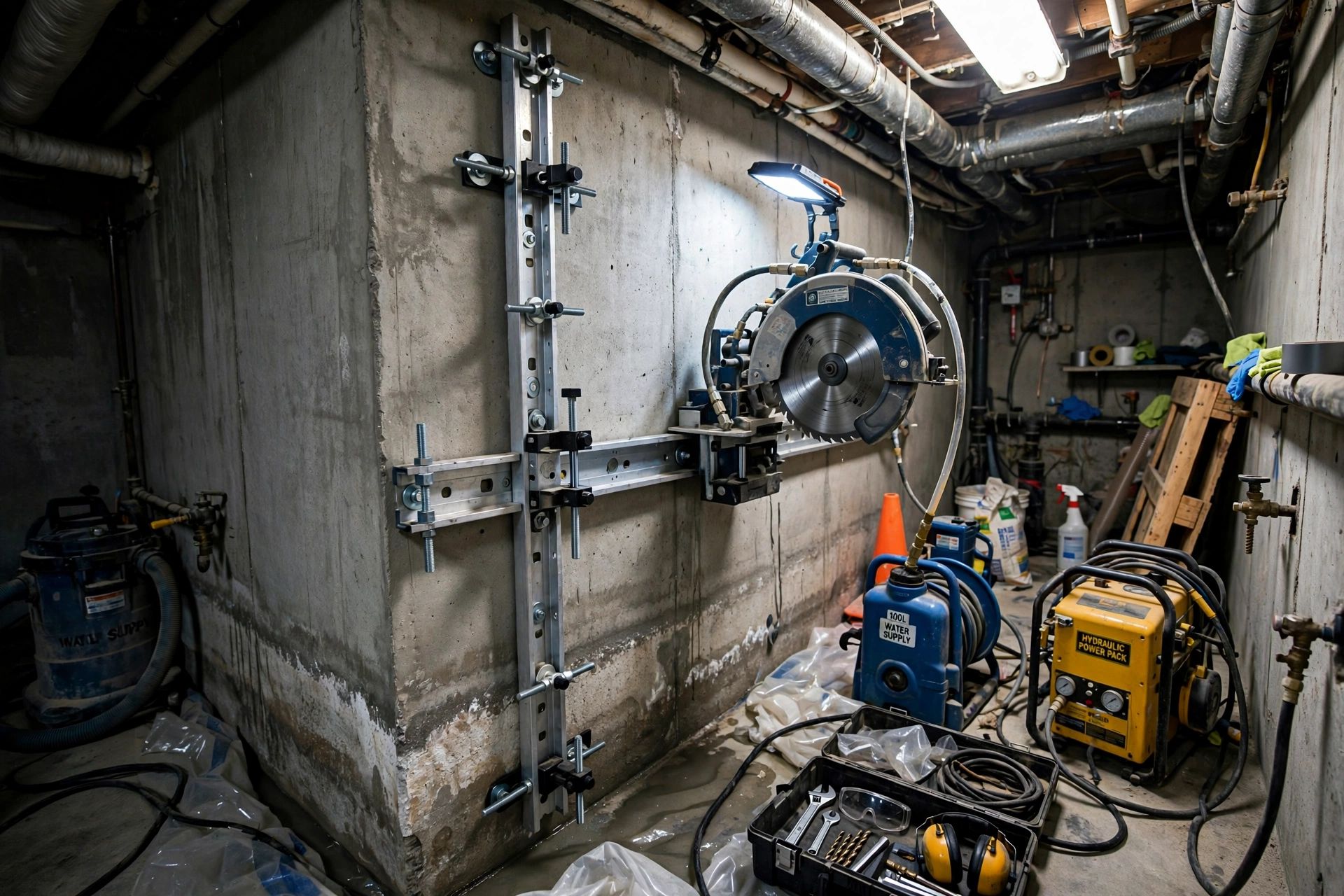
| Basement wall or floor work | Wall saw, floor saw or ring saw | Restricted access, track fixing, headroom, reinforcement and containment of water and slurry | Propping, breaking out, removal and making good |
Saw selection affects setup and cutting time, particularly where the work changes from a wall to a slab. For a closer look at the differences between wall sawing, floor sawing and ring sawing, see this guide to choosing a sawing method.
What Changes the Price
Depth and Thickness
Depth drives the saw choice. A shallow trench in a slab may be suitable for a floor saw, while a deeper cut through a thick wall may call for a wall saw on a track or a ring saw, with more time needed to set up and complete the cut. A cut through screed and a thin slab is not the same job as a deep cut through a thick concrete floor.
When you request a quote, give the wall or slab thickness if you know it, along with the required cut depth. For a soil-pipe route, the intended pipe size and position can help define the opening; see how to choose the right soil-pipe core-hole size and position.
Reinforcement
Plain concrete cuts faster than reinforced concrete. Rebar or mesh can slow the blade and increase wear, particularly in a heavily reinforced slab or wall, so tell the contractor if you know the concrete contains steel.
For example, a service trench through an unreinforced floor may be quicker to cut than a similar trench through a slab with dense mesh and rebar. If the reinforcement is unknown, photographs and any available drawings can help the contractor assess the likely setup, but they cannot confirm what is inside the concrete.
Access and Set-Up
A wall saw needs room to position and fix its track securely. A narrow basement, an upstairs room with difficult access, or a long route from the unloading point can add time before cutting starts; a clear, open working area is generally simpler to set up.
For example, cutting a doorway in an accessible ground-floor wall may need less preparation than the same opening in a tight basement where equipment and slurry-control measures must be brought down a restricted route. Tell the contractor about stairs, door widths, parking, headroom and any limits on working hours.
Water and Slurry
Wet diamond cutting uses water to cool the blade and manage dust, but the resulting slurry needs to be contained and controlled. Cutting indoors, above a finished floor or near sensitive equipment can require additional protection and collection arrangements.
A floor trench in an unfinished area may be easier to manage than a cut beside a finished kitchen floor, where keeping water and slurry away from cabinets and surfaces matters. Discuss where water can be supplied, how slurry will be collected and what needs protecting. The HSE's construction dust guidance explains the importance of controlling exposure to construction dust.
What's Not in the Cutting Price
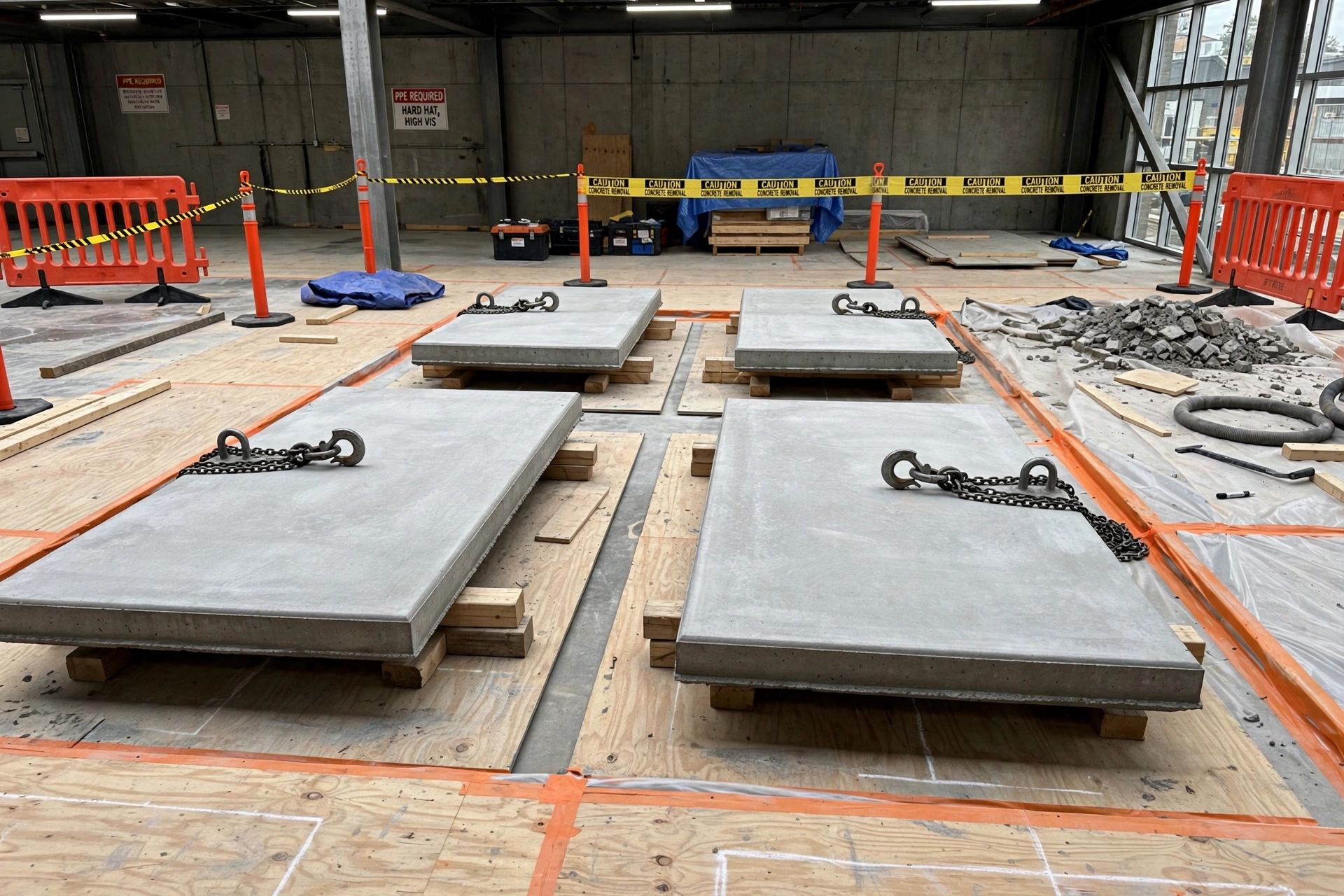
A cutting quote may cover the saw work only. Breaking out the cut section, lifting it, carrying it away and disposing of it are separate tasks unless the quote says they are included; making good the wall or floor is also usually outside the cutting scope.
For a new door or window opening, structural design, a lintel and propping with Acrow props are not the same as cutting. Never cut a structural opening without an engineer's design and suitable propping. Arrange for a structural engineer to specify the opening and support before cutting starts, and confirm who is responsible for Building Regulations and the follow-on work.
When Price Per Metre Is a Fair Comparison
Price per metre can be a fair way to compare quotes on large, repetitive jobs: for example, long straight floor cuts in an open slab, joint cutting on a new floor, or a commercial project with many metres of cutting at the same depth. In those cases, the initial setup is a smaller share of the job and the total length has a stronger influence on the amount of cutting work.
Compare per-metre quotes only when the scope is genuinely alike. Check that the saw type, cut depth, slab or wall material, reinforcement assumptions, water and slurry arrangements, access, working hours and included follow-on work match. A headline rate is not a like-for-like comparison if one quote includes extra setup or removal and another does not.
How to Get an Accurate Quote
Give the contractor enough information to judge the work and the setup. LAP Diamond Drilling offers free quotes from photos, and clear details can help the team provide a more useful price before a visit.
- Describe the cut. Give the opening size or cut length, wall or slab thickness, and the material if you know it: brick, block, concrete or reinforced concrete.
- Say what the cut is for. Explain whether it is a door opening, window opening, drain or soil-pipe trench, service duct, ACO channel, slab opening, trimming or joint cutting.
- Explain access. Say where the work is, how the equipment will get in, whether there are stairs or restricted headroom, and whether water and power are available.
- Clarify what the quote includes. Ask whether it covers cutting only or also breaking out, lifting, removal, disposal, propping, lintels and making good.
- Send photos and request a fixed price. Include wide views of the work area and close-ups of the intended cut, plus dimensions and any drawings. Grouping cuts into one visit may reduce the overall time spent on setup.
Quote comparison checklist
- Does the quote state the cut’s location, dimensions and depth?
- Does it identify the material and say whether reinforcement is known or assumed?
- Does it specify the saw work and the expected visit or working time?
- Are access, setup, water supply, slurry collection and protection of nearby finishes addressed?
- Does it say whether breaking out, lifting, removal and disposal are included or excluded?
- Are structural design, propping, lintels and making good clearly assigned to someone?
- Is VAT stated, and are any site or working-hour constraints recorded?
LAP Diamond Drilling is a Drilling and Sawing Association member, with CSCS, IPAF and PASMA credentials. The team has completed more than 120 jobs on homes and commercial sites, including Bristol Airport and a Skanska project, and has a 5.0 rating from 19 Google reviews. You can also check the Drilling and Sawing Association for information about the trade.
Ways to Keep the Cost Down
Plan related cuts together so the saw and setup are used efficiently in one visit. Clear the working area and access route, mark the intended cut lines, and have water and power ready where available; confirm the arrangements with the contractor first.
For a structural opening, sort the engineer's design, lintel and propping plan before the cutting date. That helps avoid delays and makes it clearer which work is included in the cutting quote. For a wider guide to drilling costs and the factors that affect a visit, read our diamond drilling cost guide.
Concrete Saw Cutting Cost FAQs
How much does concrete cutting cost?
LAP's visit prices are £250–£300 for a half day and £450–£550 for a full day, with a £150 minimum visit, all ex VAT. The price depends on factors such as depth, reinforcement, access and slurry control, so send the job details for a quote.
Do you charge per metre?
Many domestic and small commercial jobs are priced by the visit rather than by the metre, because setup and site conditions can account for a substantial part of the work. Per-metre pricing can be a fair comparison for large, repetitive cuts at a consistent depth in accessible conditions.
How much does it cost to cut a door opening in a concrete wall?
There is no door-opening price in this guide: the wall thickness, reinforcement, track access, cutting sequence and slurry arrangements affect the work. The visit prices above provide a guide, but a quote needs the opening dimensions, wall details and photos; structural design and propping must be arranged separately.
How much does it cost to cut a trench in a concrete floor?
The cost depends on the trench length and depth, the slab and screed thickness, reinforcement, access and how slurry will be controlled. Send the route, dimensions and photos so the contractor can assess the likely saw setup and quote the work.
Is VAT included in the prices?
No. The half day, full day and minimum visit prices listed here are ex VAT. Check that the quote states VAT clearly so you can compare the total amount payable.
Does the price include removal of the cut concrete?
Not necessarily. Breaking out, lifting and removing the cut sections, disposal and making good are usually separate unless the quote explicitly includes them; confirm the scope before booking.
Do I need a structural engineer for a new opening?
Yes, a new structural opening needs an engineer's design and suitable propping before cutting begins. The engineer should specify the support requirements, including any lintel, and the responsibilities for Building Regulations should be clear before work starts.
Can you price concrete cutting from photos?
Often, yes. Send clear photos with the cut dimensions, wall or slab thickness, location, purpose and access details; LAP Diamond Drilling offers free quotes from photos and can advise what further information is needed.
People shopping for concrete cutting usually ask for a price per metre, but for most jobs the visit, setup and site conditions are the better comparison. Send photos, sizes and thickness to LAP Diamond Drilling for a fixed-price quote; include the job location and what you need cut so the team can assess it.