

The drilling is usually the quickest part. A 107mm extractor hole through a brick cavity wall takes about 10 to 15 minutes to cut, and the whole visit is about an hour. What decides whether it goes smoothly is getting the size and position right first: the duct’s real outside size, the sleeve or wall kit, a slight fall to the outside, and checking for the lintel, cables and window frame.
Typical cost: £150 minimum visit. Additional holes are £25–£150 each, depending on size and material. Prices are ex VAT.
This guide is for homeowners, kitchen and bathroom fitters, and electricians planning an extractor fan, cooker hood or MVHR duct through a wall.
How Much Does an Extractor Fan Hole Cost?
For a straightforward visit, allow for the £150 minimum charge. Additional holes are £25–£150 each, depending on their size and the wall material. Prices are ex VAT; the number of holes, access, wall construction and any special protection needed can affect the quote.
The agreed work can include checking the proposed position, scanning for services, protecting the room, wet diamond core drilling, collecting water and slurry, and cleaning up. Confirm what is included in your quote, particularly if the room is finished or the wall needs extra protection. For more about local cutting prices and the factors that affect them, see our diamond drilling cost guide.
If you need several holes, ask for them to be priced together. Grouping the work into one visit can be more practical than arranging separate visits, but the total depends on the sizes, materials and access.
What Size Hole Do You Need?
The core needs to be larger than the duct so the duct, wall sleeve or wall kit can fit through the opening. Check the fan or cooker hood instructions before choosing a core size: the duct’s stated size does not always tell you the exact opening required by the manufacturer.
| What you’re fitting | Typical duct size | Core we’d drill | Typical cutting time | Typical visit |
|---|---|---|---|---|
| Bathroom extractor fan | 100mm bathroom fan duct | 107–112mm core | 10–15 minutes | About 1 hour |
| Kitchen extractor fan | 125mm kitchen duct | 132–152mm core | Depends on the wall | Depends on the wall |
| Cooker hood | 150mm cooker hood duct | About 162mm core | 15–20 minutes | 1–1.5 hours |
These are typical pairings, not a substitute for checking the fan, hood or wall-kit instructions. The required opening can depend on the sleeve supplied and the fitting method. Our core hole size guide gives further guidance on choosing an opening size.
The same planning applies to through-the-wall fans, tumble dryer vents and MVHR ducting. Ducting and wall kits vary, so have the actual product details available before the hole is marked.
How We Do It
Extractor fan, cooker hood and MVHR duct holes are among our most common jobs. We diamond core drill through solid brick, cavity walls, blockwork, Bath and Pennant stone, and rendered walls in kitchens, bathrooms, utility rooms and loft conversions across Bristol and the South West.
LAP Diamond Drilling is a Drilling and Sawing Association (DSA) member, with CSCS, IPAF and PASMA credentials. Founder Liam Palmer’s team has completed more than 120 jobs, from single extractor holes to commercial M&E work at Bristol Airport and on a Skanska project. We use handheld and rig-mounted core drills, with wet drilling, water collection and slurry control. You can read more about diamond drilling and the methods used.
We confirm the duct and proposed position, mark the opening, protect the work area and drill from inside with the core level and square through the wall. A water collection ring and wet vac help catch drilling water and slurry; we then clear the work area and leave the opening ready for the fitter to install the sleeve, duct and external louvre or cowl as agreed.
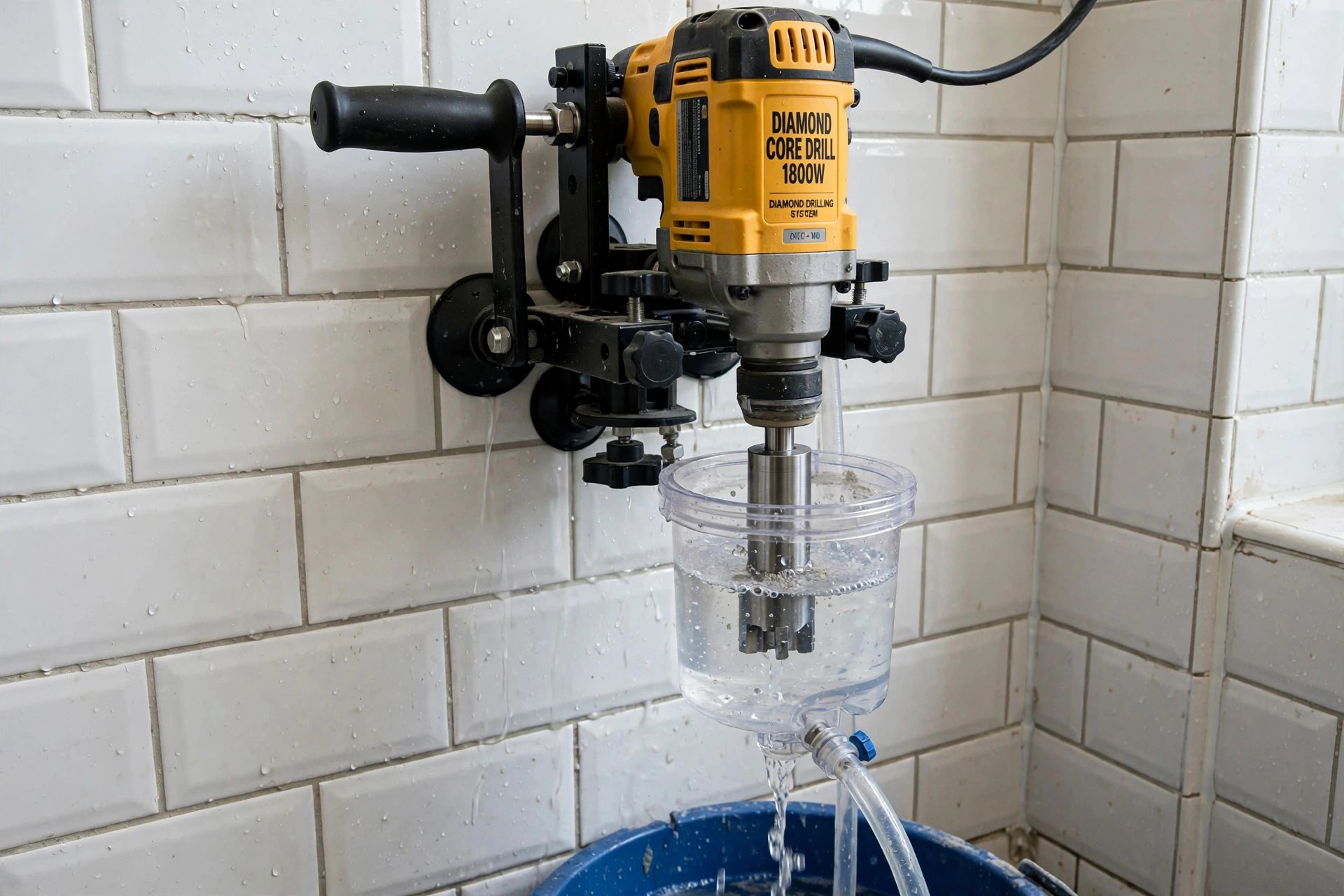
Wet drilling can be suitable for a finished room, but it still needs careful protection and water control. Tell us about tiles, fitted units and floor finishes when requesting a quote so the approach can be discussed before the visit.
What We Check Before Drilling
Before work starts, we look at the fan or hood kit and duct, the wall build-up on both sides, and the route through the wall. We check for visible services and use a CAT scanner to help identify concealed cables or pipes; scanning is one part of the assessment, not a guarantee that every obstruction can be identified.
We also consider lintels, cavity trays, the inner and outer leaf of a cavity wall, and where the opening will emerge outside. Position matters: the hole needs a slight fall to the outside so moisture can drain away, while remaining level and square enough for the sleeve and duct to fit as intended.
The external side needs room for the wall kit, louvre or cowl, clear of window frames, downpipes and air bricks. We discuss how the opening will be left for the fitter, including any agreed sealing around the sleeve.
What Goes Wrong
Drilling the Hole Duct-Sized
The most common sizing mistake is drilling an opening to the duct’s stated size. A 100mm duct usually needs a 107–112mm core, a 125mm kitchen duct needs a 132–152mm core, and a 150mm cooker hood duct usually needs about a 162mm core.
Check the fan or hood instructions and wall-kit dimensions first. If the opening is too small, the sleeve may not fit; if it is larger than required, the remaining gap may need more making good. The core hole size guide can help with planning the opening.
Lintels and Cables
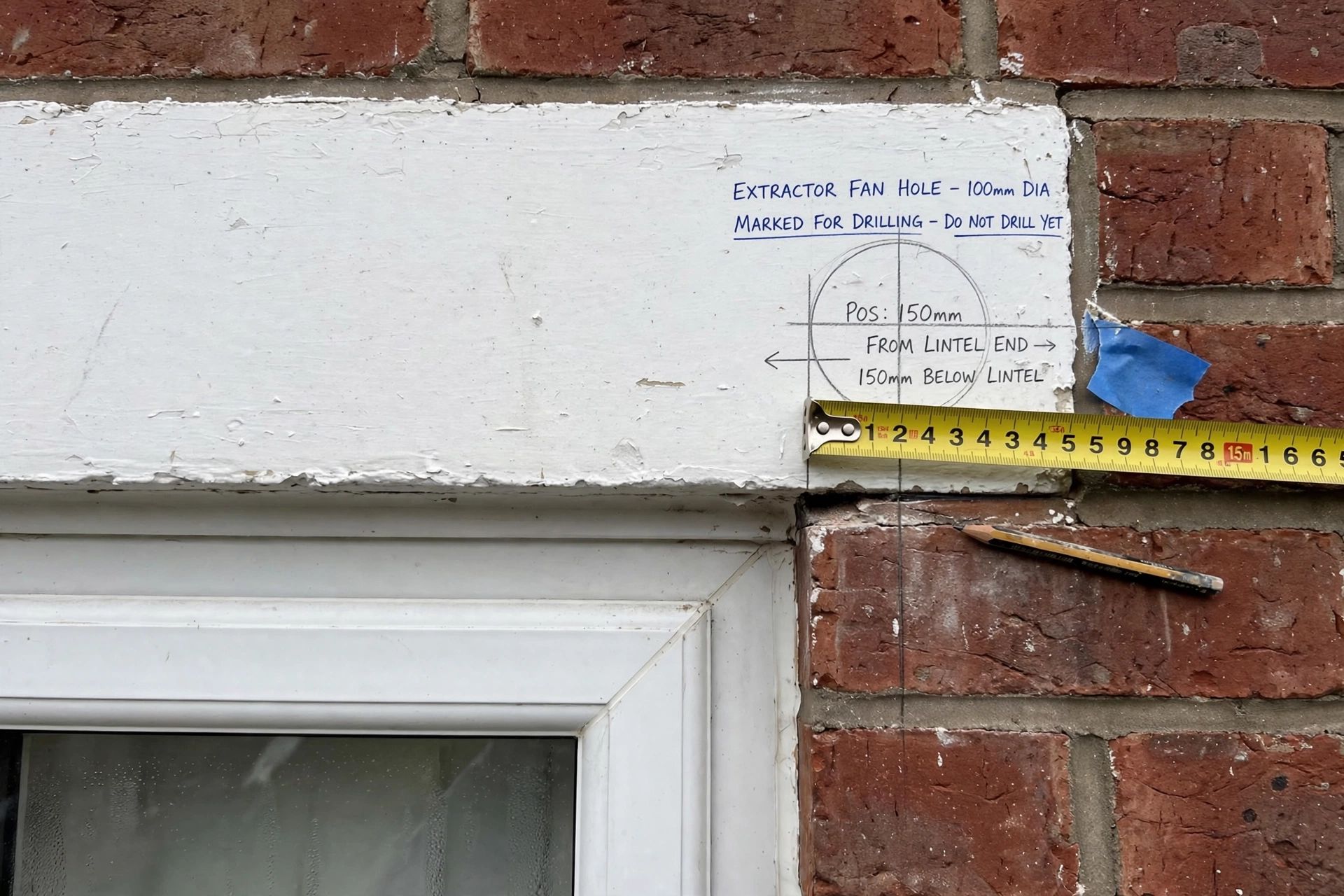
A proposed hole above a window may meet the lintel, and positions near sockets or switches may be close to concealed cables. Never drill through a lintel without checking what it is and confirming that the position is suitable; move the proposed opening if there is doubt.
A CAT scanner can help check for services, alongside reviewing the wall and the proposed route. If you are arranging work, our guide on questions to ask before choosing a diamond driller covers useful points to clarify before booking.
Where It Comes Out Outside
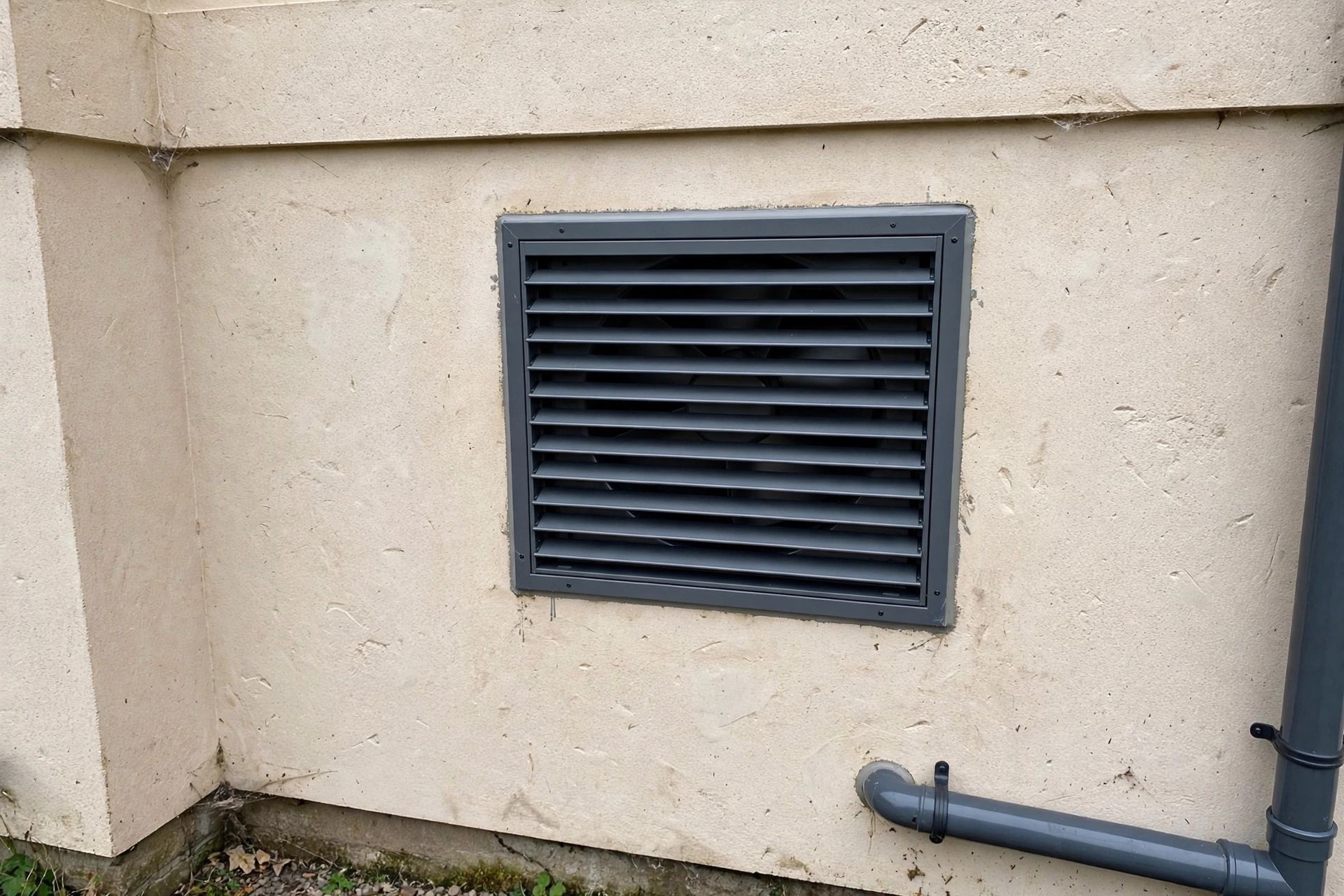
Check the outside position as carefully as the inside mark. The opening needs to clear the window frame, downpipes and air bricks, and leave space for the louvre or cowl and wall kit.
With a cavity wall, the outer leaf may be a substantial distance from the inside face. The core needs to pass through the wall level and square, with a slight fall to the outside; the route and the finish on both sides should be agreed before drilling.
Drilling in a Fitted Kitchen or Tiled Bathroom
A finished kitchen or bathroom needs planning for both the drill and its water. Wet core drilling produces water and slurry, so a water collection ring, wet vac and suitable protection help contain it around the hole. Tell the driller about tiles, worktops, cabinets and nearby floor finishes before the visit.
Tiles need careful handling to reduce the chance of chipping. The exact method and protection should be agreed for the tile and wall construction, rather than assuming the same approach suits every finished surface.
How Long It Takes
For a 107mm extractor hole through a brick cavity wall, cutting typically takes 10–15 minutes, while the visit is about an hour. A 150mm cooker hood hole typically takes 15–20 minutes to cut, with a visit of around 1–1.5 hours.
The cutting time is only one part of the job. Marking and checking the position, protecting a finished room, collecting water, and cleaning up all take time too. For kitchen duct sizes or other wall materials, timings depend on the wall. See our guide to how long it takes to drill a hole.
Can You Do It Yourself?
For a single hole through soft brick, hiring equipment may look less expensive, but you still need the correct core bit, a suitable drill, a safe way to control water or dust, and confidence about the wall and the position. A mistake near a lintel, cable, tile or finished surface can turn a short job into repairs.
For harder masonry, a cavity wall, stone or a finished room, a professional can assess the route and manage wet drilling and slurry. Compare the practical costs and risks in our guide to core drill hire versus hiring a professional.
How to Prepare
- Measure the duct and check the kit. Find the duct’s outside size and read the fan, cooker hood or wall-kit instructions for the required hole.
- Mark the centre inside. Choose a position that gives the duct a slight fall to the outside, and do not assume a space above a window is clear of the lintel.
- Take photos of both sides. Include the full wall area around the proposed hole so the inside and outside positions can be compared.
- Clear the work area. Move items away from the drilling position and tell us about fitted units, tiles and delicate finishes.
- Explain what is outside. Point out window frames, downpipes, air bricks, render and any other features near the proposed exit point.
- Plan the fan installation. Agree who is supplying and fitting the sleeve, duct, louvre or cowl. The fan should be wired by a qualified electrician.
For background on ventilation requirements, read the UK government’s Approved Document F: Ventilation. The appropriate ventilation provision depends on the building and project, so check the relevant requirements for your work.
Extractor Fan Hole FAQs
What size hole do I need for a 100mm extractor fan?
A 100mm bathroom fan duct typically needs a 107–112mm core. Check the fan and wall-sleeve instructions, as the opening required can depend on the supplied kit.
What size hole do I need for a cooker hood?
A 125mm kitchen duct typically needs a 132–152mm core. A 150mm cooker hood duct usually needs about a 162mm core; check the hood instructions before marking the wall.
How much does it cost to drill an extractor fan hole?
The minimum visit is £150, with additional holes costing £25–£150 each depending on size and material. Prices are ex VAT, and the quote should set out what is included, such as scanning, protection, water collection and clean-up.
How long does it take to drill an extractor fan hole?
A 107mm hole through a brick cavity wall typically takes 10–15 minutes to cut, with a visit of about an hour. A 150mm cooker hood hole typically takes 15–20 minutes to cut and a 1–1.5 hour visit; other timings depend on the wall.
Can you drill through a cavity wall?
Yes, a cavity wall can be core drilled, but the route needs checking through both the inner and outer leaf. The exit position, cavity and required fall to the outside should be considered before drilling.
Can you drill through tiles?
A tiled wall can be core drilled with careful planning and suitable protection. Tell the driller about the tile and wall construction before the visit so the drilling and water-control approach can be discussed.
Will drilling an extractor fan hole make a mess?
Wet core drilling creates water and slurry, but a water collection ring, wet vac and room protection help control it. Tell the team if the room has fitted units, finished flooring or other surfaces that need particular care.
Do you fit the extractor fan?
LAP Diamond Drilling carries out the agreed drilling work and leaves the opening ready for the fan fitter. The sleeve, duct, louvre or cowl and fan installation should be confirmed with your fitter; the fan should be wired by a qualified electrician.
For a standard extractor fan or cooker hood duct, book a diamond core drill: it is usually a quick job completed in one visit of about an hour. Send the duct size and photos of both sides to LAP Diamond Drilling for a free quote, and see our guide on choosing a diamond driller before you compare quotes.