

Breaking out looks cheaper because the tool hire is cheap, but the hole is only part of the job. On real jobs, we’ve been called in after a broken-out hole went wrong: it can end up oversized, with damage to the far side and cracks in the surrounding plaster or slab. We’ve also seen the repair work add up, where a clean diamond-cut hole would have needed little or no making good. This guide is for homeowners, builders, plumbers, kitchen fitters and M&E contractors choosing how to make a hole or opening in a wall, floor or slab; a side-by-side comparison is below.
Core Drilling vs Breaking Out: The Short Answer
For a neat, accurately sized hole or opening—especially in finished rooms, concrete or reinforced concrete—diamond core drilling or sawing usually gives a better result, and can cost less overall once making good is included. Breaking out remains a sensible choice for rough demolition, or where the material is being removed and the finish will be covered over.
A diamond core drill cuts a controlled, circular hole. For larger openings, saw cutting gives straighter edges than breaking out. Neither method makes damage impossible, but both reduce impact and help control the size and position of the cut.
How We Compared Them
We’ve worked on more than 120 jobs across Bristol and the South West, cutting holes and openings through brick, blockwork, stone, concrete and reinforced concrete. Some were jobs we drilled or sawed ourselves; others were call-outs after an SDS, breaker, Kango or hammer and chisel had left a hole needing repair.
We compared the methods on the things customers notice: edge finish, cracking, vibration, far-side blowout, rebar, dust, noise, speed and the amount of making good required. This guide to what diamond drilling is and how to choose a method explains the different types of drilling and where they’re used.
Side-by-Side Comparison
| Factor | Diamond drilling or sawing | Breaking out |
|---|---|---|
| Edge finish | A core drill leaves a clean, round hole; saws make controlled straight cuts. | Usually ragged and irregular, with more material removed than planned. |
| Hole size | Core bits make defined diameters; saw cuts can form larger openings. | Harder to control precisely; the opening can grow as surrounding material breaks away. |
| Cracking | Lower impact reduces the risk, but existing defects or poor technique can still cause damage. | Impact can crack plaster, tiles, mortar and nearby masonry. |
| Vibration | Generally low with diamond cutting, though the machine still needs to be secured and used correctly. | High, particularly with a breaker or Kango. |
| Far side | A controlled cut can reduce breakout; through-holes still need care at the exit face. | The far face often blows out as the final material breaks through. |
| Rebar | A suitable core bit or saw can cut reinforced concrete, subject to the design and service checks. | Rebar can slow the work, deflect a tool or remain projecting from the broken edge. |
| Dust | Wet methods use water and slurry collection; dry cutting requires suitable extraction. | Can create substantial dust, including respirable crystalline silica. |
| Noise | Machinery is noisy, but typically avoids prolonged hammering. | Repeated impacts can be loud and disruptive. |
| Speed | Efficient for the right hole or cut; set-up and water or slurry control take time. | Quick for some rough demolition, but slow and tiring in dense concrete. |
| Making good | Usually less repair work around the cut. | Often needs patching, plastering or render repairs, especially in finished spaces. |
| Total cost | Higher cutting cost can be offset by less repair work. | Cheap tool hire may be outweighed by time and making-good work. |
| Best for | Neat service holes, penetrations and controlled openings. | Rough demolition and material that is being removed anyway. |
How Each Method Works
Diamond Core Drilling and Saw Cutting
A diamond core drill uses a rotating core bit with diamond segments to grind through the material, rather than hammering it apart. Handheld drills can suit smaller holes; rig-mounted drills are fixed in place for stability and accuracy, including larger holes through floors and walls.
Core drilling is common for extractor fans, cooker hoods, boiler flues, soil and waste pipes, and service penetrations. The right core bit size and position matter, so check the pipe or duct clearance before cutting; this guide to soil pipe core-hole sizes and positioning covers a typical plumbing requirement.
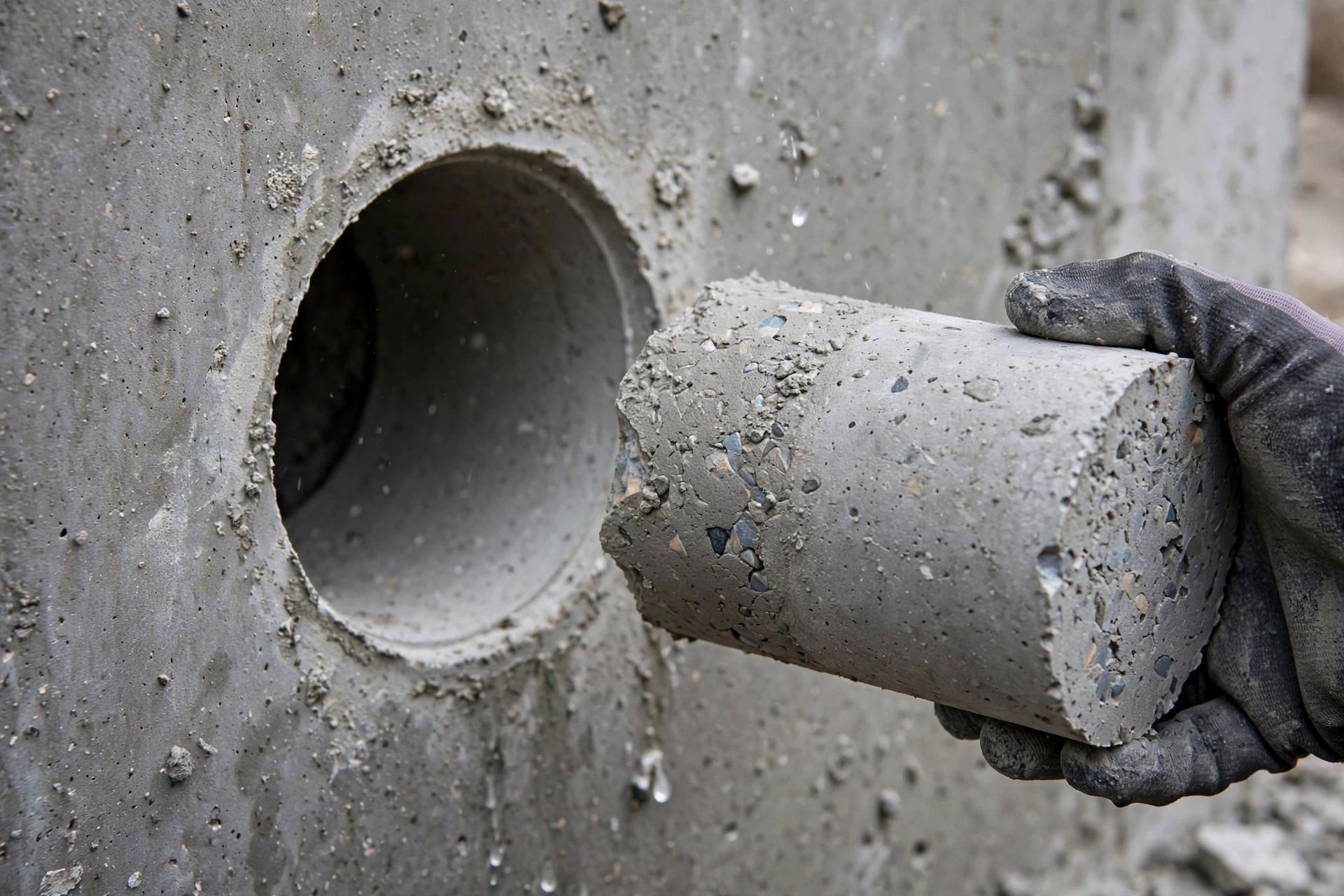
For door and window openings, drain trenches and larger slab openings, wall saws, floor saws and ring saws make controlled cuts. If a saw cannot reach all the way through, stitch drilling can help define an opening, but the sequence and support must be planned.
LAP Diamond Drilling carries out wet core drilling and sawing with water collection and slurry control. Wet cutting helps manage dust; any dry cutting needs suitable extraction rather than being done without controls. See the different types and uses of diamond drilling for more on selecting a method.
Breaking Out
Breaking out uses impact to fracture the material. An SDS drill may work for small holes in softer masonry; a breaker or Kango delivers more force, while a hammer and chisel can be used for small adjustments or careful local removal.
The broken material is removed piece by piece, so the final shape depends on where cracks travel—not just where the tool strikes. That can be acceptable for demolition or a hole that will be hidden behind a fitting, but it is less predictable around tiles, plaster, render or a visible finish.
Where Each One Falls Short
Where Diamond Drilling Falls Short
Diamond drilling and saw cutting need more set-up than swinging a breaker. Wet cutting requires water and slurry control, while dry cutting requires suitable extraction; the process and equipment can make the upfront price higher for a rough hole that will be covered.
For example, using a core drill for a small, irregular patch of masonry that is being demolished anyway may add cost without improving the finished job. Very large openings may also need several saw cuts or stitch drilling, and the method does not replace an engineer’s design or temporary propping for structural work. If you’re weighing up equipment hire against a contractor, read core drill hire versus hiring a professional.
Where Breaking Out Falls Short
Breaking out can transfer vibration through a wall or slab. On a finished job, we’ve been called in after impact work left cracks in plaster and a far-side edge that needed more repair than the original hole warranted.
It can also be slow and tiring in dense concrete, and awkward around rebar. Breaking material can generate a lot of dust and noise; follow the HSE guidance on construction dust and use appropriate controls for the work.
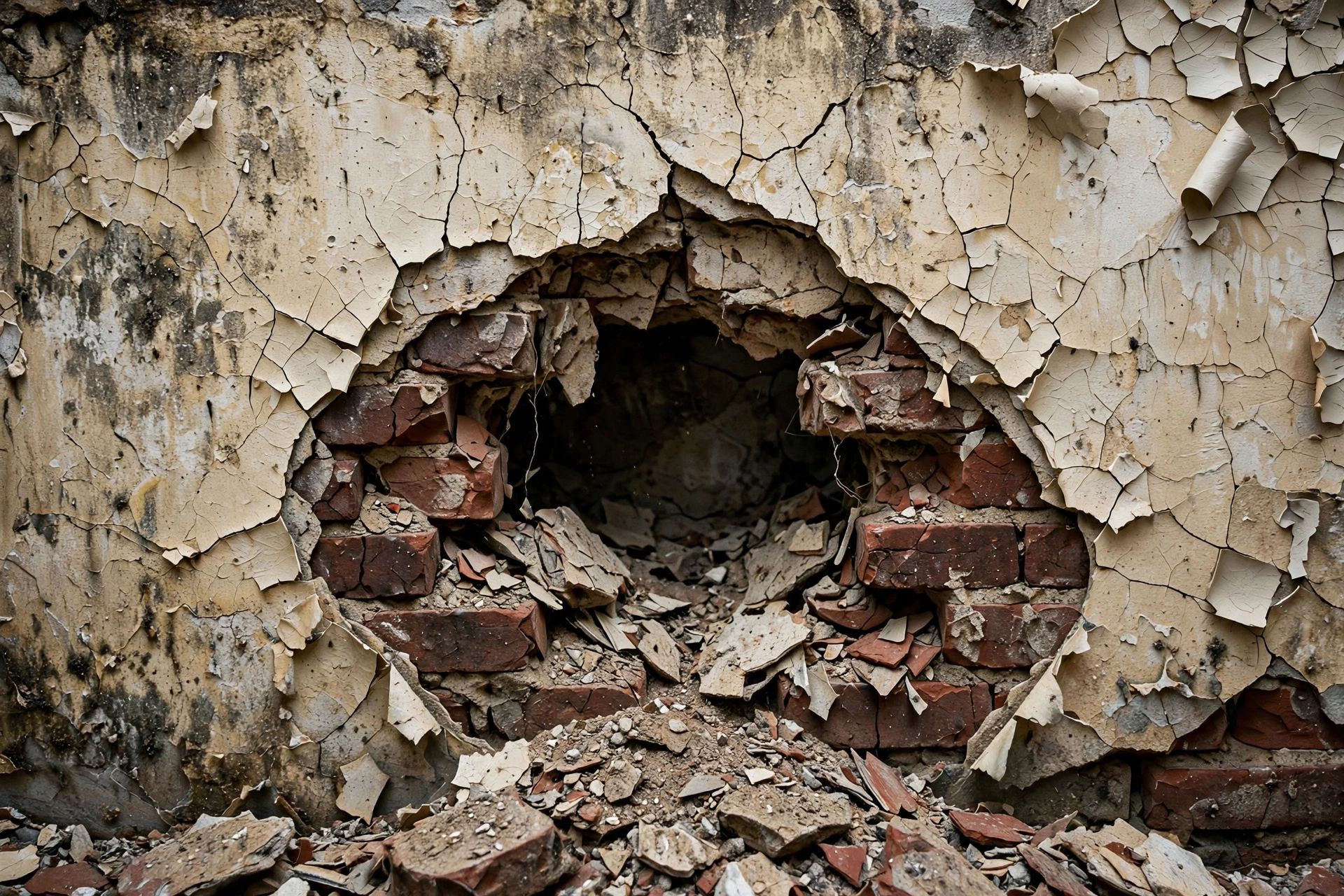
To reduce the chance of damage, check what is behind and around the proposed hole, mark the required opening clearly, and avoid using impact tools close to delicate finishes. If the opening must be neat, or the far side is visible or finished, diamond cutting is usually the more controlled option.
The Real Cost: Hole Plus Making Good
The cheapest tool is not always the cheapest job. Breaking out may look economical for a small hole, but time spent removing loose material and repairing blown brick, plaster or render can change the total. Those repair costs depend on the damage and finish, so we don’t assign a made-up price to making good.
LAP’s guide gives these indicative prices, excluding VAT: a £150 minimum visit; extra holes at £25–£150 depending on size and material; half a day at £250–£300; and a full day at £450–£550. See concrete cutting prices in Bristol and what affects the cost for more detail.
The time on site also includes more than the cut itself: access, setting up, checking the location, collecting water and slurry, and safely clearing the work area all matter. For a better idea of the time involved, see typical drilling times and visit lengths.
Openings in Structural Walls and Slabs
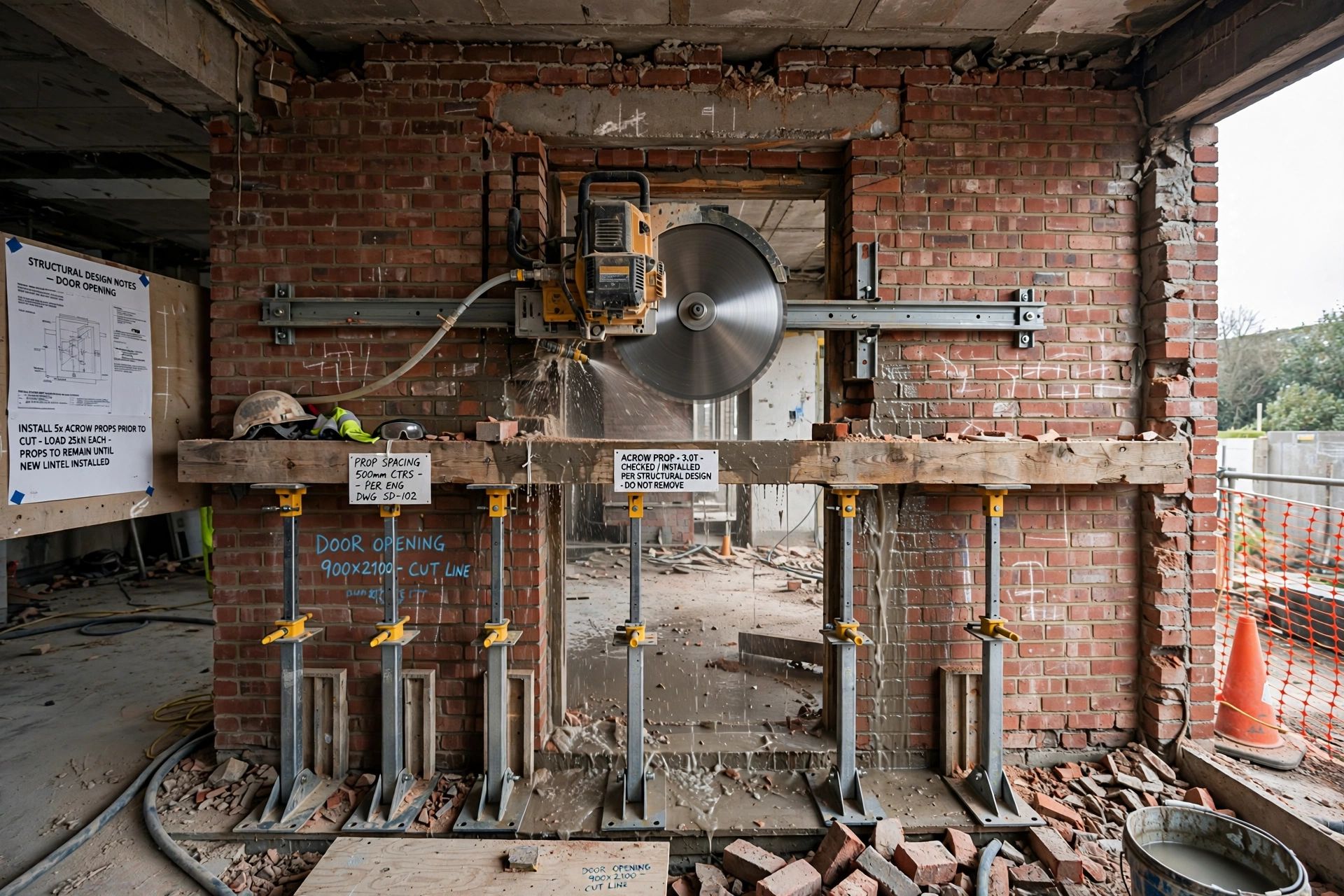
A new doorway, widened window, large opening in a load-bearing wall or opening through a structural slab needs an engineer’s design before work starts. The design should specify the opening, support requirements and cutting sequence; temporary support such as Acrow props must be planned and installed as specified.
Choosing diamond sawing rather than breaking out does not remove the need for an engineer or propping. Before cutting, the team also needs to consider services, rebar, the slab or wall construction, access and what lies on the far side. Do not cut a structural opening without an engineer’s design and the required support in place.
Planning a Controlled Structural Cut
A wall saw or floor saw can make the planned edges of an opening, while controlled lifting and removal deal with the cut sections. The actual method depends on the design and site conditions; large openings can require several cuts or stitch drilling rather than one simple pass.
LAP is a Drilling and Sawing Association member, and its team holds CSCS, IPAF and PASMA credentials. For an overview of when professional cutting may be appropriate, read core drill hire versus hiring a professional; structural design and propping still need to be addressed separately.
Which Should You Choose?
For a neat hole or opening in a finished room, concrete or reinforced concrete, near tiles, glass or fresh plaster—or anywhere vibration and cracking could cause problems—diamond core drilling or saw cutting is usually the better choice. It often works out cheaper once the repair work from an oversized or damaged opening is counted.
Choose diamond if:
- You need a round hole for an extractor fan, cooker hood, boiler flue, soil pipe, waste pipe or building services.
- The opening needs a clean edge or a specific size and position.
- The work is near tiles, glazing, fresh plaster, visible brickwork or a finished room.
- You’re cutting concrete or reinforced concrete and need to manage vibration and the far-side finish.
- You need a controlled cut in a floor slab, or a wall or floor saw is suited to the planned opening.
Breaking out is fine if:
- The work is rough demolition and the material is coming out anyway.
- The hole is small, precision is not important and the surrounding finish will be covered by render, plaster or another finish.
- You have checked the wall or slab, services and adjacent finishes, and the impact and dust are acceptable for the job.
LAP Diamond Drilling works across Bristol and the South West, from single extractor holes to commercial M&E projects, including work at Bristol Airport and on a Skanska project. The team uses handheld and rig-mounted core drills and wall, floor and ring saws, with wet cutting, water collection and slurry control; LAP has a 5.0 rating from 19 Google reviews.
Core Drilling vs Breaking Out FAQs
Is core drilling better than breaking out?
For a clean, accurately sized hole with less impact on surrounding finishes, core drilling is generally the better fit. Breaking out is often suitable for rough demolition or work that will be covered over.
Does breaking out crack walls?
It can. The impact may crack plaster, tiles, mortar or nearby masonry, and the far side can blow out as the tool breaks through; the risk depends on the material, tool and location.
Is diamond drilling more expensive?
The cutting price can be higher than a DIY breaker hire, but the total job cost also includes time and making good. LAP’s published guide lists a £150 minimum visit, extra holes at £25–£150, a half day at £250–£300 and a full day at £450–£550, all excluding VAT.
Can you core drill a hole someone has started breaking out?
Often, a contractor can assess whether a core drill can create a cleaner, correctly sized opening from the damaged area. It depends on the remaining material, access, the hole’s position and whether the break has affected the surrounding wall; send photos for an assessment.
Can you break out reinforced concrete?
It is possible, but rebar can make the work slower and less controlled, and can leave exposed steel or a ragged edge. Check the structural design before cutting or removing reinforcement; never assume a bar can be cut just because it is in the way.
Which method is less messy?
Wet diamond drilling and sawing can control dust, but they produce slurry that needs collecting and managing. Breaking out avoids wet slurry but can produce substantial dust and debris, so suitable dust controls are still needed.
Do I need an engineer for an opening?
If you’re making a new opening in a load-bearing wall or structural slab, get an engineer’s design and follow its propping requirements before work begins. A cutting method does not determine whether the opening is structurally safe.
Can you core drill near tiles?
Diamond drilling is often preferable near tiles because it avoids the heavy impact of breaking out, but tiles can still crack if they’re poorly supported, already damaged or drilled incorrectly. Confirm the position and use an appropriate method and set-up for the tile and wall behind it.
For neat, controlled holes and openings, diamond drilling or sawing is usually the better choice; breaking out suits rough demolition and work that will be covered. Send photos of the wall, slab and proposed hole to LAP Diamond Drilling for a free quote and advice on the right method.