

Core holes for extractor fans, cooker hoods, soil pipes, flues and services in lived-in homes, offices and commercial sites across Bristol show us that the right drilling method depends on the room as much as the material. We use water-fed diamond core drills, handheld or rig-mounted, and dry diamond bits with H-class extraction on suitable brick and block. This guide is for homeowners, landlords, office managers and builders weighing up mess, dust, water and disruption.
Wet vs Dry Diamond Drilling: The Short Answer
Indoors in a finished room, wet drilling with a water collection ring is usually the cleaner, safer option because it controls dust at the cutting edge and catches most of the water and slurry. Dry diamond drilling with H-class extraction is a sensible choice for suitable brick or block where water would cause a problem, such as near electrics or above a finished ceiling; concrete is drilled wet.
Before work starts, ask how the driller will control both dust and water. Opening a window is not a substitute for proper extraction or collection. Read more about diamond core drilling in Bristol.
How We Compared Them
We compared wet and dry methods on core holes for extractor fans, cooker hoods, soil pipes, flues and services in kitchens, bathrooms, plant rooms and offices. The work included different materials and settings, from finished rooms to commercial sites.
We judged how much dust reached the room, where water and slurry ended up, how long set-up and clean-up took, the finish inside the hole, and what the customer needed to do afterwards. We also considered exposure to respirable crystalline silica for the drilling team and anyone nearby, in line with HSE principles for controlling construction dust.
Side-by-Side Comparison
| Factor | Wet diamond drilling | Dry diamond drilling |
|---|---|---|
| Dust | Water suppresses dust at the cutting edge; collection is still needed to control splashes and slurry. | Produces dust that must be captured at source with suitable H-class extraction. |
| Water | Uses a controlled water feed, usually collected with a ring and wet vac. | No drilling water; dust extraction is essential. |
| Materials | Suitable for concrete, reinforced concrete, brick, block and many stone types, subject to site conditions. | Suits selected brick, block and some stone. Not suitable for dense or reinforced concrete. |
| Hole quality | Usually gives a clean, accurate opening with limited breakout when set up correctly. | Can give a clean opening in suitable masonry, but material and bit temperature affect the finish. |
| Bit wear | Water cools the core bit and carries away cutting debris. | Bits can run hot and wear faster, particularly in hard or unsuitable material. |
| Set-up time | Needs a water supply, collection ring, wet vac and protection for the room. | Needs the right dry bit, H-class extractor and a secure extraction connection. |
| Best for | Concrete and finished interiors where dust control matters and water can be contained. | Suitable masonry where water is impractical, including some locations near electrics or overhead. |
| Not suitable for | Locations where water cannot be safely controlled, live electrics that have not been isolated, or poorly managed overhead work. | Concrete, reinforced concrete, or any drilling without effective extraction. |
How Each Method Works
Wet Diamond Drilling
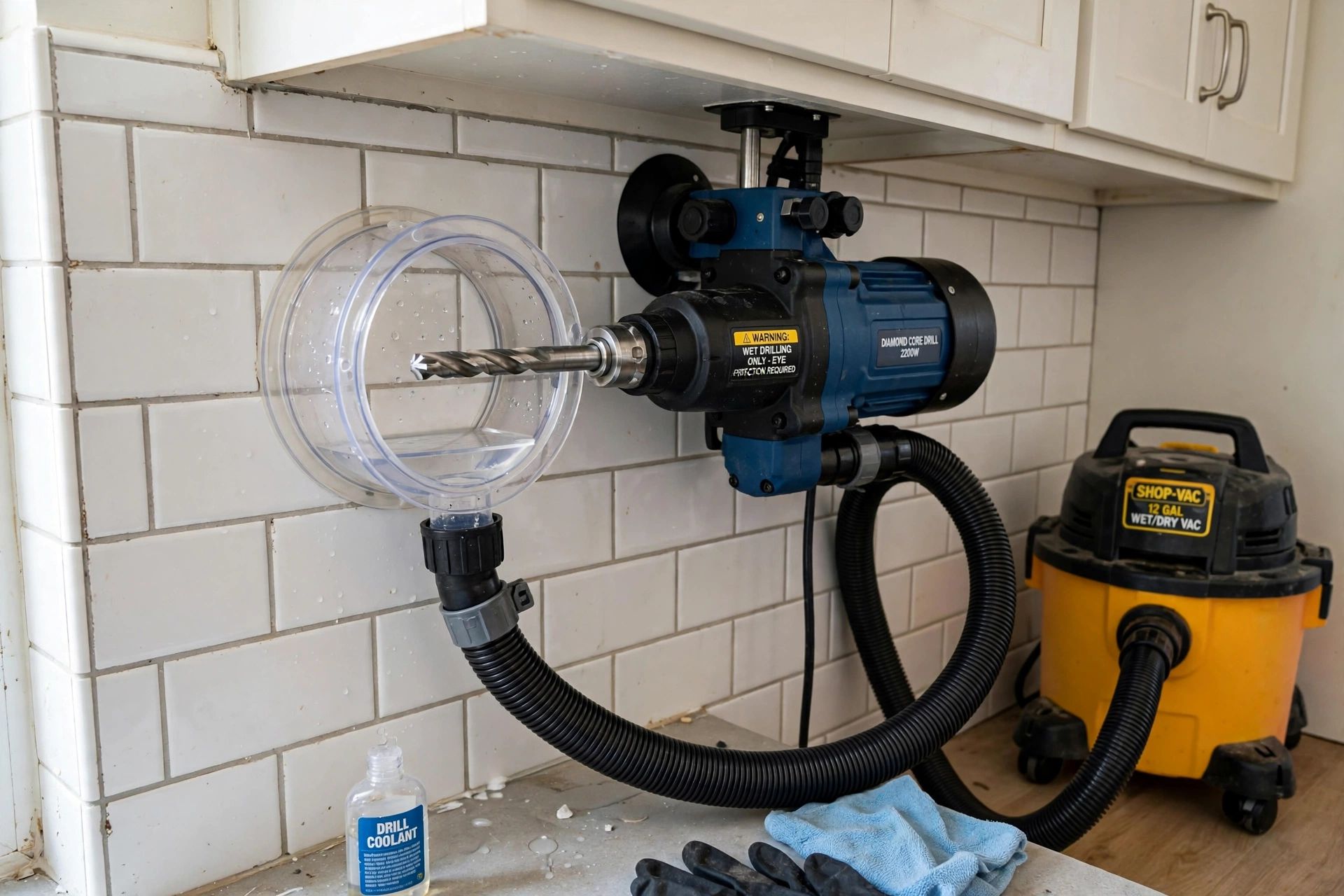
A diamond core drill turns a hollow core bit against the wall or slab. A controlled flow of water cools the bit and carries the cuttings away from the edge; a rig-mounted drill is commonly used for larger or more demanding openings, while handheld equipment can suit some smaller holes.
A water collection ring fitted around the drill point catches runoff, and a wet vac removes the collected water and slurry. A typical 100–112 mm hole through a standard masonry wall may use roughly 1–5 litres of water, depending on wall thickness, material, feed rate and set-up. Thick walls or longer drilling can use more, so the driller should plan collection before starting.
Dry Diamond Drilling
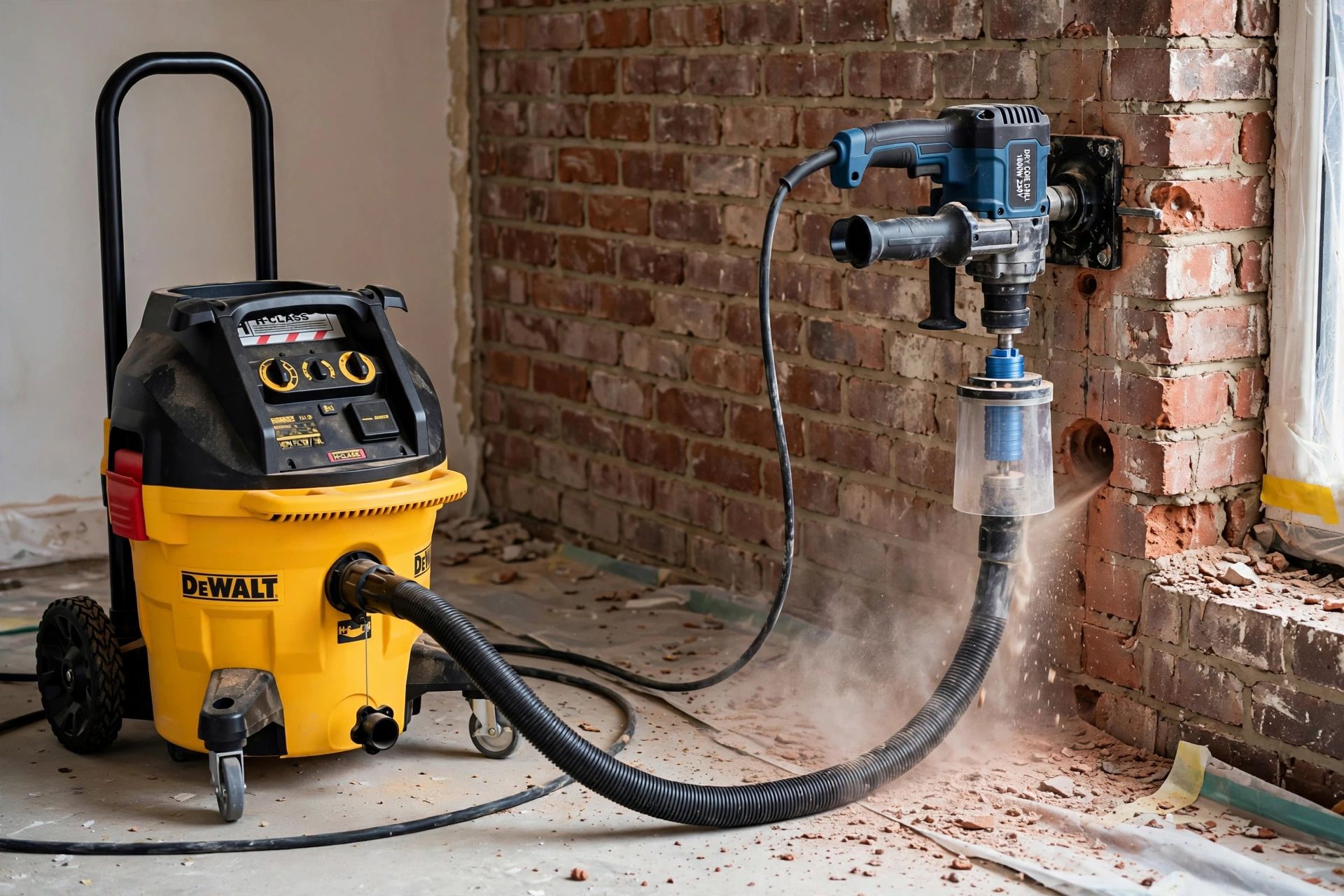
Dry drilling uses a core bit designed for use without a water feed. The drill is connected to an H-class extractor that captures dust at the point of cutting; the extraction system must remain connected and working throughout the hole.
This method can suit selected brick and block where water would be difficult to contain, including some overhead positions and locations close to services. It is not a workaround for drilling concrete dry: dense and reinforced concrete need the appropriate wet method and equipment.
Where Each One Falls Short
The method that controls one problem can introduce another. Wet drilling brings water and slurry into the work area, while dry drilling avoids water but makes dust control and material choice especially important.
Where Wet Drilling Falls Short
Wet drilling needs a reliable water supply and a practical way to collect the runoff. Near electrics, the relevant circuit should be isolated and the work area planned before water is introduced; overhead holes also need careful positioning and collection because water can drip down the wall or towards the operator.
Slurry must be captured and disposed of properly, never poured down a sink, toilet or surface-water drain. In very soft or crumbly brick, water and the cutting action can contribute to breakout at the edge. We manage these risks by checking the location and wall material, protecting nearby finishes, fitting collection equipment and adjusting the set-up; if the wall is fragile, we discuss the likely finish before drilling.
Where Dry Drilling Falls Short
Dry drilling only suits selected masonry, such as suitable brick or block. In dense or reinforced concrete, a dry bit can overheat, wear quickly and produce a poor result; silica dust is also a serious hazard if it escapes the extraction system.
A real example is a proposed service hole through a concrete wall where a dry approach might seem attractive because the room is furnished. The material rules it out: we would use wet diamond drilling with water collection and suitable protection instead. HSE guidance calls for effective controls for construction dust, not reliance on an open window: HSE guidance on construction dust.
Dust, Silica and Your Health
Respirable crystalline silica is fine dust released when materials such as concrete, mortar, brick and stone are cut or drilled. The particles can travel deep into the lungs, so dust that is hard to see is not necessarily harmless; exposure is a concern for the tradesperson and anyone in the room.
Wet drilling suppresses dust at the cut, while dry drilling requires effective on-tool extraction with an H-class extractor. A suitable FFP3 mask is part of personal protection where the risk assessment calls for it, but a mask does not replace dust control at source. Follow HSE information on silica and construction work and keep other people away from the immediate work area.
Chasing can also release dust along a longer cut, so equipment and containment matter there too. See our practical guide to choosing a tool for wall and floor chasing.
How to Get Your Room Ready
A few steps before the driller arrives can protect finishes and reduce delays. We will talk through access, the wall and the proposed opening when arranging the job.
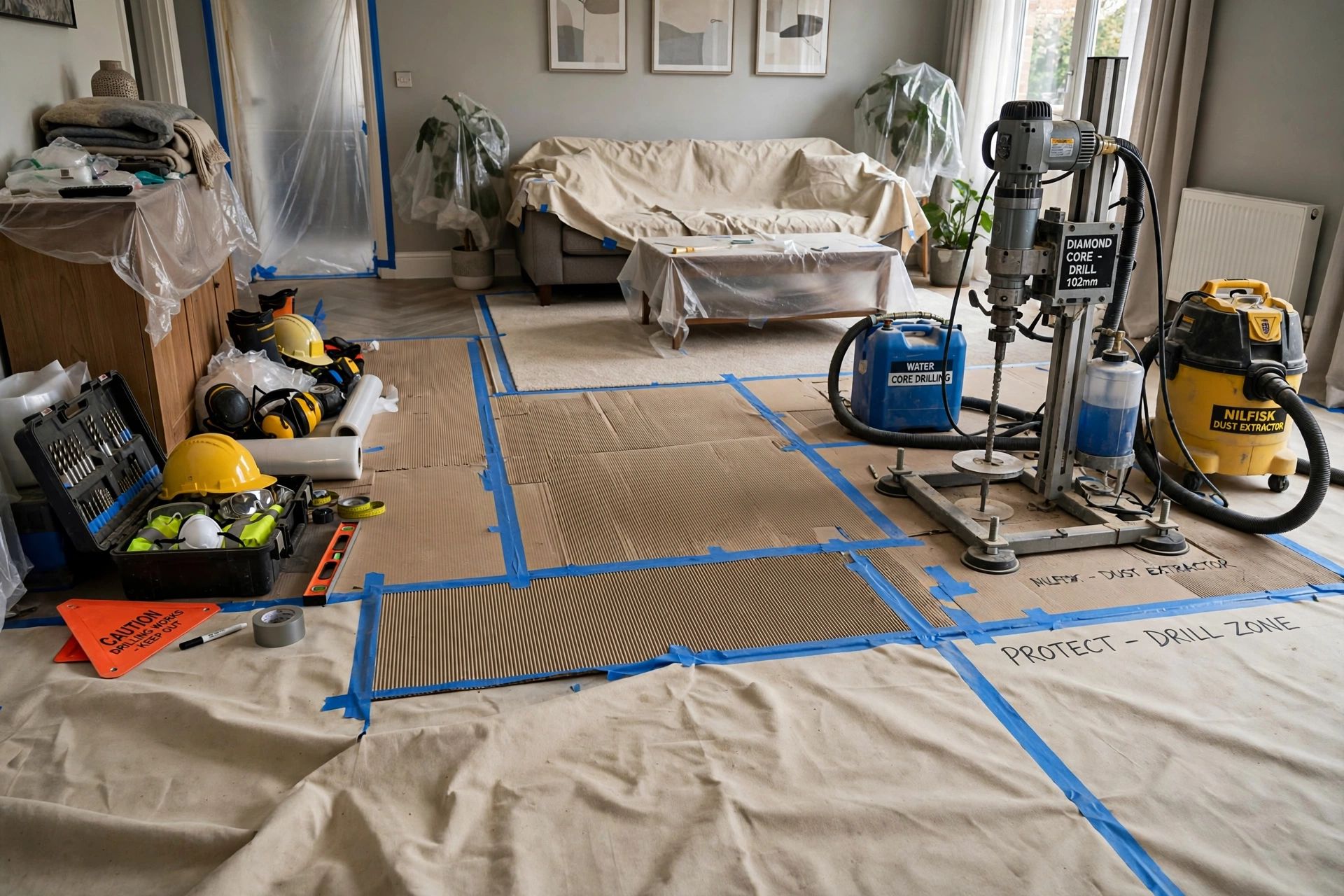
- Clear the work area. Move small items, ornaments and anything fragile away from the drill position and the route to it.
- Protect furniture and finished floors. Move furniture back where possible and tell us about delicate flooring, worktops or recently decorated surfaces so protection can be planned.
- Check both sides of the wall. Clear access on the far side too, and point out cupboards, tiles, appliances, pipes or finishes that may affect the opening or water collection.
- Make power and water accessible. Let us know what sockets and water supplies are available. Do not run extension leads through wet areas or attempt to isolate electrical circuits yourself unless you are qualified.
- Tell us about services. Share any known cable, pipe or heating routes and any survey information. Keep the proposed hole clear of live services.
- Keep children and pets away. Arrange for them to stay out of the work area while drilling, collection and clean-up are under way.
- Plan access and parking. Confirm the entrance, floors, stairs and any site rules or working hours, especially for offices, shops and shared buildings.
Which One Should You Choose?
- Kitchen or bathroom extractor fan, cooker hood or soil pipe: Wet drilling is often a good fit for concrete and many masonry walls, especially in a finished room, provided water can be contained. A collection ring and wet vac help protect tiles, cabinets and floors.
- Finished floors and furnished rooms: Wet drilling can keep airborne dust down, but it is not mess-free. Protect the floor and furnishings, collect the water and slurry, and allow time for clean-up.
- Ceiling or overhead hole: Dry drilling with H-class extraction may suit selected brick or block where water would drip into the room. The material must be suitable, and concrete still needs wet drilling with a carefully planned collection method.
- Near electrics: First identify and isolate the relevant electrical supply before wet work. Dry drilling may be considered in suitable masonry if water cannot be used, but it still needs H-class extraction; do not drill around live electrical equipment without a safe plan.
- Office or shop staying open: Agree a work zone, timing and access plan. Wet collection or dry extraction can help control the work, but people should be kept away from the drilling area; schools and healthcare settings may need additional site-specific controls and scheduling.
- Outside wall: Wet drilling can work well when runoff can be contained and the exterior finish, such as render, is protected. Check for a cavity wall and any services, and plan the exit side to reduce breakout.
- Concrete or reinforced concrete: Use wet diamond drilling with appropriate equipment and water collection. For structural openings or steel in the proposed position, seek the relevant structural advice before work begins.
- Plant room or commercial M&E work: The material, access, services and site rules determine the method. LAP Diamond Drilling is a DSA member, and its team holds CSCS, IPAF and PASMA credentials; past work includes more than 120 jobs, from single extractor holes to commercial M&E at Bristol Airport and on a Skanska project.
Diamond drilling avoids the repetitive hammering of an SDS drill and is generally lower-impact, though it is not silent. For more on the difference, read diamond drilling vs SDS core bits.
Wet vs Dry Diamond Drilling FAQs
Does core drilling make a mess?
It can, but good preparation keeps the impact controlled. Wet drilling uses a collection ring and wet vac for water and slurry; dry drilling needs H-class extraction to capture dust at the cut.
How much water does wet core drilling use?
A typical 100–112 mm hole through a standard masonry wall may use around 1–5 litres, though wall thickness and material change the amount. Longer holes can use more, so ask how the water will be collected before work begins.
Can you core drill without water?
Yes, in suitable brick or block with a dry diamond bit and effective H-class extraction. Dry drilling is not suitable for concrete or reinforced concrete, which should be drilled wet.
Is dry drilling dangerous?
Dry drilling without effective extraction can expose people to respirable crystalline silica. Use the correct bit and H-class extractor, keep others clear of the area, and follow the HSE’s dust-control guidance.
Can you drill near electrics?
Only after the position and electrical risks have been assessed. Isolate the relevant circuit before wet drilling; dry drilling may be an option in suitable masonry, but it still requires safe access and dust extraction.
Where does the slurry go?
It should be collected with the water collection equipment and wet vac, then disposed of appropriately. Never tip drilling slurry down household drains or surface-water drains.
Do I need to move furniture?
Move small items and fragile belongings away from the work area, and clear access on both sides of the wall where possible. Tell the driller about large or fixed furniture so protection and equipment access can be planned.
How long does clean-up take?
A straightforward hole may take minutes to drill once the set-up is ready, but protection, collection and clean-up add time. Allow roughly 30–90 minutes for a single accessible opening, depending on wall thickness, access and how much protection the room needs.
For finished rooms, wet drilling with a collection ring is usually the cleaner, safer choice; use dry drilling only on suitable masonry with H-class extraction. LAP Diamond Drilling provides wet core drilling with water collection and slurry control, as well as dry drilling with H-class extraction where appropriate. Pricing starts at a £150 minimum visit, with additional holes typically £25–£150 each depending on size and material. Send a photo of the wall for a free quote through our contact page.