

Most people ring up asking for a specific saw, such as “I need a wall saw for a doorway”, but the material hardly decides it: diamond blades cut brick, block, stone and concrete. Pick the saw by the job, not the material, and you avoid paying for a bigger machine than you need or ending up with a cut that is too shallow.
This guide explains floor, wall and ring sawing, what affects the choice, and how dust, access, corners, timings and cost shape the work. The job table below helps you find the right approach for your opening, trench, slab or road cut.
Why the Material Doesn't Decide the Saw
A diamond blade can cut through brick, block, Bath stone and concrete. The practical choice comes down to the cut’s depth and direction, space to set up, and whether the corners need to be square.
A builder once asked for a wall saw to make a doorway in a 215mm block wall. A ring saw could make the opening with less setup; bringing in a track-mounted wall saw would add time and cost without improving the result. LAP Diamond Drilling provides concrete saw cutting in Bristol and the South West, including wall, ring and floor sawing.
The Three Main Saws Explained
| Saw | How it works | Typical depth | Best for | Limits |
|---|---|---|---|---|
| Floor saw | A walk-behind machine runs a circular blade along a flat surface. | Depends on the blade. | Slabs, roads, yards, drain trenches, ACO channels and expansion joints. | Needs a clear, reasonably flat run. It does not cut vertical walls. |
| Track-mounted wall saw | A rail is fixed to the surface and guides a powered blade through the wall. | Depends on the blade. | Door and window openings, widening openings, lift shafts and deep or reinforced concrete cuts. | Track fixing and machine setup need space; corners may need separate finishing. |
| Ring saw | A handheld saw uses a ring-shaped blade to cut into the wall. | About 270mm, often by working from both sides. | Smaller openings and cuts where a wall saw’s track will not fit. | Limited depth; difficult access or thick walls may call for another method. |
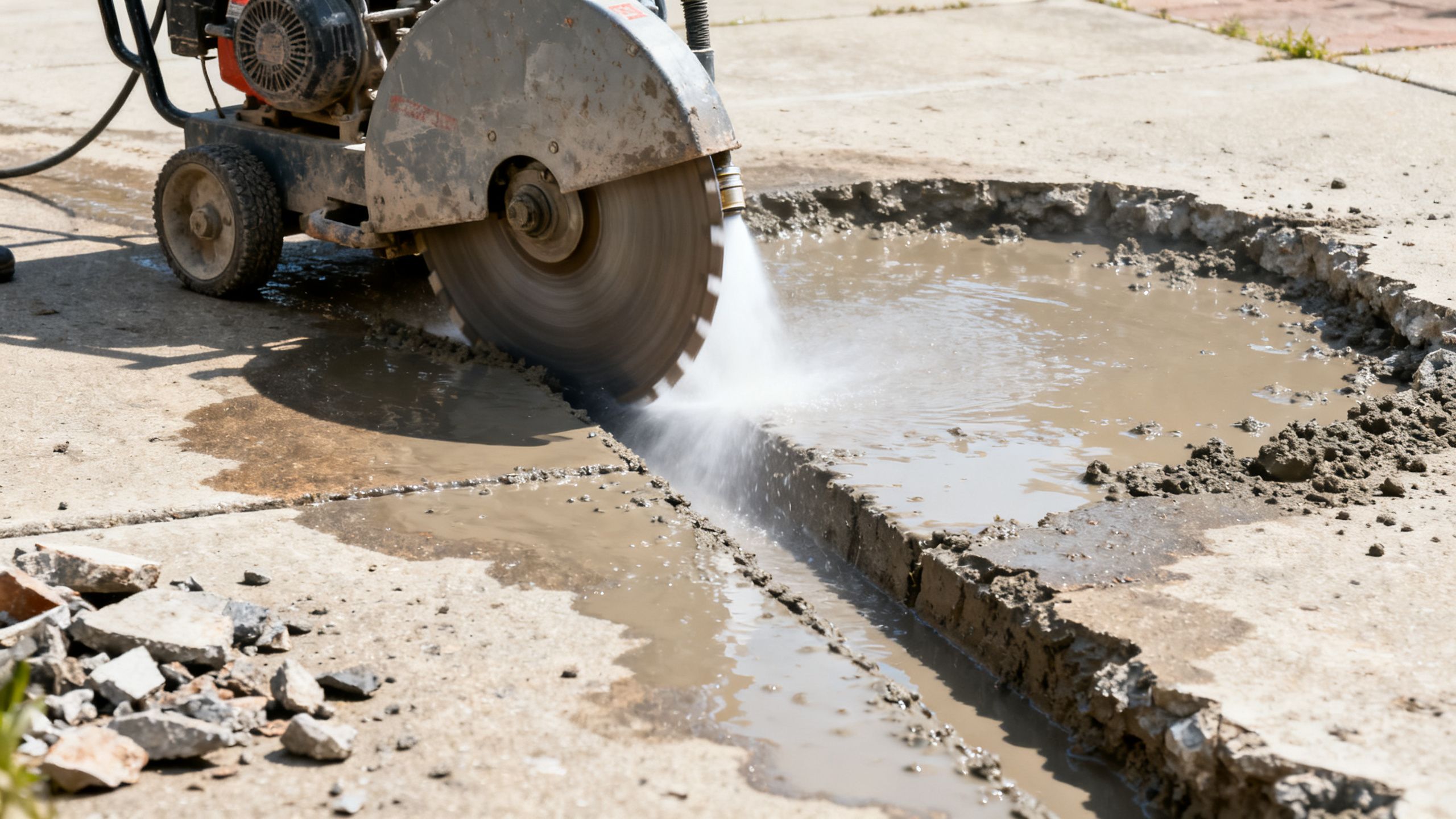
A floor saw is often called a flat saw. On roads and yards it makes straight cuts through asphalt or concrete; a cut-off saw may suit a short, accessible cut, while a walk-behind saw is more practical for longer runs. Wire sawing uses a diamond wire loop for very large or thick sections where a blade cannot reach all the way through.
What Actually Decides the Saw
How Deep the Cut Is
A ring saw cuts to about 270mm, often by cutting from both sides. For example, a 215mm block wall is within that range, while a 350mm reinforced concrete wall may need a track-mounted wall saw; choosing a ring saw for the latter can leave an incomplete cut or require extra work from the opposite side.
Floor and wall saw depth depends on the blade and machine setup. Confirm the thickness, including finishes, before choosing: a 180mm slab with screed on top is not the same cut as 180mm of bare concrete.
Which Way the Cut Runs
A floor saw cuts flat, horizontal surfaces, so it suits a drain trench across a slab or a series of cuts for slab removal. A track-mounted wall saw runs on a rail fixed to the wall and can cut vertical walls, steep ramps and, with the right setup, ceilings; a ring saw is handheld and can cut in different directions within reach.
For example, a groundworker cutting an ACO channel across a yard would normally use a floor saw, not a wall saw. Using the wrong machine can make the cut awkward to control or leave no practical way to follow the marked line.

How Much Room There Is
A wall saw needs space to fix its track and move the blade across the cut. A floor saw needs a flat, clear run and room to work; a ring saw can be useful in a tight cupboard, stairwell or reveal where a larger machine will not fit.
For example, a small opening beside a stair flight may be reachable with a ring saw, while a track saw’s rail and operator cannot be positioned safely. Check both sides of the wall too: pipes, stored items or a narrow landing can block access or complicate slurry collection.
Corners, Overcut and Lintels
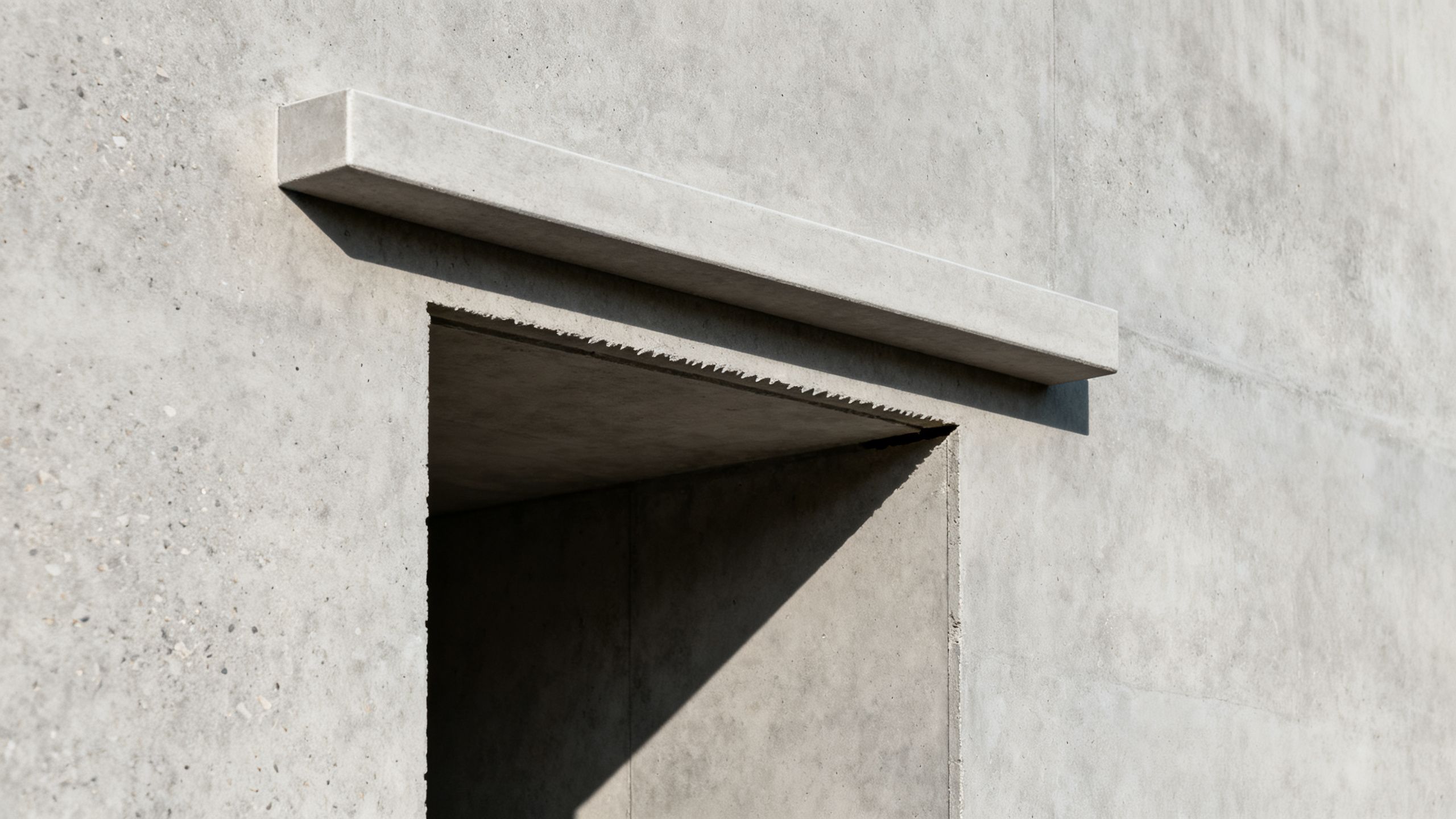
Circular blades extend past the corners of a rectangular opening, creating an overcut. If the cut runs into the bearing for a lintel or padstone, it can weaken the support; core-drilling the corners or finishing them by hand may keep the cut within the specified line.
For example, a doorway in a load-bearing wall may need neat corners at the lintel bearings, not just a fast straight cut. Never cut a load-bearing opening without a structural engineer’s specification and the required propping already in place. See when you need a structural engineer for wall openings before work starts.
What It Adds to the Bill
A track-mounted wall saw takes time to position and fix, while a ring saw can be quicker to set up for a small opening. For example, using a wall saw on a modest opening in a 215mm block wall may add setup time without adding useful depth or finish.
LAP’s guide gives a £150 minimum visit, £250–£300 for a half day and £450–£550 for a full day, all ex VAT. Access, cutting depth, number of cuts, protection and slurry handling affect the time on site; the Bristol diamond drilling cost guide explains how setup and visit time influence pricing.
When the Material Does Matter
Material matters at the extremes, even though it is not usually the first thing that determines the saw. Heavy rebar slows cutting, and cutting main reinforcement requires approval from the structural engineer; tell the cutting team what is known about the steel and share any drawings.
Walls much thicker than about 270mm rule out a ring saw as a one-sided solution. Asphalt, fresh “green” concrete and very abrasive stone may need a blade selected for that material, since the wrong blade can cut slowly or wear quickly. For very large or thick sections, such as bridge decks or massive foundations, wire sawing may be the better method.
Which Saw for Your Job
| Job | Saw we'd use | Why |
|---|---|---|
| Door opening in blockwork, around 215mm thick | Ring saw, or wall saw if the opening or finish calls for it | Ring sawing can suit this depth and limit setup. Corner details still need planning. |
| Door or window opening in a thick or reinforced concrete wall | Track-mounted wall saw | The track guides a controlled cut; depth depends on the blade and setup. Structural approval and propping are required where the wall is load-bearing. |
| Widening an existing opening | Wall saw or ring saw | Choose by thickness, access and how close the new cut runs to the existing lintel bearings. |
| Drain trench through a slab | Floor saw | It follows a straight line across a flat surface; depth depends on the blade. |
| ACO channel in a yard | Floor saw | Suits long, straight cuts in concrete or asphalt before removing the channel section. |
| Expansion joint in a slab | Floor saw | Makes a controlled straight cut along the joint line. |
| Slab removal | Floor saw, often with several cuts | Breaking the slab into manageable sections makes removal easier. Check services and slab details first. |
| Opening in a lift shaft or stairwell | Track-mounted wall saw or ring saw | Access, thickness and cut direction decide which equipment can be positioned safely. Structural design and propping must be addressed first. |
| Opening in a Bath stone or other stone wall | Ring saw or wall saw | The thickness, stone condition, access and required corner finish guide the choice. |
| Road or yard cut | Floor saw; wire saw for exceptional depth or scale | A floor saw suits flat, long runs. Wire sawing can handle sections beyond a blade’s reach. |
A finished opening also depends on the structural details, not only the saw cut. Where an engineer has specified a lintel, it must be installed with the required bearing and support before the opening is treated as complete.
How to Get the Right Saw for Your Job
- Measure the wall or slab thickness and note the material: block, brick, stone, concrete, reinforced concrete, asphalt or screed over a slab.
- Mark the proposed opening or cut line. Take photos of both sides and the surrounding space, including any visible services or obstructions.
- Describe access: room in front of the wall, stairs or tight corners, and whether power and water are available. Say if the room is occupied or lived in.
- Tell us whether the edges will be on show and whether a lintel, frame or other finish is planned. For a structural opening, provide the engineer’s drawings and confirm the required props are in place.
- Send the details to LAP Diamond Drilling. We’ll recommend the saw, corner detail and likely time on site. We may suggest a smaller saw than the one you asked for if it can do the job, saving you the cost of unnecessary setup.
LAP is a Drilling and Sawing Association (DSA) member, with CSCS, IPAF and PASMA credentials. Founder Liam Palmer has completed 120+ jobs, from single extractor holes to commercial work at Bristol Airport and on a Skanska project. LAP has a 5.0 rating from 19 Google reviews and provides free quotes from photos. You can learn more about the Drilling and Sawing Association.
Dust, Water and Mess
Diamond sawing is normally done wet. Water cools the blade and suppresses airborne dust, while slurry needs to be contained, collected and disposed of appropriately; plan protection for nearby finishes, drains and occupied areas before work begins.
Never dry cut indoors. Concrete, brick and stone can release respirable crystalline silica dust, which is hazardous to health. Follow the HSE guidance on construction dust and agree water supply and slurry control with the cutting contractor before the visit.
Concrete Sawing FAQs
What is wall sawing?
Wall sawing uses a blade guided along a track fixed to a vertical or inclined surface. It is commonly used for doorways, windows and other accurately positioned openings in concrete, blockwork and stone.
What is floor sawing?
Floor sawing uses a walk-behind machine to cut flat surfaces such as slabs, roads and yards. It is used for drain trenches, ACO channels, expansion joints and dividing a slab into sections for removal.
How deep does a ring saw cut?
A ring saw cuts to about 270mm, often by working from both sides of the wall. A thicker wall or a cut that cannot be accessed from both sides may call for a track-mounted wall saw or another method.
Which saw is used for a door opening?
The choice depends on wall thickness, access, corner detail and the required finish. A ring saw can suit a modest opening in blockwork; a track-mounted wall saw is often preferred for thicker or heavily reinforced concrete.
Can you saw cut reinforced concrete?
Yes, diamond saws can cut reinforced concrete, though rebar can slow the work and affects blade choice. Cutting main bars needs approval from the structural engineer, and a load-bearing opening must not be cut without an engineer’s specification and the required props in place.
How long does a door opening take?
A straightforward opening may take a few hours of cutting, but setup, protection, slurry control and moving the cut sections add time. Wall thickness, reinforcement, access and corner work can extend the visit, so send measurements and photos for a realistic estimate.
How much does concrete sawing cost?
LAP’s guide lists a £150 minimum visit, £250–£300 for a half day and £450–£550 for a full day, ex VAT. The final price depends on setup, cut length and depth, access, water and slurry arrangements; a smaller suitable saw can reduce unnecessary setup cost.
Do I need a structural engineer for a new opening?
If the opening affects a load-bearing wall, get the structural engineer’s specification before cutting. The specified lintel, bearings and temporary support, such as Acrow props or needles, must be in place as directed before work begins; Building Control requirements may also apply.
Most people ask for a specific saw, but the job—not the material—should decide it. Send the wall or slab thickness and photos to LAP Diamond Drilling for a free quote, using the contact page.